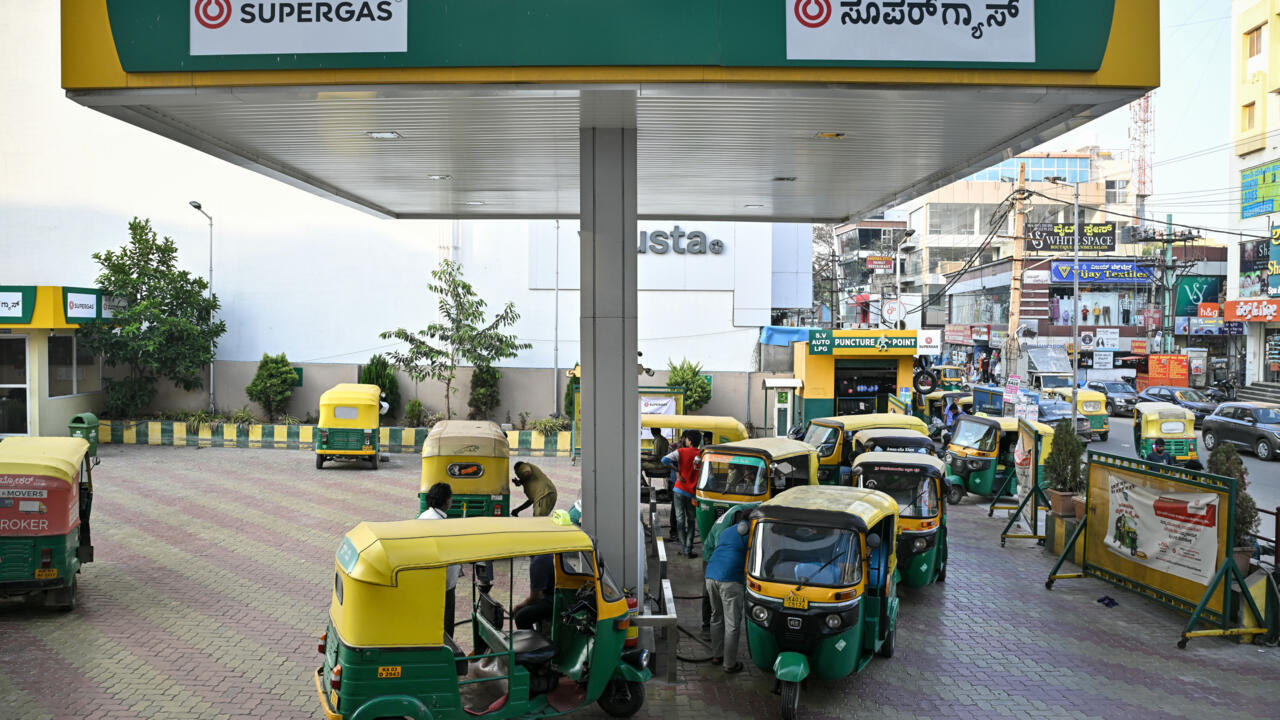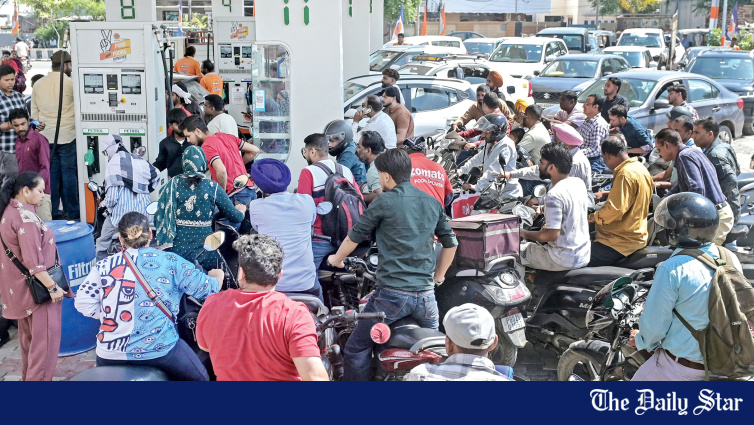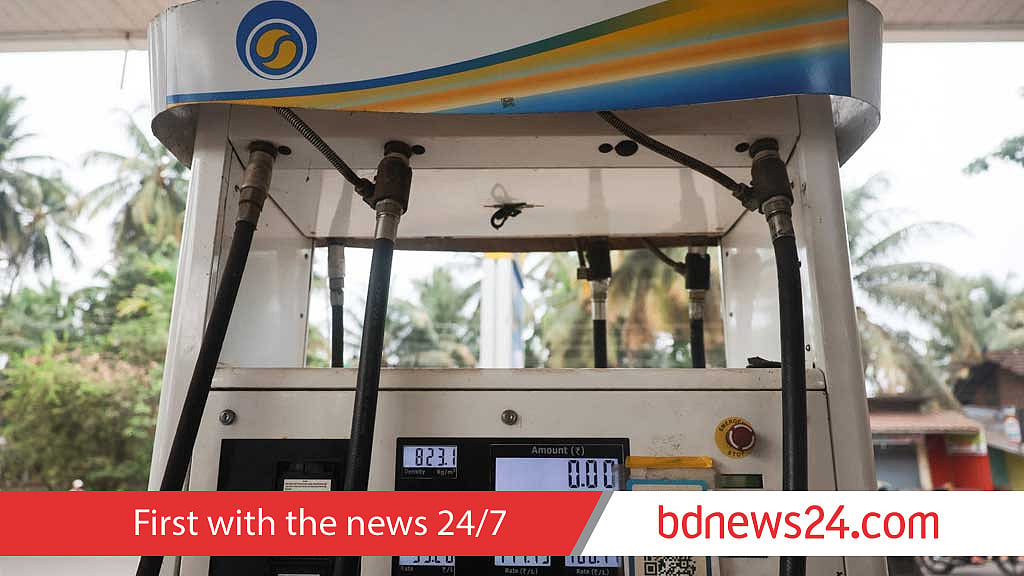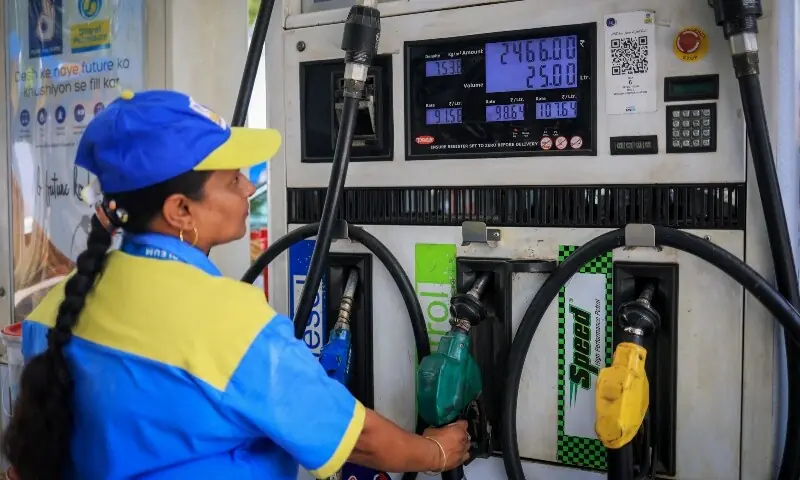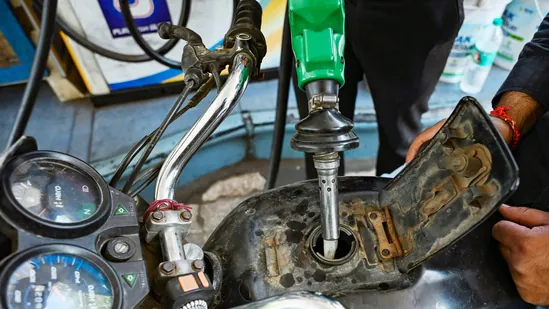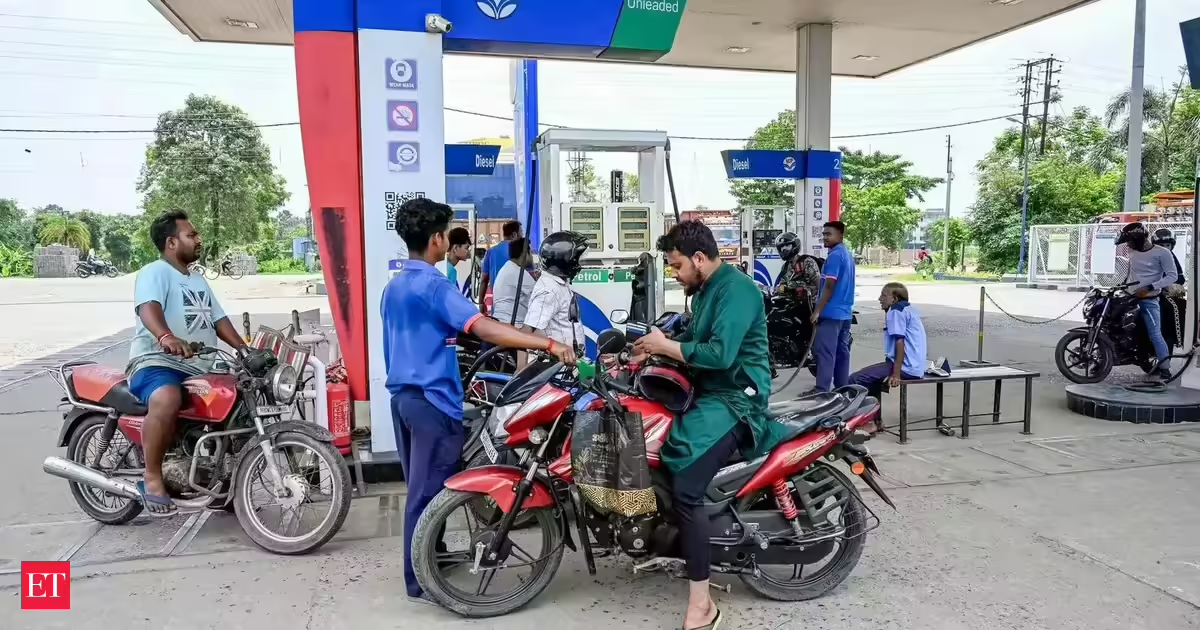
India’s government ramped up steps to curb foreign outflows and cushion the economy from the fallout of the Iran war.State-run oil refiners raised gasoline and diesel prices by more than 3% on Friday, the first increase in four years, following a surge in crude prices. On Thursday, authorities tightened rules for importing gold into the country while local government employees in the capital region of Delhi were told to work from home twice a week to save fuel.The government also temporarily banned exports of sugar to protect local supplies. And separately, Bloomberg News reported that the Reserve Bank of India proposed a significant reduction in the taxes paid by foreign investors on the nation’s bonds, another way to boost inflows.“The government is undertaking various precautionary measures to conserve foreign exchange reserves amid pressure on the rupee,” said Teresa John, economist with Nirmal Bang Securities. The measures to restrict gold imports are similar to previous periods of “external stress,” she said.Also Read | Petrol, diesel prices hiked by Rs 3/litre: Here’s what top economists have to sayIndia is the world’s third-largest importer of oil and heavily reliant on energy supplies through the Strait of Hormuz, a key waterway effectively blocked for more than two months because of the Iran war.The rupee fell past 96 to a dollar on Friday to record low, making it Asia’s worst performer so far in 2026. The currency has erased all gains made after the RBI took aggressive measures to curb speculation.India’s trade deficit widened in April to $28.38 billion, from $20.6 billion in March as the country’s import bill rose amid a spike in global energy prices. Higher oil prices have also fueled foreign-exchange outflows from India, which imports about 90% of its energy needs.The latest moves are part of emergency steps the government is implementing to cushion the impact of the war on the economy. Prime Minister Narendra Modi, whose party won a landslide in recent state elections, warned the public on the weekend that austerity measures were coming. Since then, top officials have been laying the groundwork for fuel price hikes.Also Read | Rupee slides to record low, crosses 96 vs USD for the first timeOil Minister Hardeep Singh Puri said Tuesday that Indian refiners are incurring substantial losses by keeping retail fuel prices unchanged. On the same day, Reserve Bank of India Governor Sanjay Malhotra said at an event in Switzerland “it is just a matter of time” before some of the higher costs of fuel will be passed on to consumers.“We believe that if crude and liquefied petroleum gas prices remain elevated for elongated periods, government might take further retail petrol and diesel price hike,” said Radhika Piplani, an economist with Motilal Oswal Financial Services.Foreign investor outflows so far this year have already exceeded last year’s record $19 billion. Sustained outflows, coupled with a swelling import bill as oil tops $100 a barrel, could push India toward an unprecedented third straight year of balance of payments deficit, economists have said.“Now we have come to a situation where curbing non-essential imports have become a necessity,” said Gaurav Kapur, an economist with IndusInd Bank Ltd. “Whenever such a situation arises, curbing gold import is always at the top of the list.”Gold and consumer electronics are considered non-essential imports, officials have said, and restricting purchases would help to preserve foreign currency.The emergency measures are not unprecedented. Several countries in Asia, such as Vietnam and Thailand, have asked citizens to work from home to save on fuel and preserve dollars.While consumer inflation in India remains below the central bank’s 4% target, data this week showed price pressures are growing as energy costs soar. The wholesale price index surged 8.3% in April from a year earlier, up from 3.88% in March.The RBI has kept interest rates unchanged at 5.25% so far this year, although many economists expect it would need to tighten in coming months. Foreign exchange reserves slid to $690.7 billion in May from a peak of $728 billion in March.“We expect a status quo by the RBI in the next policy but subsequently rate hikes will be back on the table in the second half of the year,” Motilal Oswal’s Piplani said.Bloomberg
India moves to buffer economy against Iran war fallout
India is taking urgent steps to protect its economy. Fuel prices have risen. Gold imports are restricted. Local government staff in Delhi are working from home to save fuel. Sugar exports are temporarily banned. These actions aim to conserve foreign exchange reserves amid global pressures. The nation faces challenges from rising oil prices and foreign investor outflows.
698 words~3 min read