Scientists have uncovered a real mystery hidden deep beneath the islands themselves.
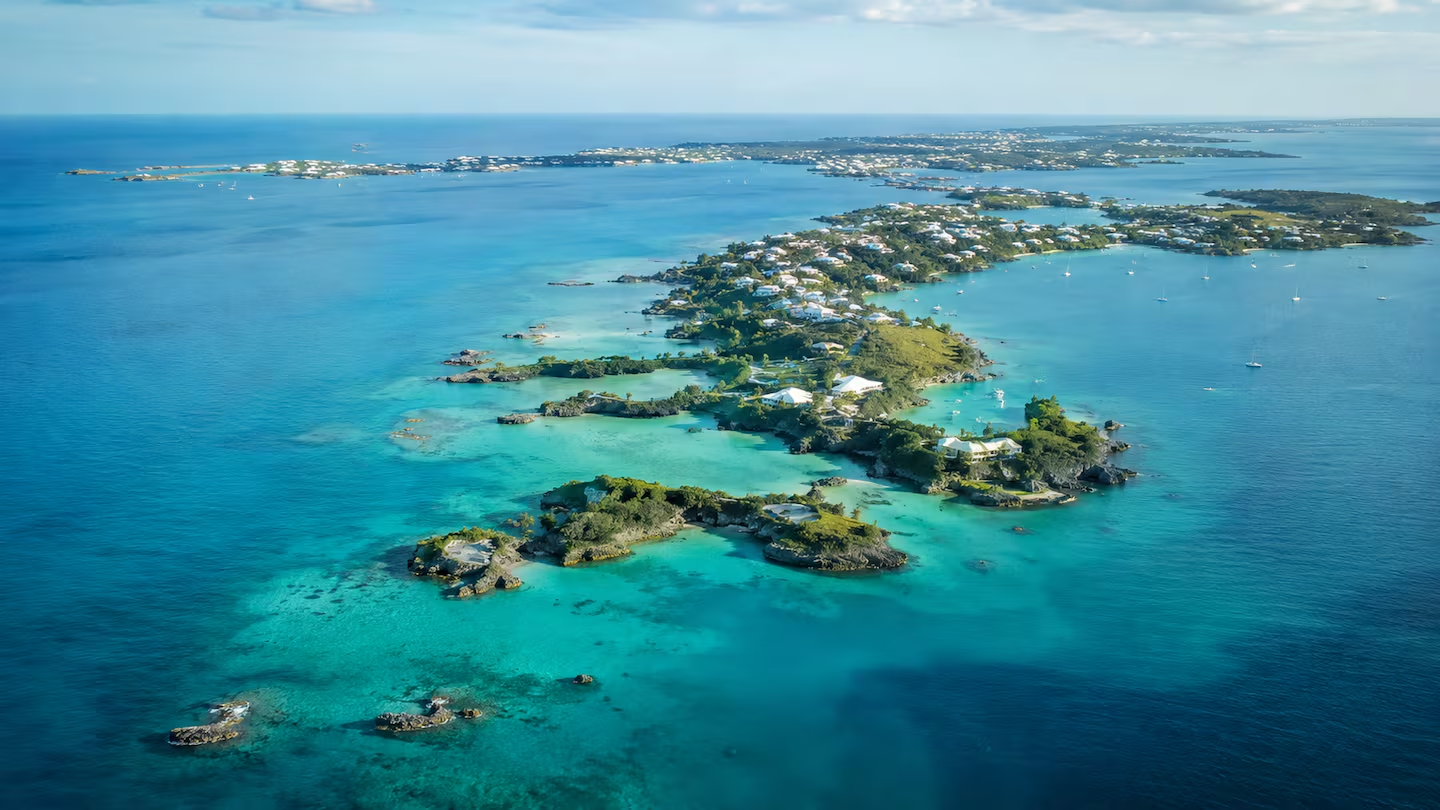
For decades, geologists have been baffled by one of the Atlantic Ocean's most persistent puzzles: why does Bermuda sit so high above the surrounding ocean floor, even though its volcanoes have been silent for more than 30 million years? Now, a team of American scientists believes it finally has the answer, and it lies hidden deep beneath the island itself.
New research led by William Frazer, a seismologist at Carnegie Science, and Jeffrey Park of Yale University reveals that Bermuda is supported by a type of geological structure unlike anything seen elsewhere on Earth, according to Carnegie Institution for Science.
Most volcanic island chains, such as Hawaii, form above what scientists call a mantle plume: a column of hot, buoyant rock that rises from deep within Earth's mantle. As this material pushes upward, it creates volcanoes and causes the seafloor to bulge. Over time, as tectonic plates move away from the plume and volcanic activity fades, these swells typically sink back down. But not beneath Bermuda.
Bermuda still sits atop a broad swell, standing roughly 1,600 feet higher than the surrounding ocean floor, reports Carnegie Science.