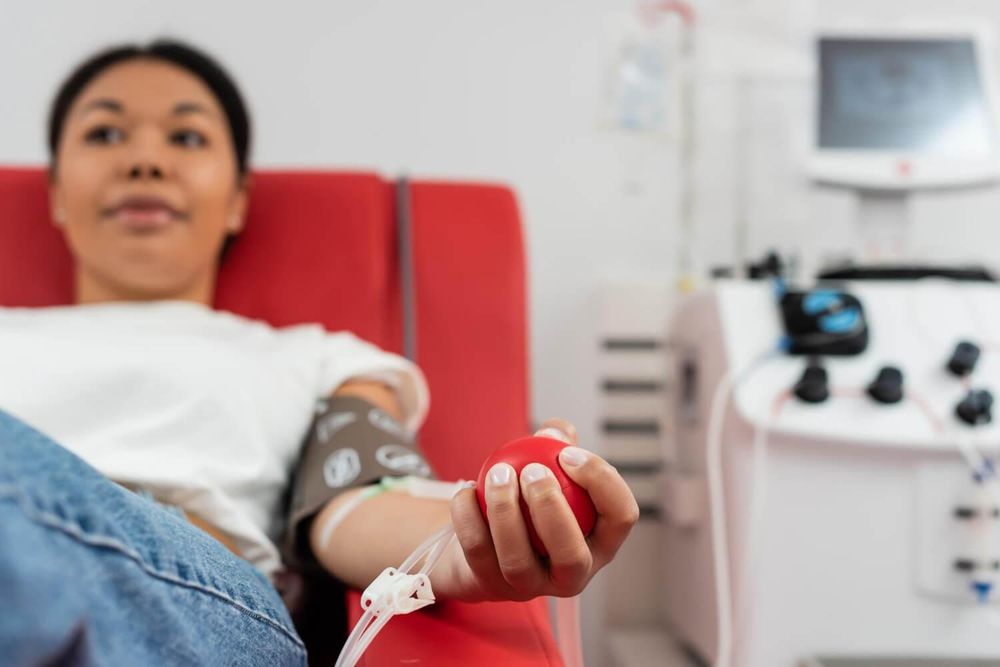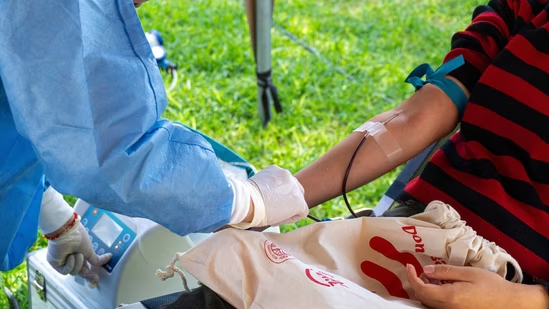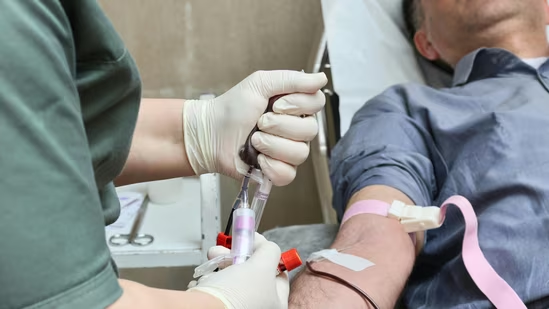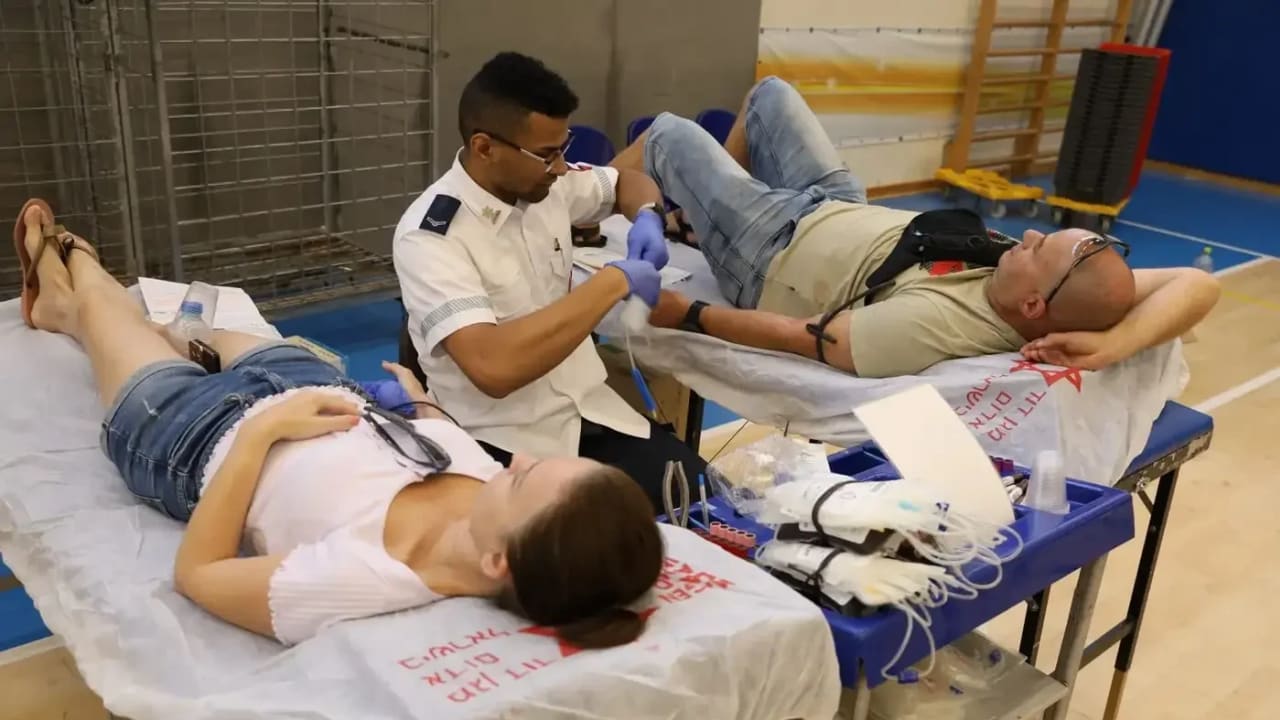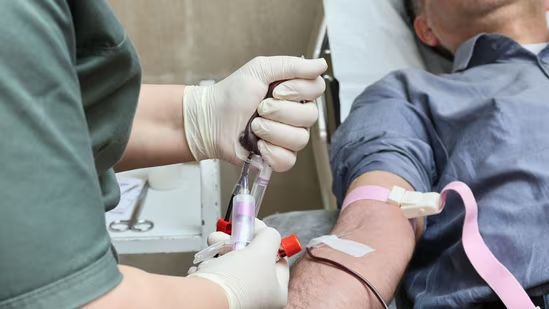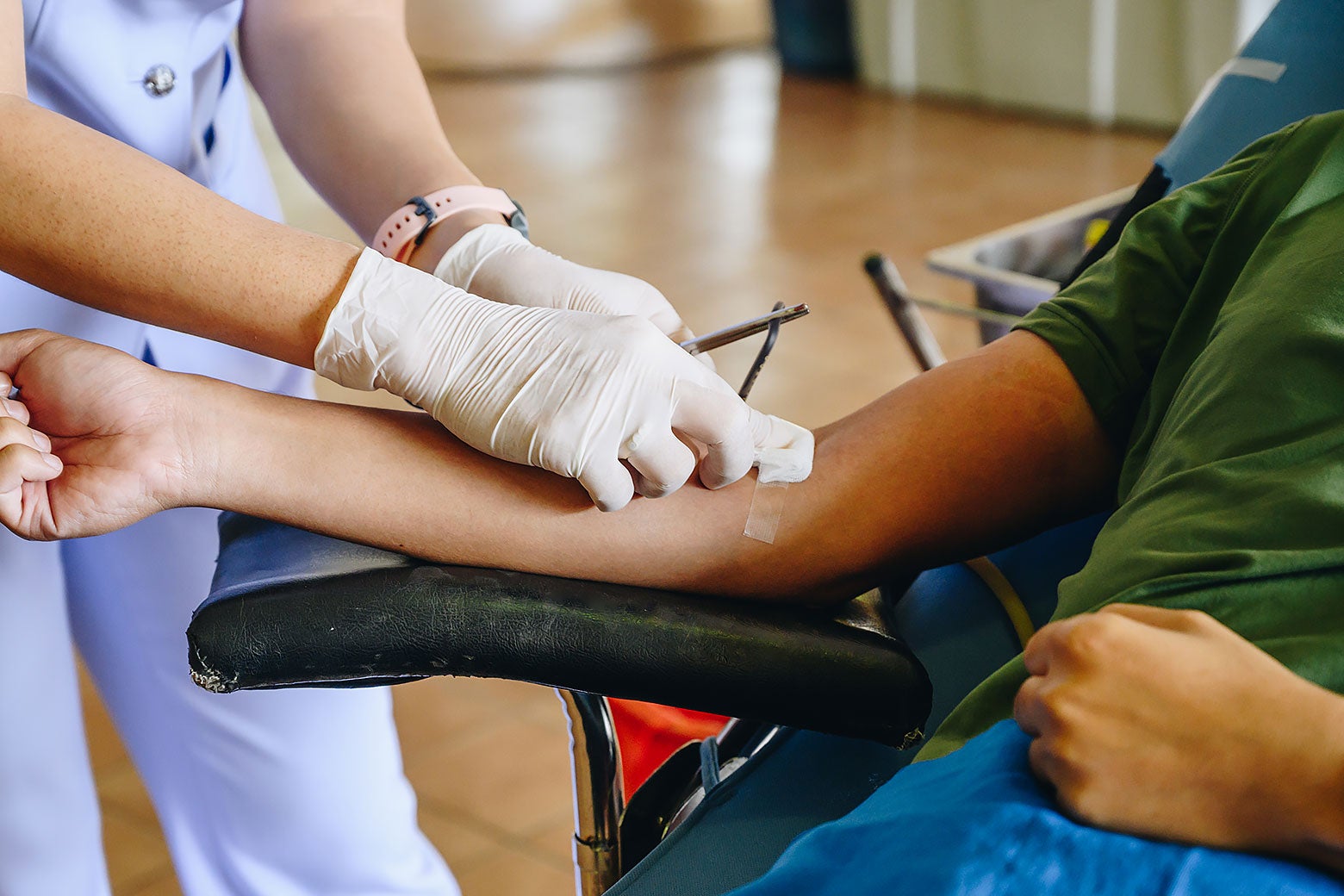
Every eight weeks or so, I head to the blood donation center in Providence bright and early. I check in and get my vitals taken (iron levels, blood pressure, and pulse) as the nurse looks over a questionnaire I’ve filled out to ensure my eligibility. Then I’m led to a chair, where I lie back. A needle goes into my arm, and the blood goes out of my vein through a tube. In the 10 short minutes, it fills a pint-size bag. During that time, I alternate between watching whatever the nurses have put on the TV that day and scrolling my phone. When it’s all done, I am treated to a plethora of snacks and a complimentary sticker. But I don’t snack too much, because my next stop is IHOP to gorge on pancakes.
I enjoy the excuse to treat myself, but donating blood has some other personal benefits too. For instance, research has shown that it temporarily reduces the level of PFAS—commonly known as “forever chemicals”—in the body. (The long-term benefit may not be significant, given how widespread PFAS are, but nonetheless I find this comforting.) Then there are studies that demonstrate, for men in particular, benefits for heart health. Though research is mixed, one highly referenced study from 1998 suggests that that men who donate blood just once a year have an 88 percent reduced risk for heart attack compared to non–blood donors. Another study suggests that for those with hypertension, routinely donating blood (four donations) over a year can lead to a decrease in mean blood pressure. The thought is that donating blood reduces iron levels and makes the blood less viscous; thicker blood is associated with a higher risk of blood clots and heart attacks.