The Palm House by Gwendoline Riley. New York Review Books. 224 pages. 2026.
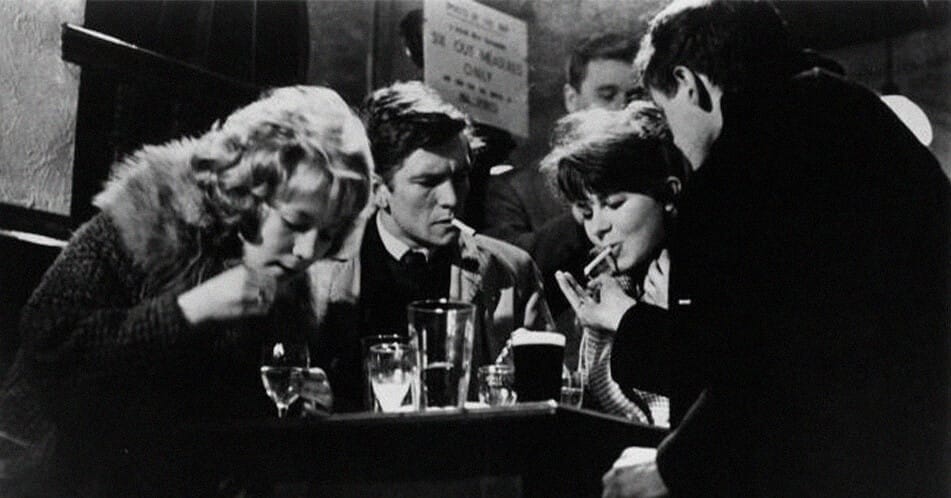
In Gwendoline Riley’s novels, the sky is skin-close. It’s always raining, has just rained, or will begin to rain soon. Her atmosphere cavorts and settles in the nerves. Her world gathers in silver leaf puddles, rain skipping like jacks, draughty cafes and darkling pubs where the literati sulk. “You realize they don’t have a clue what we are or what we mean,” says one of the wistful misfits in the heart of her new novel, The Palm House, to which his pubmate replies, “But do we want them to know? Maybe not.”
The British novelist Gwendoline Riley published her first novel at twenty-two and, in 2018, the Times Literary Supplement named her one of the twenty best British and Irish novelists. For the past twenty-five years and in six slim, diaristic novels, Riley’s narrators have prowled a damp English corner of the Earth, armed with bone-dry observations and cool numbness, characteristically soused for good measure. Riley’s “plots,” such as they are, span the uncontrived events of everyday life interlaced with recollections from the past that trundle down like loose objects falling from an attic closet. Time and time again, Riley circles around moments that must be weathered before the break of a stasis, before a surmise hardens into something like understanding: the past that rattles its cage, the nettling sigils of family, the muddled prosiness of ubiquitous drinking, the search for a place to belong. Many of her close relationships are drily observed purely through dialogue, needing no further exposition to play faintly to the tune of Peggy Lee’s “Is That All There Is?” She catalogues fleeting ordinary locales with an archivist’s touch, drawing out what makes them so common-felt, pickling them in jam jars against a fading world.