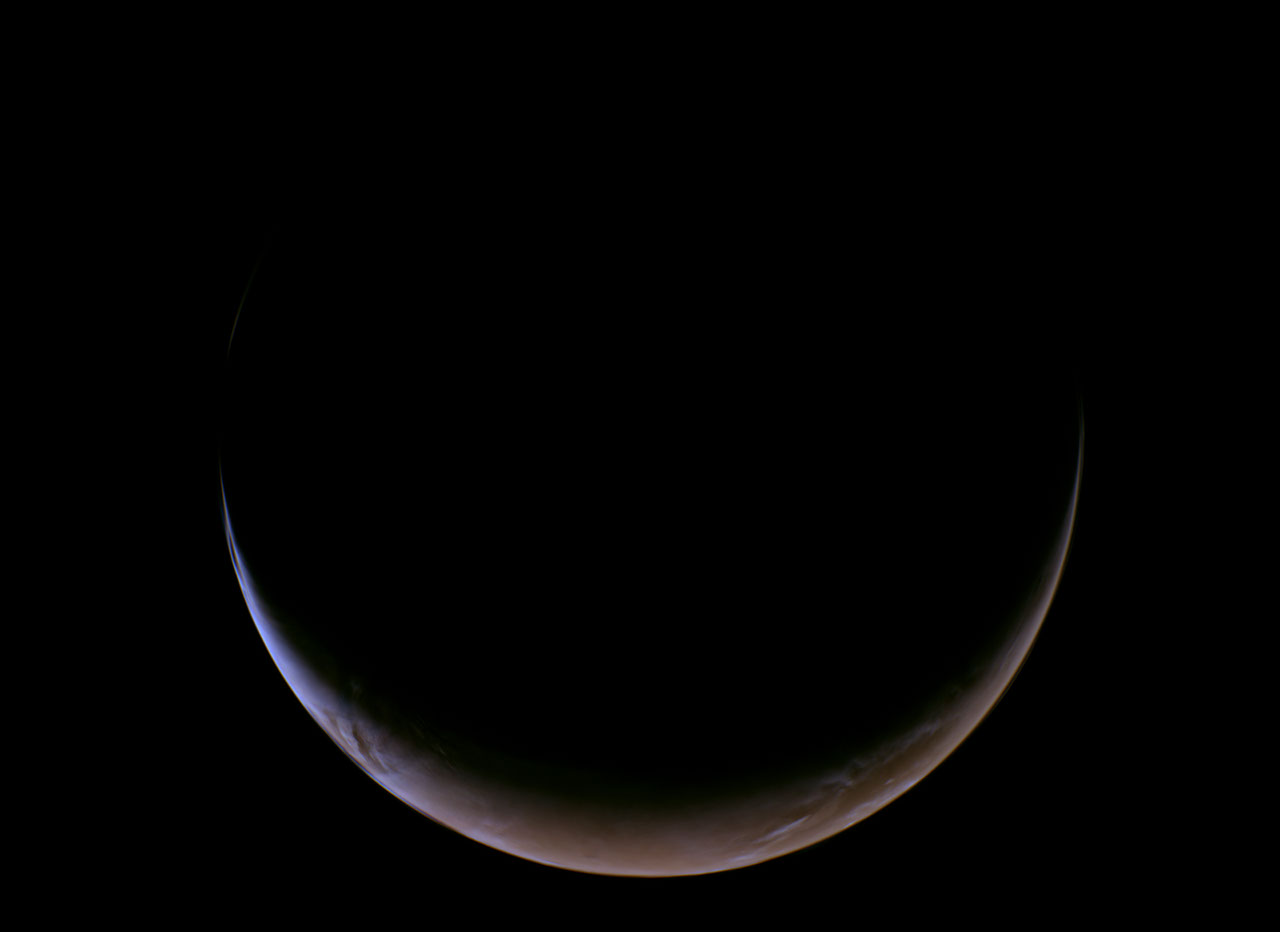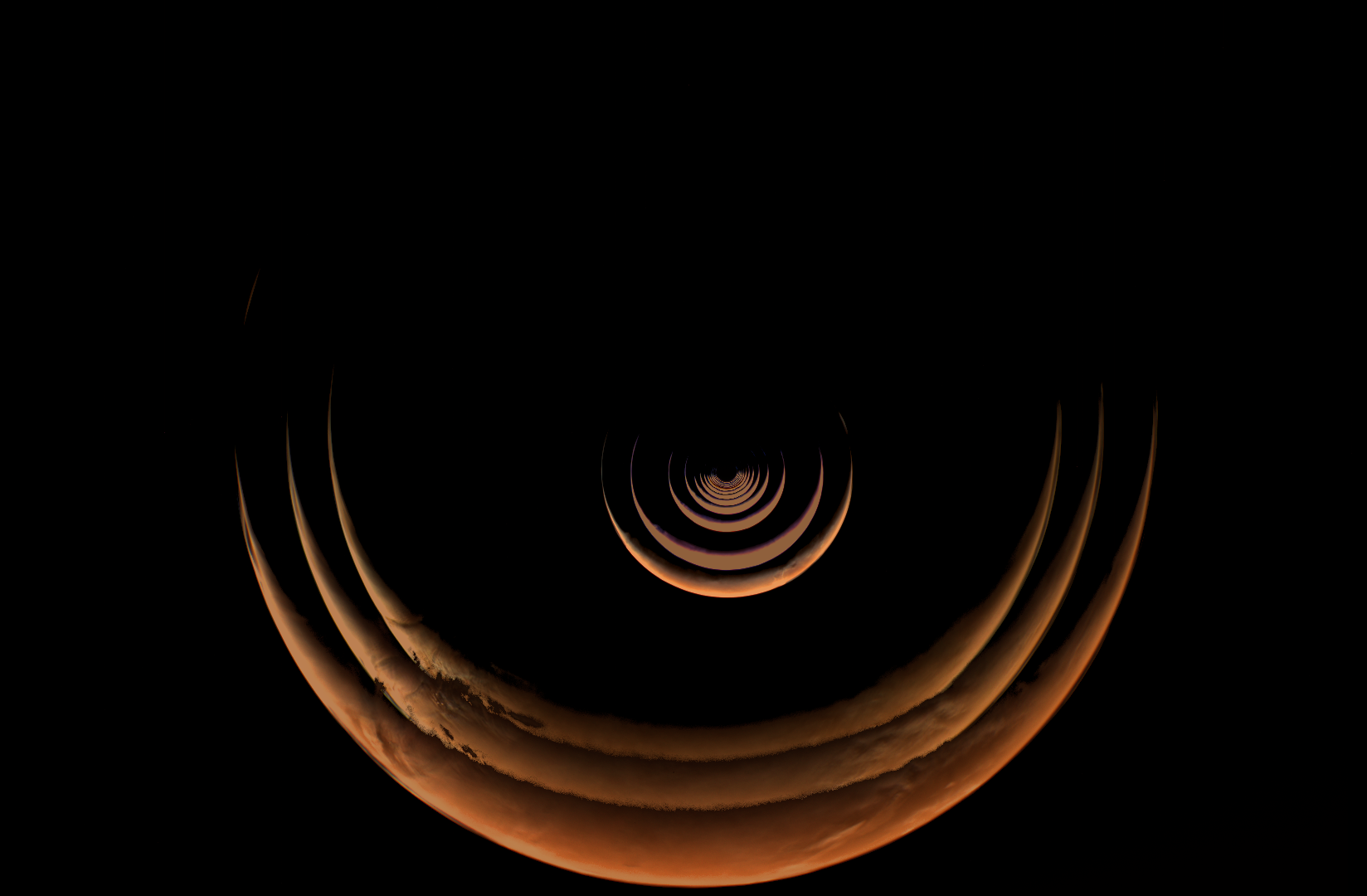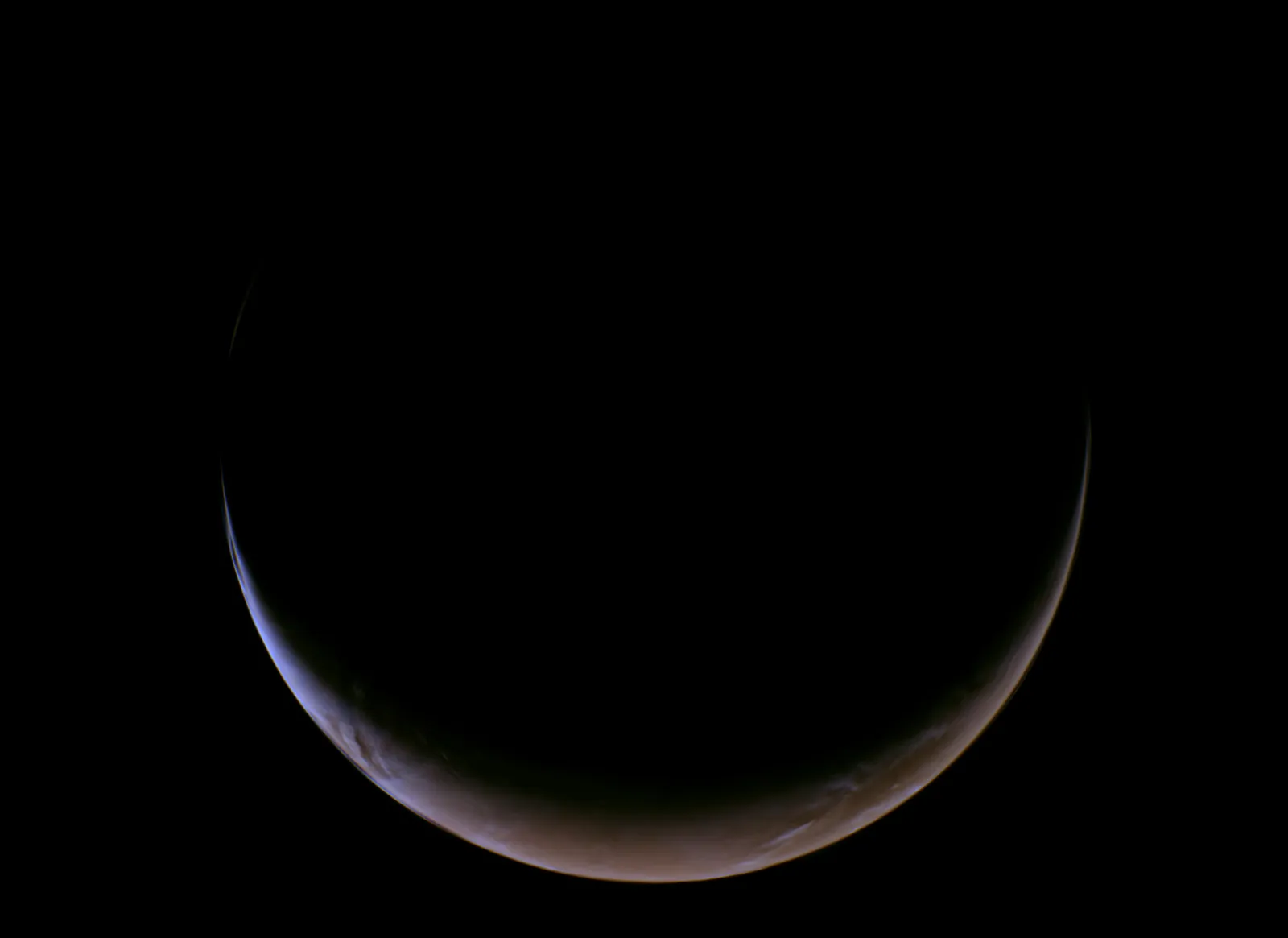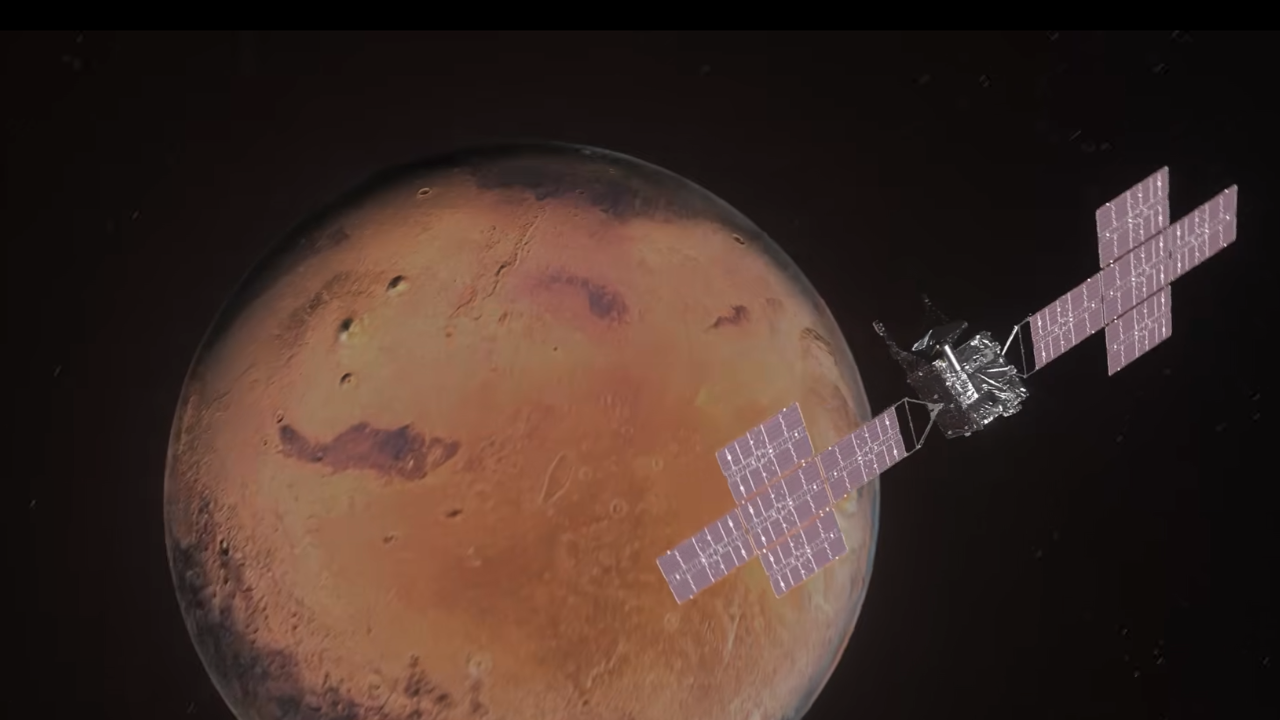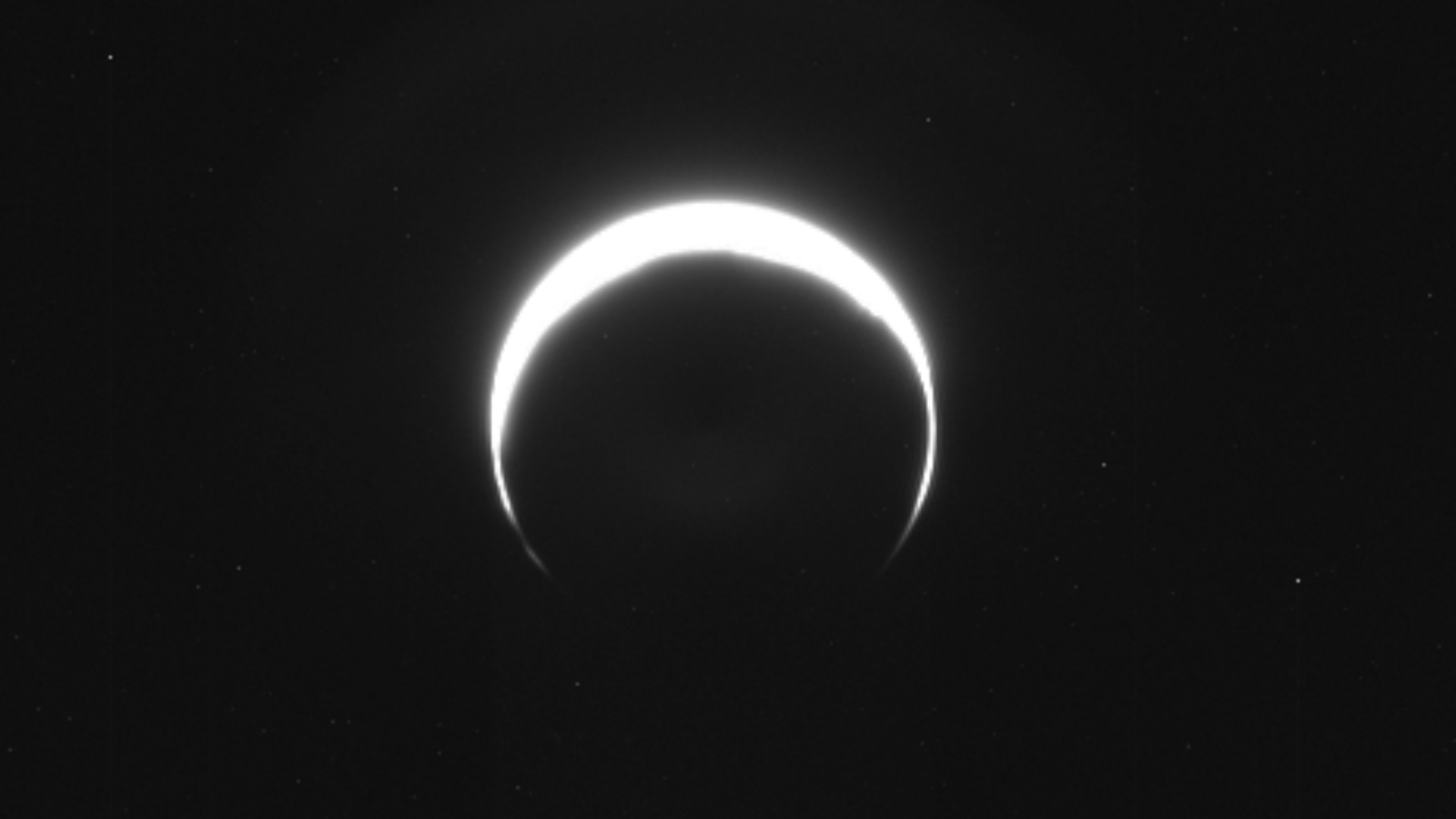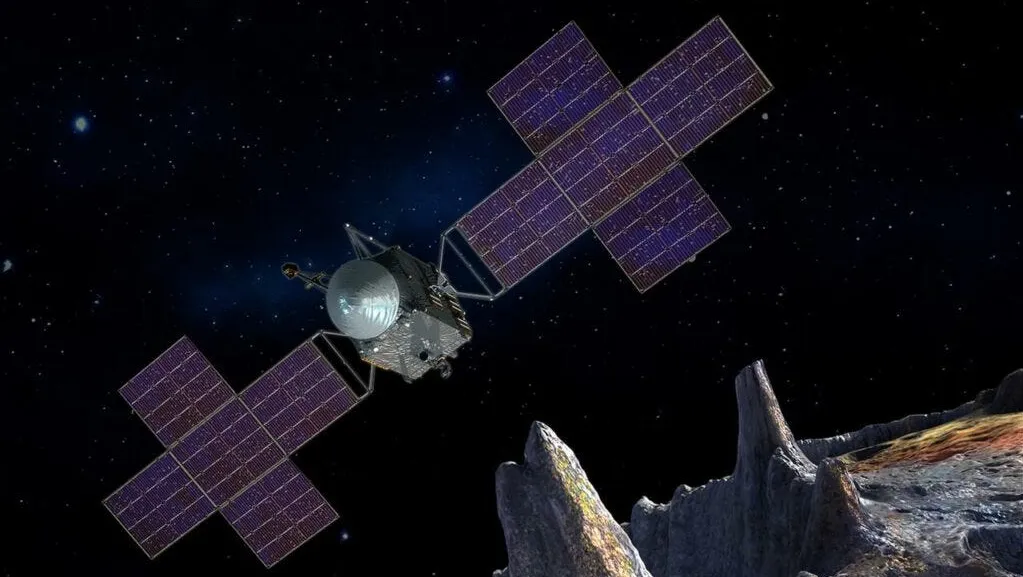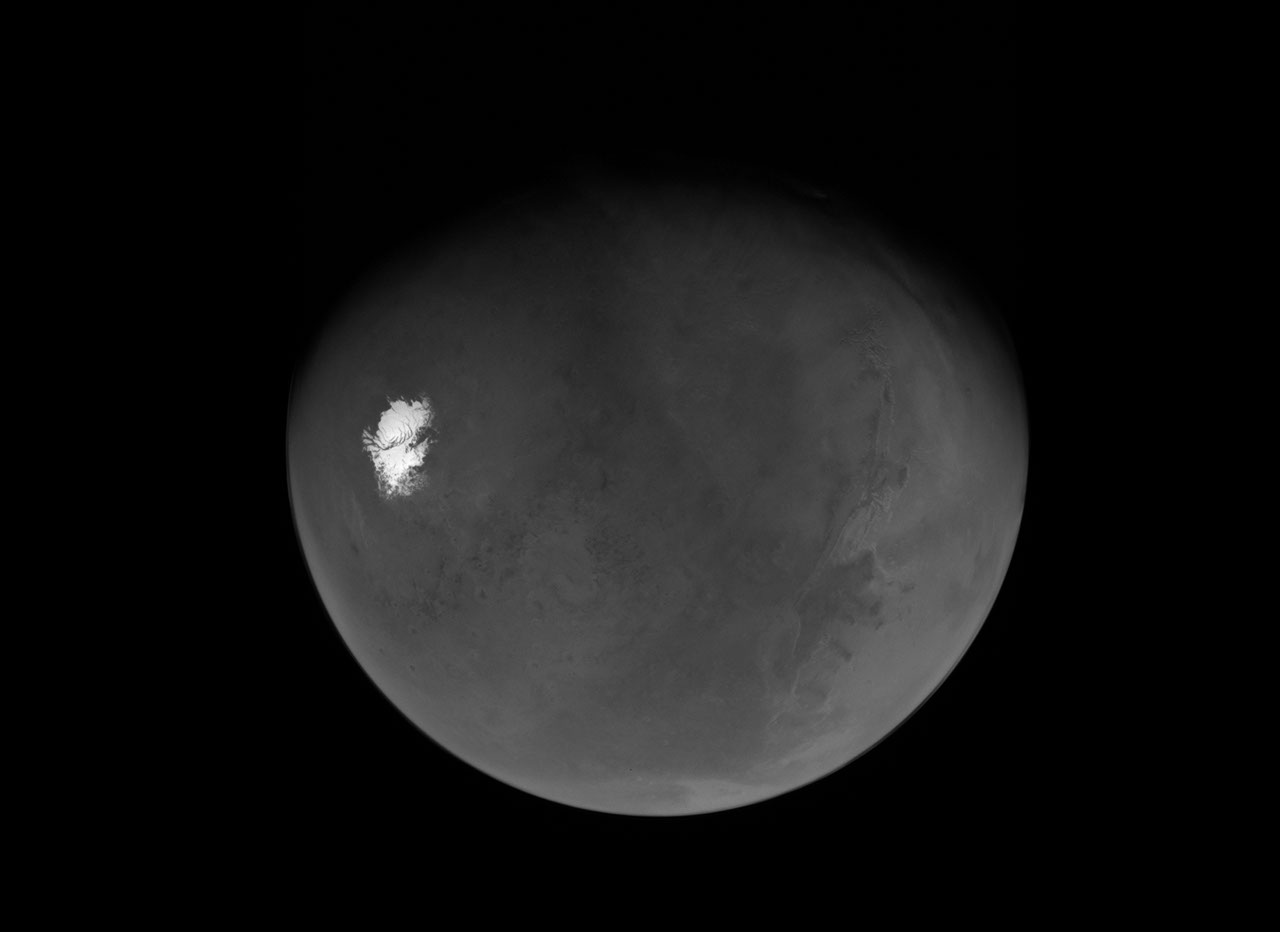
ToplineNASA’s Psyche Mission has captured a striking new view of Mars as the spacecraft approaches the planet for a critical gravity-assist maneuver on May 15. The newly released image shows Mars as a rare thin crescent, similar to a crescent moon seen from Earth. It gave scientists an opportunity to calibrate instruments ahead of the mission’s eventual arrival at metal asteroid 16 Psyche in 2029. This colorized image of Mars was captured by NASA’s Psyche mission on May 3, 2026, about 3 million miles (4.8 million kilometers) from the planet.NASA/JPL-Caltech/ASUKey FactsMars looks like a crescent because Psyche is approaching Mars from the planet’s night side, from where only a narrow sliver of sunlight illuminates the Red Planet.The images were taken on May 3 from approximately 3 million miles (4.8 million kilometers) away using the spacecraft’s multispectral imager, which captures visible light, as well as near-infrared, ultraviolet and thermal wavelengths.The gap in the crescent on the right-hand side is the planet’s icy north polar cap. Scientists believe seasonal winter clouds and hazes in the region may be limiting how atmospheric dust scatters sunlight there.Launched on Oct. 13, 2023, the NASA spacecraft is due to arrive at Psyche in mid-2029.This image of Mars was captured by NASA’s Psyche mission on May 3, 2026, about 3 million miles from the planet as the spacecraft approaches for a gravity assist on May 15. Sunlight is reflected and scattered by dust in the Martian atmosphere, creating an extended crescent around the planet.NASA/JPL-Caltech/ASUWhat Is Psyche?Discovered more than 200 years ago, Psyche is the largest known metallic asteroid, measuring about 140 miles (225 kilometers) across, making it the tenth-most massive object in the asteroid belt, between Mars and Jupiter. The potato-shaped asteroid is one of nine asteroids known that appear to be made largely from metal, something astronomers know because it’s extraordinarily reflective. Its unusual composition has intrigued astronomers for decades, not only for what it reveals about how planets form, but also for its metal content. It was the 16th asteroid ever discovered (hence its name) in 1862.Gravity Assist Will Accelerate SpacecraftDuring the close approach on May 15, the Psyche spacecraft will pass roughly 2,800 miles (4,500 kilometers) above the Martian surface while traveling at about 12,333 mph (19,848 kph). Flight engineers at NASA’s Jet Propulsion Laboratory will use the planet’s gravity to increase the spacecraft’s speed and alter its orbital path toward asteroid Psyche without consuming significant amounts of propellant. That’s crucial because Psyche relies on solar-electric propulsion powered by xenon gas. The gravity assist allows the spacecraft to conserve fuel while continuing its years-long journey into the asteroid belt.This artist's concept depicts the 140-mile-wide (226-kilometer-wide) asteroid Psyche, which lies in the main asteroid belt between Mars and Jupiter. Psyche is the focal point of NASA's mission of the same name. The Psyche spacecraft is set to launch in August 2022 and arrive at the asteroid in 2026, where it will orbit for 21 months and investigate its composition.NASA/JPL-Caltech/ASUWhat Psyche Will DoAfter arriving at asteroid 16 Psyche, the spacecraft will enter a series of four planned orbital phases at progressively lower altitudes. It will initially orbit about 440 miles above the surface for roughly two months while mission engineers study the asteroid’s shape and gravitational field. Each closer orbit will allow the spacecraft’s instruments to capture increasingly detailed measurements, maps, and high-resolution images, enabling its surface to be mapped in 3D. Mission planners ultimately hope to bring the spacecraft as close as 40 miles above Psyche’s surface. The mission is currently scheduled to conclude in Nov. 2031.Further ReadingForbesNASA’s Psyche Mission Faces New Mystery As It Nears Mars FlybyBy Jamie CarterForbesWhat Is That Bright Star In The West After Sunset?By Jamie CarterForbesIt’s 100 Days Until A Total Solar Eclipse. Here’s How To See ItBy Jamie Carter
NASA Spacecraft Captures Rare Crescent Mars Ahead Of Friday’s Flyby
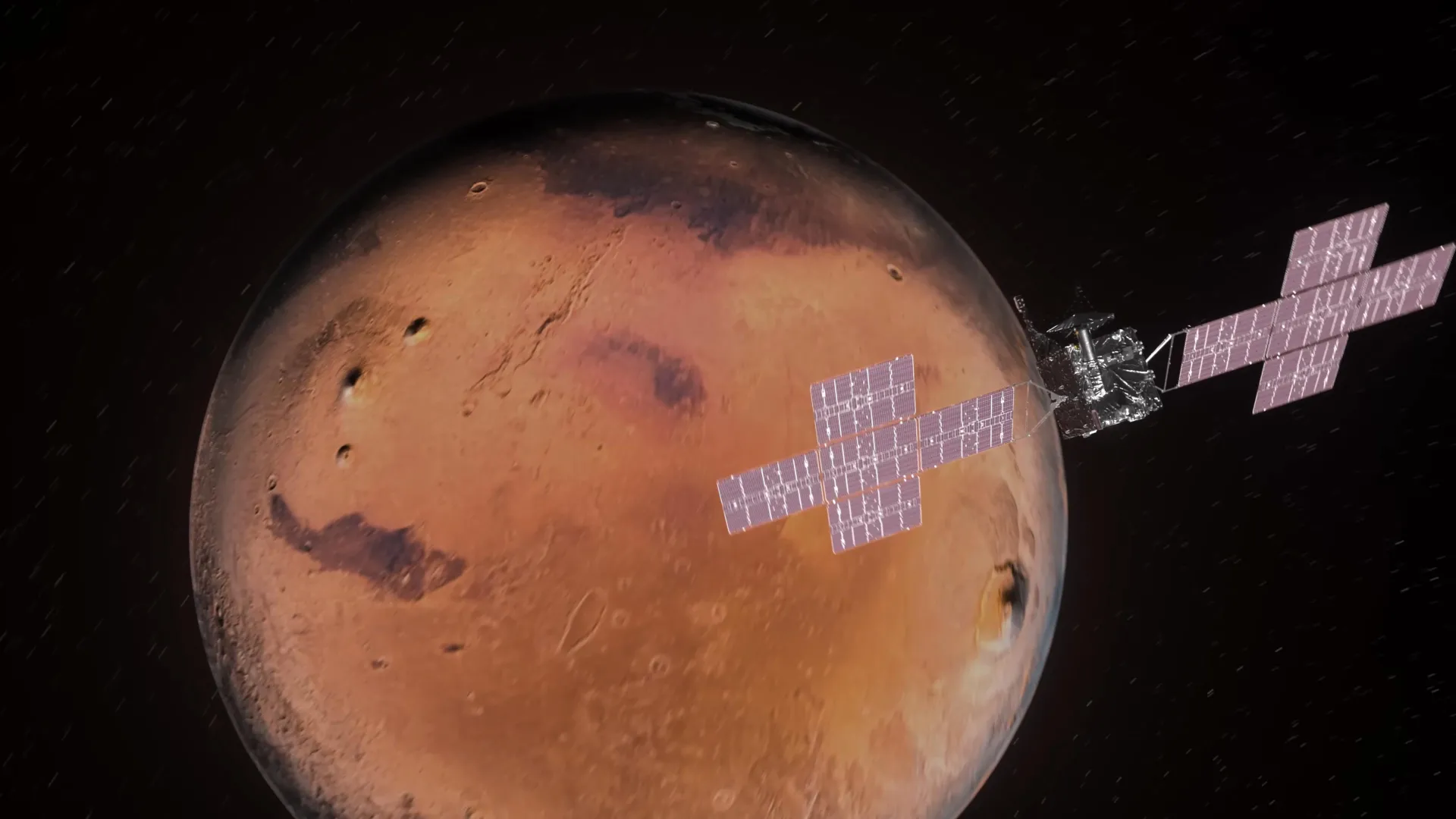
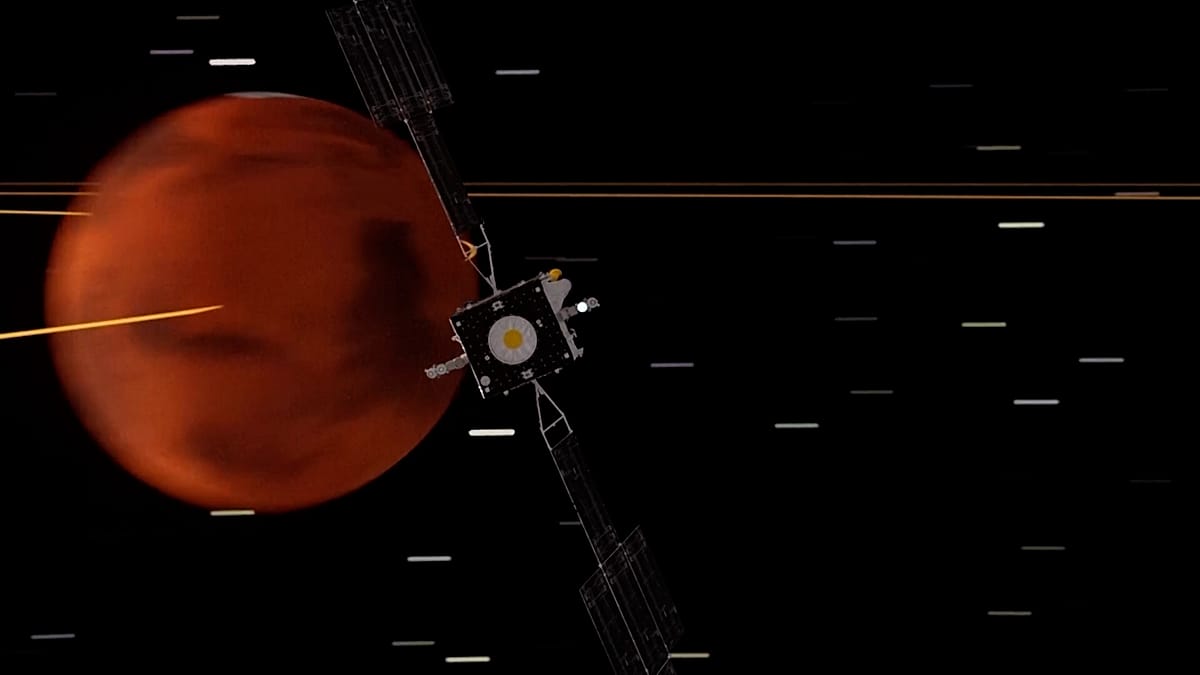
NASA’s Psyche spacecraft will fly past Mars on May 15, 2026, using the planet’s gravity to accelerate toward asteroid Psyche.
630 words~3 min read