Read The Diplomat, Know The Asia-Pacific
Military organizations must contend with operational realities, not political declarations. That’s exactly why OPCON transfer is necessary.
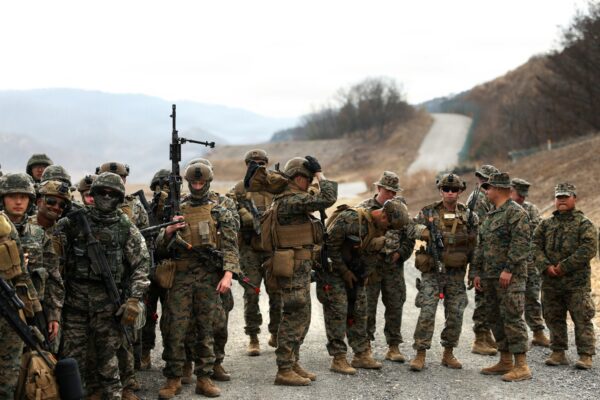
U.S. Marines with 12th Littoral Combat Team, 12th Marine Littoral Regiment, 3rd Marine Division, and Republic of Korea Marines with 1st ROK Marine Division finish training for the day during exercise Freedom Shield 26 in Pohang, South Korea, March 16, 2026.
This four-part series examines the debate over wartime operational control (OPCON) transfer from four angles: the structural origins of the impasse (Part 1), the military case for transfer (Part 2), the key design issues requiring resolution (Part 3), and a vision for the alliance after transfer (Part 4). Taken together, the series charts a path toward the mature partnership that a “Koreanization of Korean defense” would require.
As Part 1 established, OPCON has long served as a sophisticated control rod sustaining alliance stability – but in a rapidly shifting security environment, that same rod is becoming a bottleneck. The ROK Armed Forces have matured into a world-class military inside the combined command structure; they have now outgrown it. Part 2 makes the case that OPCON transfer is no longer a formality: it is the strategic intersection at which U.S. global strategy and South Korea’s expanded national power converge.