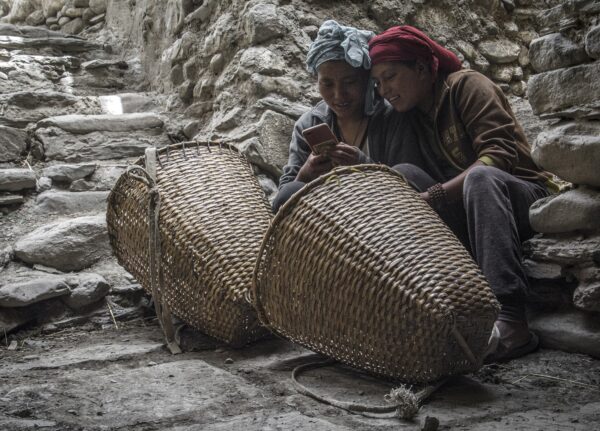
For 23-year-old law student Narayan Rokaya, staying connected in his village of Lha means stepping back in time. While Nepal’s cities have long moved past the sluggish “E” networks that plague his phone, Rokaya must walk to the local ward office and wait in line with neighbors just to access the internet. “Even for basic studying, we have to wait our turn,” he said, noting that daily queues are a reality for anyone hoping to communicate with family abroad.
Laxmi Joshi, 21, a student from Dogadakedar Rural Municipality–2 in Baitadi, technically has internet access, but the connection shifts unpredictably between 2G, 3G, and occasionally 4G, disappearing altogether during power cuts or bad weather. “I have to walk 30–35 minutes just to get a proper signal. The internet is unreliable here – not indoors, not in the rain, not when the electricity goes out,” Joshi explained.
Their experiences reflect a broader pattern: for many Nepalis, access to the internet is either unavailable or too inconsistent to rely on.
This gap stands in sharp contrast to Nepal’s ambitious IT Decade (2024–2034), which targets 3,000 billion Nepali rupees in ICT exports and 500,000 direct jobs. While the vision looks outward, millions within the country continue to navigate a digital landscape that was never built with them in mind.