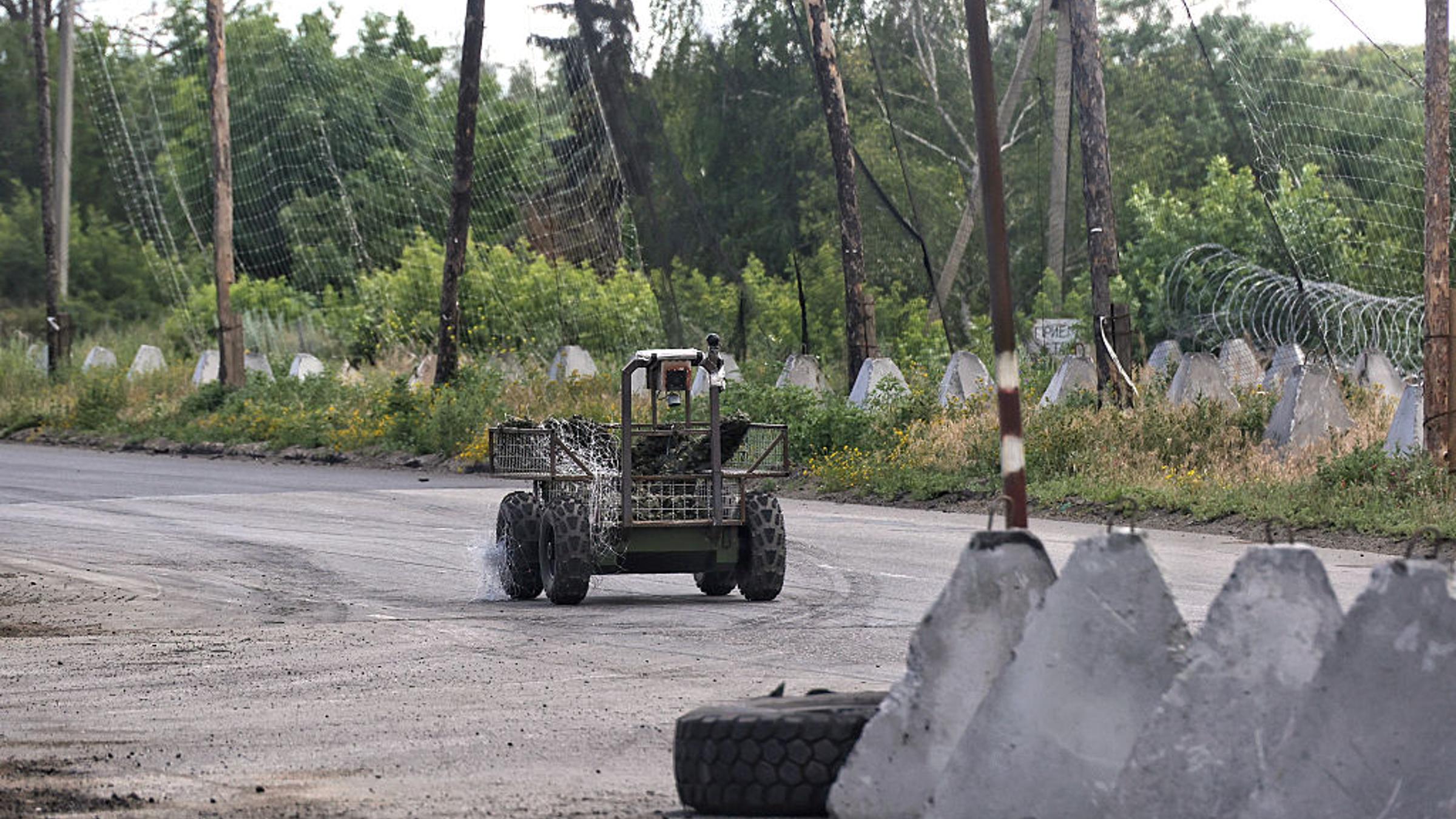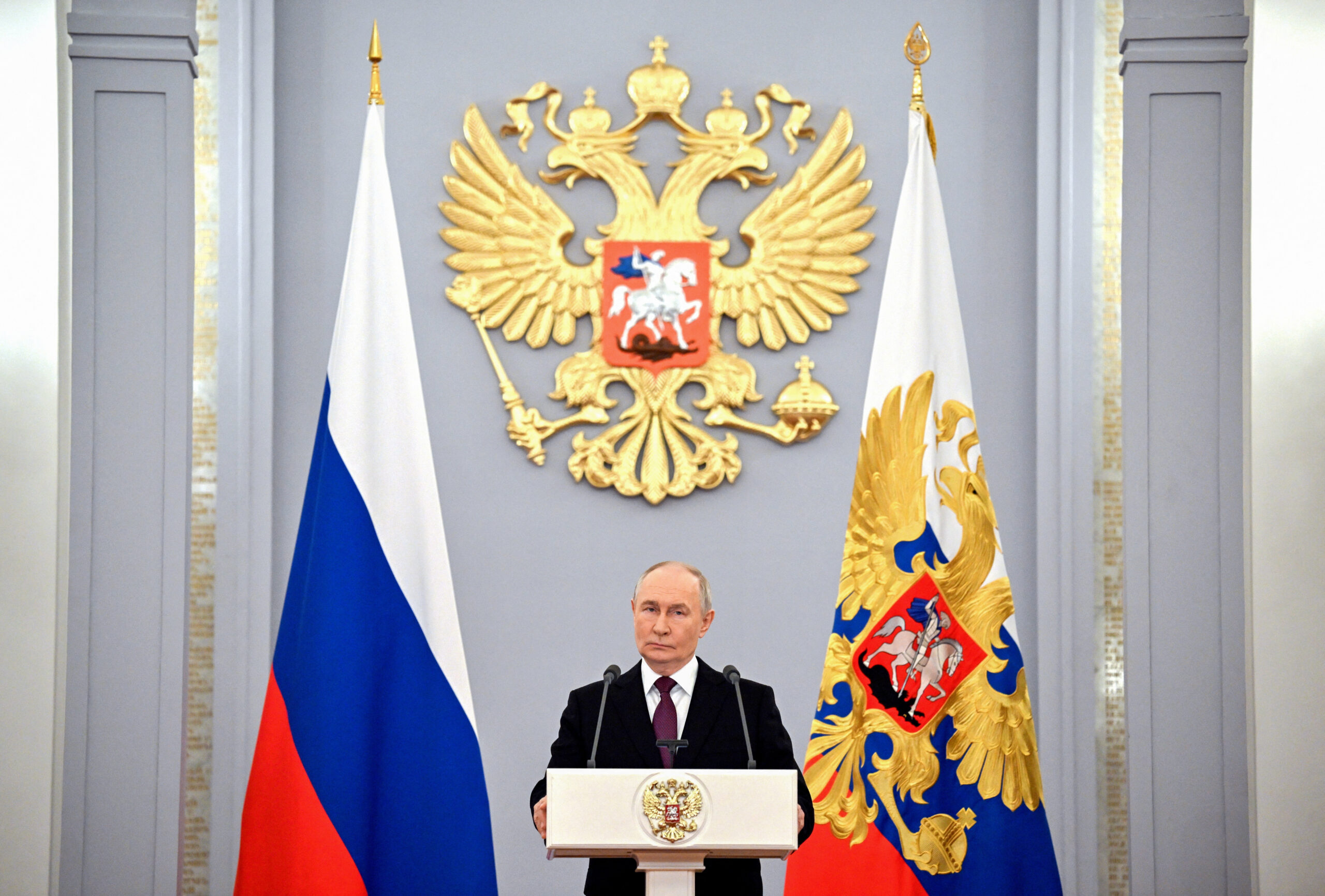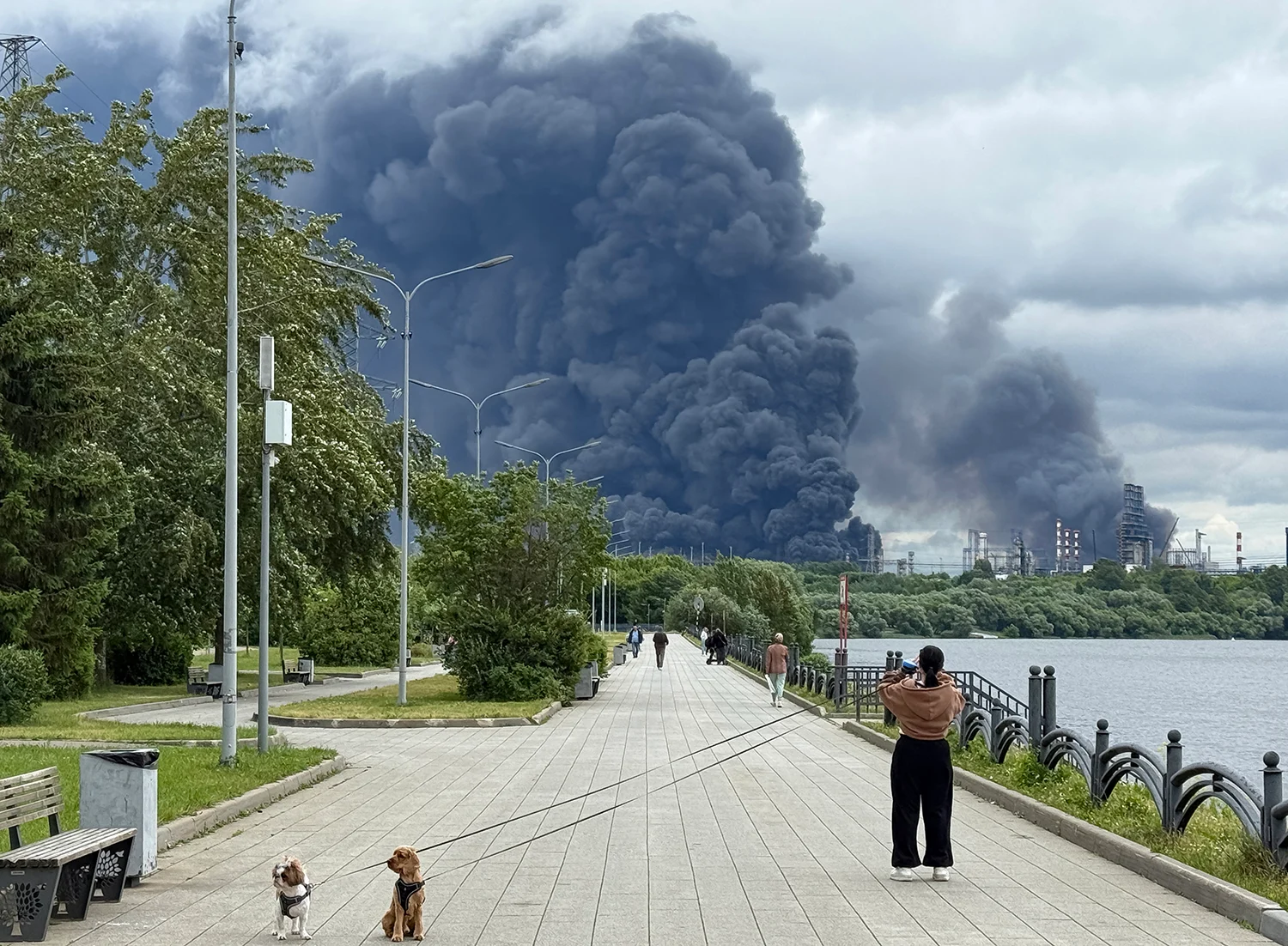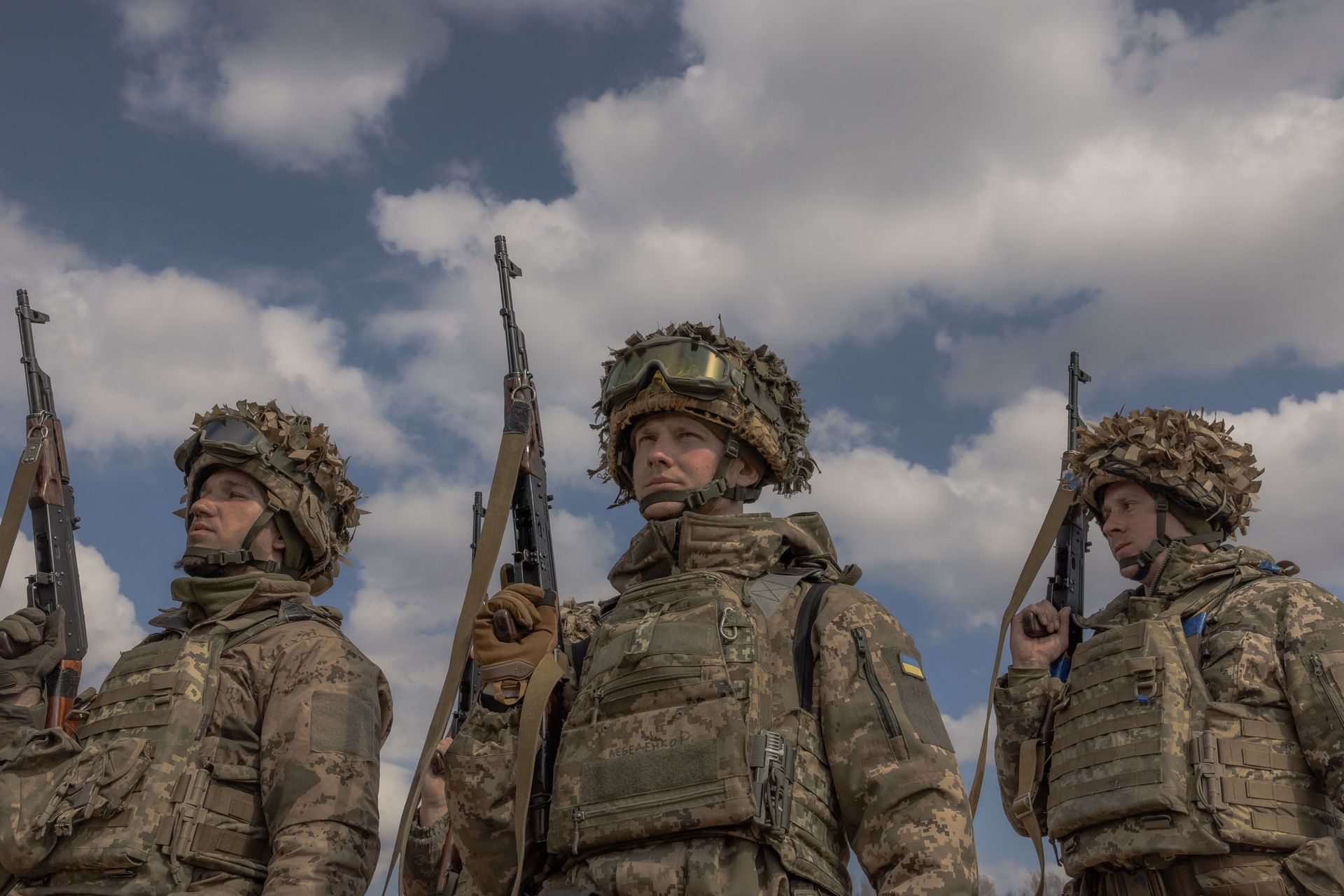
Ukrainian recruits of Air Assault Forces complete basic military training at a training center in an undisclosed location in Ukraine on March 27, 2026. (Roman Pilipey / AFP / Getty Images)Who is winning?Since the launch of Russia's full-scale invasion of Ukraine, the information space around the war has been obsessed with this deceptively simple question, and the constant new iterations of answers to it.In the hands of those fighting the narrative war, from officials on both sides, online cheerleaders, armchair generals, and a certain world leader who likes to talk about who has the cards, the answers differ radically, but all are delivered with consistent venom, emotion, and intellectual assuredness.Russia has already been defeated, their human wave attacks are stupid and hopeless, and at this rate they would take a century to take Ukraine, says one camp.Ukraine, with its stark disadvantage in manpower and without the backing of the United States, cannot hope to out-endure Russia, and should sign whatever peace deal now, as time is on Moscow's side, says the other.Serious analysts are more careful, speaking of positive or negative trends as they grapple with the vast complexity of such a large-scale war.As much as Moscow might be humiliated by this or that event, as long as its plan to secure victory by slowly grinding down the outnumbered Ukrainian military continues, there is no cause for celebration, they say. The upper hand will be gained by the side in whose favor the long attritional fight is running.A Ukrainian self-propelled howitzer fires at positions east of Sloviansk, Donetsk Oblast, on March 18, 2026. (Francis Farrell / The Kyiv Independent)This spring though, something strange is in the air.Ukrainian long-range strikes on Russia are going from strength to strength, maturing from single headline-grabbing explosions to the wholesale destruction of some of Russia's most important oil export and refining facilities.The tension was especially palpable ahead of Vladimir Putin's Victory Day parade in Moscow on May 9. Instead of the postcard display of Russian power that it usually tries to be, the parade has now become a liability, a lightning rod of the Kremlin's weakness and paranoia.Only a small handful of the usual stock of dictators attended the event, which was held without any military equipment, and for which a ceasefire was desperately requested from Kyiv.But far more importantly than the optics is the reality on the battlefield.Instead of picking up over spring as they usually do, Russian territorial gains have flatlined, giving Moscow next to nothing to show for its consistently high losses.But in a long war that has seen many ebbs and flows, perceptions can be deceiving, and making quick judgements can be a dangerous game.Sluggish springSince Ukraine's failed counteroffensive in 2023 and the settling in of both sides into a positional war of attrition, the winter has always been a time when the front line stabilizes.But over spring, with the warmer weather and cover from new foliage improving conditions for infantry assaults, Russian forces tend to pick up speed, exerting immense pressure across the front line and usually overwhelming the defense in at least two sectors.This year, that hasn't happened, yet.At the back end of winter, taking advantage of the cut-off of Starlink for Russian forces in the field, Ukraine counterattacked across a wide front in the south.These counterpunches, while not leading to a breakthrough, helped upend Russian plans to continue pushing west towards the city of Zaporizhzhia.Meanwhile further east, Russian forces have stopped and started in Donetsk Oblast, but have fallen short of creating anything like the new operational threats that developed in spring 2024 and 2025.A major effort to push northwest of Pokrovsk has bogged down in the village of Hryshyne, advances east of Sloviansk have slowed, while the city of Kostiantynivka, the southernmost of Ukraine's "fortress belt" of cities, is doing its job, making Russia pay a hefty price for each street and house taken.Ukrainian paratroopers head to a Mil Mi-8 helicopter to practice parachute jumps at a training ground in an unspecified location, Ukraine, on March 27, 2026. (Oleksandr Magula / Suspilne Ukraine / JSC "UA:PBC" / Global Images Ukraine / Getty Images)The front line in Kharkiv Oblast, two springs ago the site of a menacing cross-border offensive that threatened to once again bring Ukraine's second largest city into artillery range, is also stable.The numbers speak for themselves: according to monthly calculations by trusted Ukrainian mapping and analytical project DeepState, Russian forces only took 672 square kilometers, down from 827 in the same period last year. Estimates by other open-source groups are even more favorable for Ukraine.This comes despite no noticeable drop-off in the intensity of assaults along the front line, or Russian losses.Killing machineSo why are Russian forces failing to repeat their yearly spring acceleration on the battlefield?Much of the answer lies at the intersection of tactics, innovation, and politics.With a political imperative to advance and take territory, particularly the heavily fortified Donbas region, the Russian army is forced to attack almost without pause.According to Kyiv, Russia continues to be able to steadily recruit between 30-35,000 new soldiers per month, enabling Moscow to sustain its losses on the battlefield.But while the inflow of low-quality, poorly-trained contract soldiers from Russia's poorest regions — complemented by criminals, foreigners, and other coerced marginal groups — is steady for now, the environment they are entering continues to change.Since first-person view (FPV) drones began to arrive on the battlefield in large numbers toward the end of 2023, the ability to strike anything that moves with a precision strike 10 times cheaper than an artillery shell – and to do so within minutes – has driven a paradigm shift in warfare.As of 2026, around 80% of all casualties on both sides are caused by drones.Massing forces of any kind — whether armored vehicles or dismounted infantry — near the front line has become suicidal.With equipment left in stocks to burn, Russia still attempts mechanized assaults every now and again, usually under the cover of bad weather. Almost always, they end in failure, with a good result being at least some infantry dismounted before the armor is quickly immobilized and destroyed.
Who is winning the war in Ukraine?
Who is winning? Since the launch of Russia's full-scale invasion of Ukraine, the information space around the war has been obsessed with this deceptively simple question, and the constant new iterations of answers to it. In the hands of those fighting the narrative war, from officials on both sides, online cheerleaders, armchair generals, and a certain world leader who likes to talk about who has the cards, the answers differ radically, but all are delivered with consistent venom, emotion, and
3,089 words~14 min read