In late 2019, one of the world’s largest biotechnology companies made a decision that, little did it know, would help usher forward a new era of pain management.
Amgen’s choice to mostly exit brain drug research wasn’t out of the blue. Neuroscience, even in the labyrinthine world of drugmaking, is notoriously risky and expensive, and its challenges have convinced many developers their dollars would be better spent elsewhere. After Amgen joined that list, some of its laid off staff found new roles just down the street from the company’s Los Angeles-area headquarters, at a startup formed by venture capitalists at Westlake BioPartners.
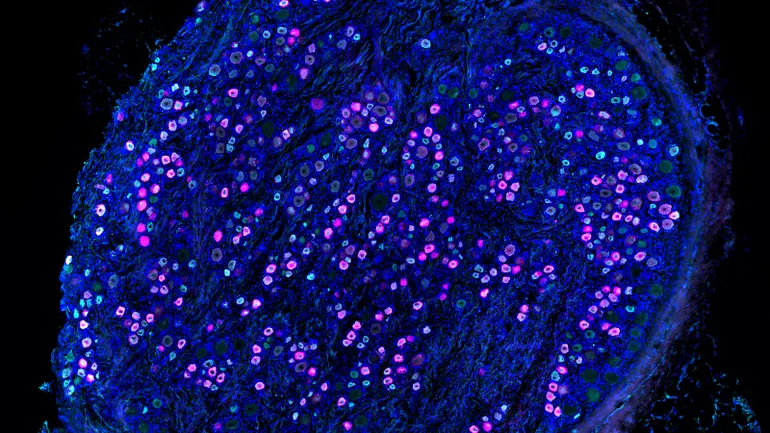
For Westlake, the moment was right to jump into a branch of science three decades in the making, where researchers had uncovered that certain nanoscopic tubes in the outer layers of cells play a key role in pain. These “sodium ion channels” are tricky to study and even harder to control. But years of slow, grueling experimentation was finally paying off.
Pain, being a virtually universal human experience, has long been a white whale opportunity for drug hunters. If anyone could find a strong analgesic that’s safer than opioids, the social and financial payoffs would be massive. In other words, a smart bet for Westlake — which, by itself and with relatively little funding, got that startup, Latigo Biotherapeutics, off the ground in 2020.