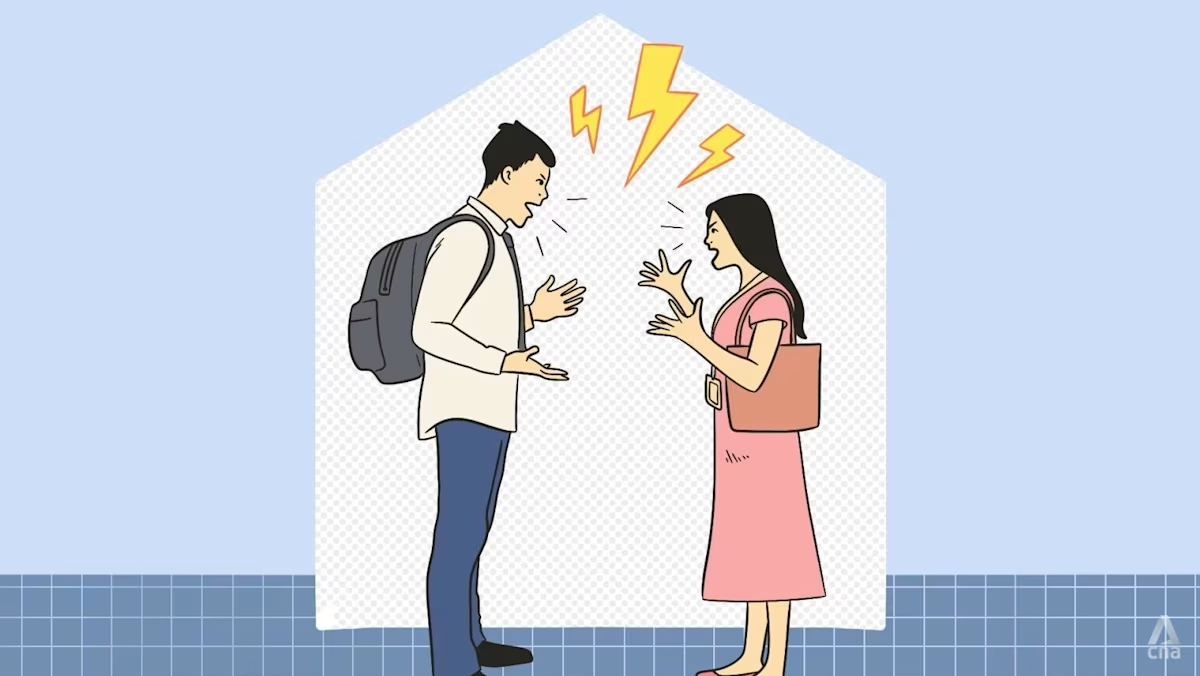
Picture this: You're in a car with your significant other after a long day at the office for both and all you've talked about since dinner is your partner's problems at work. It’s not that you don't care. You do. But by the third rehash, everything starts to grate and you think to yourself: "Can we just talk about something else? I'm starting to hate your job." During our busiest work seasons, this is definitely a scene right out of my relationship. And from conversations with friends, it seems I'm not alone.When I'm racing to finish a long news feature or during periods such as the General Election, my world shrinks to work. My boyfriend, who works at a startup, knows the same tunnel vision well, especially with his long hours, late-night launches, and being on standby for emergencies.In some ways, I've felt lucky that we're both busy because there's less guilt about postponed dinners or cancelled plans. But it's not just a matter of lacking time for non-work matters. In conversations with peers, I've heard how a partner's job can also spark tension because no one wants to see their partner suffer in a work environment that seems to treat them poorly.
Relationship counsellors I spoke to said that frustrations over a partner's working life are common, especially in Singapore, where dual-income households are the norm. Mr Thomas Tsang, a counsellor at Eagles Mediation & Counselling Centre, said that many people here work long hours, which can exhaust couples and leave them with less emotional energy for each other. "Most couples I work with are working couples, which reflects a common norm in Singapore's affluent society. As such, relationship conflicts often revolve around work-related factors such as finances, material expectations, quality of living and perceived status." Dissatisfaction and demands arising from work-related stress are "rarely linear or simplistic", he added, but these can intersect with various issues such as unequal earning power or longer hours for one party due to higher rank or demands at work. So what do you do when you want to respect your partner's career and ambition, but start resenting what their job seems to take from the relationship?HOW WORK SHOWS UP IN RELATIONSHIPS Work is one of the most common sources of relationship conflict, given how it touches almost every dimension of a couple's life together, one psychologist said. Ms Ooi Sze Jin, a registered psychologist and founder of A Kind Place, also said that for younger couples planning a future, work can show up in conflicts over financial expectations tied to earning power and spending habits. Or they may crop up as misaligned timelines for milestones such as housing, marriage and children, she added.Some couples might even feel like they are getting "secondhand stress" from their partner's work situation, especially when partners have different work demands. "One might work nine to five, another might do overtime or shift work. The one who works more gets home tired and carrying stress, and their partners become the default 'outlet' (for them to vent their frustrations). "This happens because their partner is the person they see most, there's an expectation of unconditional emotional support, and it feels 'safe' to unload at home," Ms Ooi said. Over time, this can become a toxic dynamic because the receiving partner may experience "compassion fatigue", start to dread conversations with their partner, feel exhausted being around them or even withdraw emotionally to protect themselves, she cautioned.