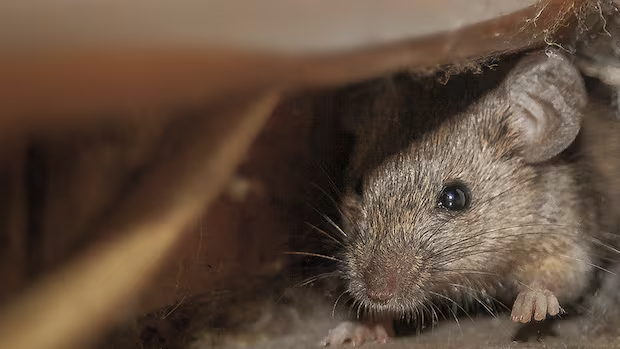
HealthAs Canadians embark on spring cleaning, public health officials are advising them to take steps to protect themselves from hantavirus carried by rats and mice.Disease can spread to humans when particles from dried rodent droppings are inhaledMaia Tustonic · CBC News · Posted: May 12, 2026 1:31 PM EDT | Last Updated: May 12Listen to this articleEstimated 3 minutesThe audio version of this article is generated by AI-based technology. Mispronunciations can occur. We are working with our partners to continually review and improve the results.In Canada, the rodents that have been known to carry hantavirus are typically found in rural and wooded areas. (Robert Corrigan/Columbia University)As Canadians embark on spring cleaning, public health officials are advising them to take steps to protect themselves from hantavirus carried by rats and mice. When clearing out sheds, cottages, cabins and garages, experts say Canadians should ensure they have the knowledge and equipment to keep safe, amid concerns following the deadly outbreak of the disease on a luxury cruise ship this month.What to look out forResidents should watch for rodent droppings and take proper precautions when cleaning for spring, according to Angela Rasmussen, a virologist at the University of Saskatchewan. "If you are doing some spring cleaning, cleaning out your lake cabin here in Canada, we actually do have mice that can transmit hantaviruses," she said. WATCH | Cases of hantavirus in North America are rare:Hantavirus spread: Doctor explains what you need to knowMay 10|Duration 5:21As Canadian passengers from the hantavirus-hit MV Hondius cruise ship are back home isolating, there are concerns about a potential spread of the illness. For The National, Erica Johnson puts viewers' questions to infectious diseases specialist Dr. Lynora Saxinger.The disease can spread to humans from dried rodent droppings, urine or saliva, according to Dr. Bonnie Henry, B.C.'s provincial health officer. Droppings and urine can be "aerosolized" when residents clean out cottages ahead of the summer, she told reporters on Monday. The strain of hantavirus seen in North America hasn’t been known to spread between people, Henry said. Where to be most carefulIn Canada, the deer mouse, white-footed mouse and red-backed vole are known hantavirus carriers, according to the Public Health Agency of Canada (PHAC). These rodents typically live in rural and wooded areas. Farmers, cottagers and homeowners are most likely to be exposed, according to an April warning released by Saskatchewan’s health authority.Which rodents carry hantavirus in Canada? Your questions answered"The risk of exposure is highest when cleaning enclosed or unused spaces where mice may have nested," Dr. Stanley Enebeli, a medical health officer at the health authority, said in the release. Residents should be cautious when cleaning sheds, cabins and garages but also trailers, RVs and old vehicles, he said. How can I protect myself while cleaning? Hantavirus prevention involves two key steps: keeping rodents away and cleaning safely, according to PHAC.To keep cottages, cabins and sheds rodent-free, residents should block rodent-sized openings, keep yards tidy, store wood away from buildings and use mousetraps, the federal health agency said. Food, water and garbage should be kept in tightly shut containers. If residents find droppings while spring cleaning, they should open doors and windows to air out the space and then leave the area for at least 30 minutes, Saskatchewan’s health authority said. Why hantavirus is giving us a 'sinking feeling,' despite experts' reassuranceVideoHantavirus spreading in Canada is unlikely: PHACBefore cleaning, residents should put on rubber gloves and wear a high-efficiency particulate air (HEPA) filtered mask, PHAC said. Droppings should not be swept or vacuumed, the agency said. Instead, residents should spray the area with a disinfectant or a mixture of one part bleach to nine parts water, and let it soak for 10 minutes.The soaked droppings can be wiped up with paper towels or a mop. When finished cleaning, residents should wash their gloves in disinfectant and hot, soapy water before taking them off, and then thoroughly wash their hands, PHAC said. Any mops used in the area should also be cleaned with disinfectant and hot, soapy water.ABOUT THE AUTHORMaia Tustonic is a journalist covering national health, business, politics and social issues for CBC News. She would love to hear your story — reach her by email at maia.tustonic@cbc.ca.
Cleaning out the shed or cottage for spring? Here’s how to protect yourself from hantavirus | CBC News
As Canadians embark on spring cleaning, public health officials are advising them to take steps to protect themselves from hantavirus carried by rats and mice.
701 words~3 min read