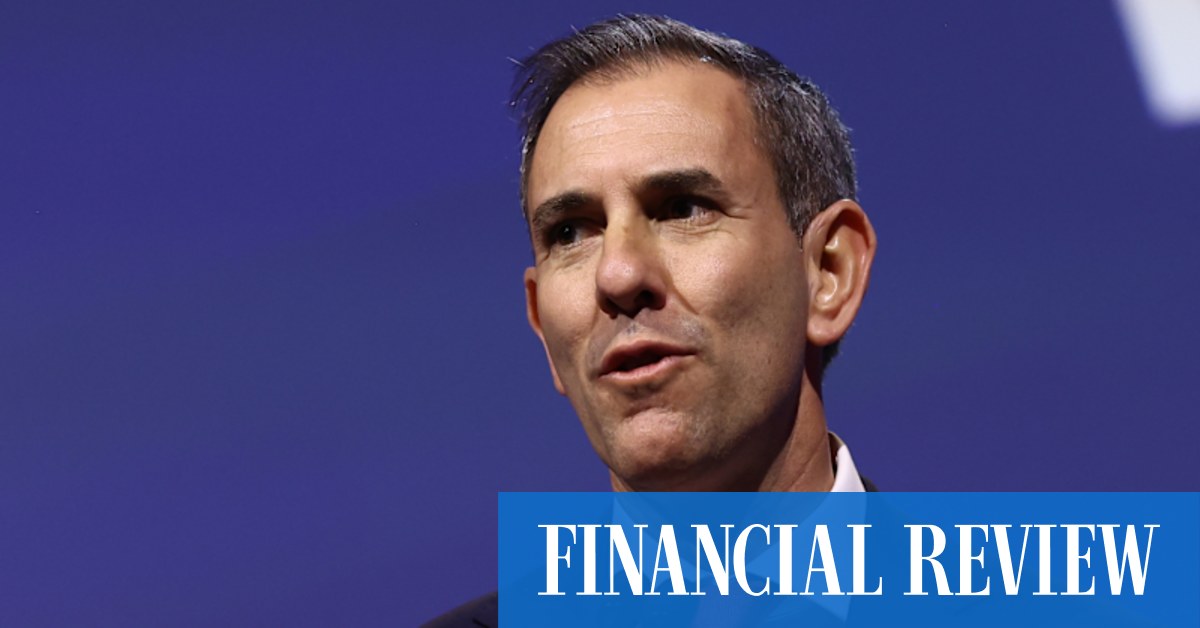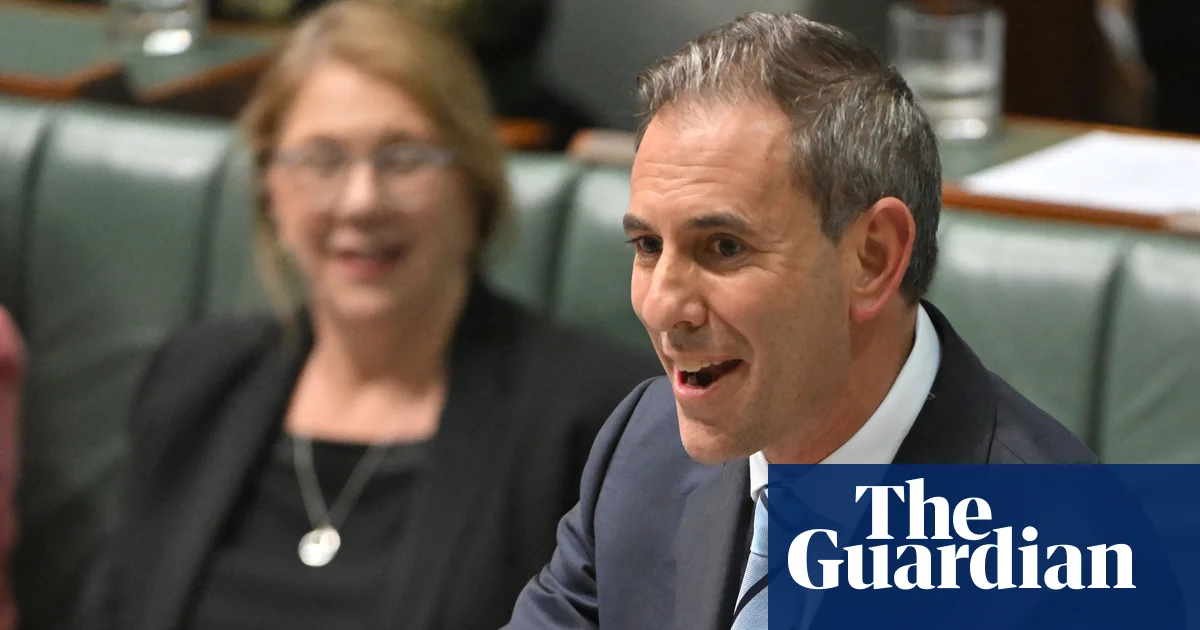
The federal budget includes a new 30 per cent minimum tax on discretionary trusts. From July 1, 2028, income generated within a discretionary trust will be taxed at 30 per cent, with the tax paid out of the trust before it distributes payments to beneficiaries.An individual beneficiary (only individuals and not corporate beneficiaries) will receive a non-refundable credit for the tax paid.This is similar to the company tax system, where businesses pay tax and individual shareholders receive franking credits for any tax already paid that they can offset against their personal income tax, to ensure they are not taxed twice for the same income.The budget papers said that, while there are legitimate reasons to use discretionary trusts, their number had doubled during the past 20 years and distributed $142.4 billion in income to beneficiaries in the 2023 tax year alone.The government said most trust income flows to the top-earning 10 per cent of families, and about 90 per cent of total private trust wealth is held by the wealthiest 10 per cent of households (those with net worth above $2.3 million)."Treasury analysis shows that in 2022–23, on average, families with discretionary trusts faced an average tax rate around 4 percentage points lower compared with families with similar incomes who do not use a trust," the budget papers noted."Numerous reviews of the tax system over the past 50 years have raised concerns that different structures used to hold assets or earn an income can result in different tax outcomes for people with similar levels of income."But experts in the accounting and legal professions, who advise clients on setting up and maintaining trusts, argue it is not just the ultra-wealthy that will be hit.Discretionary trusts, also known informally as family trusts, give family businesses flexibility in income distribution.This includes splitting income among beneficiaries (such as their children) to take advantage of each person's tax-free threshold.The use of trusts has grown rapidly in the past 20 years. There are now more than 840,000 discretionary trusts making up the vast majority of more than 1 million registered trusts.The government said Australia has many more trusts per capita than comparable countries, such as the UK and the USA, although slightly fewer than New Zealand.About 350,000 active small businesses operate through a discretionary trust structure.What is a discretionary trust, and why are they used?A trust has assets placed in it, such as money, shares or property, which are managed by a trustee who can distribute the proceeds to beneficiaries of the trust. These are often family members.Discretionary trusts have been popular with investors, small business owners, and tradespeople.Their flexibility in who to distribute income to and how has been a major drawcard, especially for families concerned about succession planning.But another reason trusts have been in the spotlight is that they allow income to be split among family members at lower tax rates.How will the change stop income splitting?By applying a 30 per cent minimum tax rate, it will no longer be beneficial to distribute income to anyone on a marginal tax rate less than this.Treasurer Jim Chalmers said the new minimum tax was about levelling the playing field, and "better aligning the taxes paid on these types of income with the taxes paid on wages".That is because wage and salary earners pay a 30 per cent marginal rate on incomes between $45,001 and $135,000.Jim Chalmers announced substantial changes in the budget to how trusts will operate. (ABC News: Callum Flinn)How much revenue will the change raise and at what point?The measure is expected to raise $4.47 billion in its first year of operation, which will help fund the government's new $250 tax cut.The tax will be paid by the trustee, as the trustee controls distributions.Andrew Clements says any assets held in the trust will be subject to capital gains at the rate of indexation, meaning people pay more tax. (ABC News: Maren Preuss)Beneficiaries will still need to declare their trust income on their tax returns, but beneficiaries, other than corporate beneficiaries, will receive non-refundable credits for the tax payable by the trustee."This affects a lot of people," said Andrew Clements, who specialises in tax at law firm Mallesons."The fact that there are 840,000 discretionary trusts means this is a broad-based asset ownership structure, and the essence of these structures is they provide a basis for control and management of intergenerational wealth."Julie Abdalla, head of legal and tax at the Tax Institute, also argued "it's a big change" that "will have flow-on effects for lots of Australian businesses, family groups, not necessarily just the high wealth kind of groups".Julie Abdalla says not just wealthy families, but ordinary businesses also use trusts. (ABC News: Daniel Irvine)"It'll be ordinary businesses as well that use these kinds of structures; there's been a lot of concern and inquiries about what this means for their businesses," Ms Abdalla said.Which trusts are exempt?Some trusts are excluded.The new minimum tax rate will not apply to "fixed" testamentary trusts, created as part of a will, complying superannuation funds, special disability trusts and charitable trusts.Fixed trusts differ from discretionary trusts because the trustee does not have the discretion to change what proportion of income a beneficiary is entitled to when it is distributed, making them less suited for the purpose of income splitting.Some types of income, such as primary production income, certain income relating to vulnerable minors, and amounts to which non-resident withholding tax applies, will also be excluded.Australian Taxation Office data showed about 30,000 trusts reported income from primary production in the 2023 tax year.Is there time to roll out of discretionary trusts without tax consequences?Ahead of the change, the government will provide rollover relief for those who restructure out of discretionary trusts into different arrangements, like companies or fixed trusts.Sometimes a restructure can result in adverse income tax consequences, including capital gains tax or stamp duty.The rollover relief will be available for a three-year window from July 1, 2027, to June 30, 2030.Tax advisers say the cost of restructuring can be too high for small businesses."Advice in this area can be very costly for taxpayers to access, and those that are not in the higher income space might have more difficulty accessing it," Ms Abdalla warned.The government said that from January 1, 2027, the Australian Small Business and Family Enterprise Ombudsman will be available to assist small businesses in understanding the options available to them and where they can get further advice.Specific arrangements will be put in place by the Australian Securities and Investments Commission (ASIC) to support small businesses that wish to incorporate.What impact will the budget change have on trusts?Experts think it will result in significant restructuring.Some may decide to migrate to a corporate structure over the three-year rollover window, but experts say it will largely depend on the details of what gets legislated."Small businesses that choose to restructure into a company will benefit from access to dividend imputation and a lower 25 per cent corporate tax rate where their aggregated annual turnover is less than $50 million and no more than 80 per cent of their assessable income is passive income," Pitcher Partners said.Accounting consultancyHLB Mann Judd's Peter Bardos said the legislation to implement these changes will be challenging to write and apply."It is possible structures will be simpler in the future; however, transitional rules and historical structures will result in a lot of complexity in the short term," he said.He said trusts had been very popular due to their ability to access the 50 per cent CGT discount and discretion to distribute income, sometimes for income splitting to minimise tax obligations."We believe it is unlikely trusts will continue to be an effective family wealth vehicle due to their requirement to distribute all income and capital gains each year. We expect a further increase in investment companies."Dylan Pargiter-Green, director and financial adviser at Bold Wealth, also thinks more family businesses have to move from trusts to corporate structures, "where the transfer of assets is not as easy"."It's a challenge, I think, for some of the families that have built considerable amounts of wealth in these structures to potentially maintain those assets and pass them generation to generation now without potentially having to realise them or change the beneficial ownership of them," he told ABC News."Some of the calls that I've had … and some of the comments that we've seen already posted across multiple forums are that younger people are also going to be disproportionately affected, where they have taken steps to engage in the market in order to build their wealth towards the dream of owning a first home, or towards the dream of having some level of financial security later."I don't think the government has thought enough about the effect of blanket tax changes to different levels of marginal rates."Dylan Pargiter-Greenis says those on very high marginal tax rates will not be the only ones impacted. (ABC News: Sebastian Baltyn)But Mallesons' Mr Clements thinks many of his clients will continue to use trusts for succession planning purposes."The major reason why a company structure won't be desirable is the inherent lack of flexibility," he noted.Distributions to companies will not generate refundable creditsThere is no credit for tax paid by the trustee for a distribution from a discretionary trust to a company.Pitcher Partners said in a budget note that "as a result, amounts distributed to a corporate beneficiary may be taxed twice, first at 30 per cent and then again at 30 per cent of the remaining 70 per cent"."This produces a tax rate of 51 per cent at the corporate level and an effective tax rate of up to 62.9 per cent on those profits when ultimately distributed to an individual," the note said."However, depending on precise details of the measure, it may be that the company pays 30 per cent on the full grossed-up amount, resulting in effectively 60 per cent tax at the corporate level and 69.7 per cent on ultimate distribution to an individual."While corporate beneficiaries could be "double taxed", it may still be beneficial to distribute income to an individual on a higher marginal tax rate than 30 per cent because they will get a "non-refundable tax credit" for tax paid by the trust."At a high level, these measures will materially disadvantage discretionary trusts as a common ownership structure," Pitcher Partners said.And they said many trusts may be unable to restructure."This will leave businesses at a significant disadvantage where they cannot restructure business or investments out of a discretionary trust," the note by Pitcher Partners said.How the trust changes interact with the CGT discountMr Clements from Mallesons said that because the government is also making changes to the CGT discount, the changes increase the effective tax rate on capital gains assets held in a trust."The regime introduces pre-capital gains tax assets into the capital gains tax framework by taxing post-July 1, 2027, growth," he said.That means that the exclusions announced, like farmers who get primary production income, do not extend to non-primary production income derived within the trust and do not extend to gains arising from dealings with farm assets.He says that this is because any gains associated with the disposal of farming assets, including assets acquired before September 19, 1985, will be subject to the changes in respect of growth accruing after July 1, 2027."This represents a material change, as gains on the disposal of property acquired prior to September 19, 1985, were previously outside the capital gains tax regime," he said.In simple terms, that means farms that have not transferred ownership since 1985 will now be liable for capital gains tax for any increase in their value after July 1, 2027, the next time they are sold.
Trust tax could hurt young, not just ultra-wealthy, tax advisors warn
The federal budget includes a new 30 per cent minimum tax on discretionary trusts. Experts say it is not just the ultra-wealthy that will be hit.
1,943 words~9 min read