Data centers are energy-intensive engines of growth, the backbone and hub of digitalization. Thousands of them are being built all around the world. The Iran war has shown how vulnerable societies are as a result.
Dietzenbach is a small German town with a population of around 35,000. Locally, it is best known for its open-air forest swimming pool and an architecturally unusual observation tower from which, on a clear day, you can see Frankfurt, some 12 kilometers (7 miles) away.
Its location is probably one of the main reasons why the US tech giant Google chose to invest several billion dollars in a new, high-performance data center. The greater Frankfurt area is one of the most important data center regions in Europe.
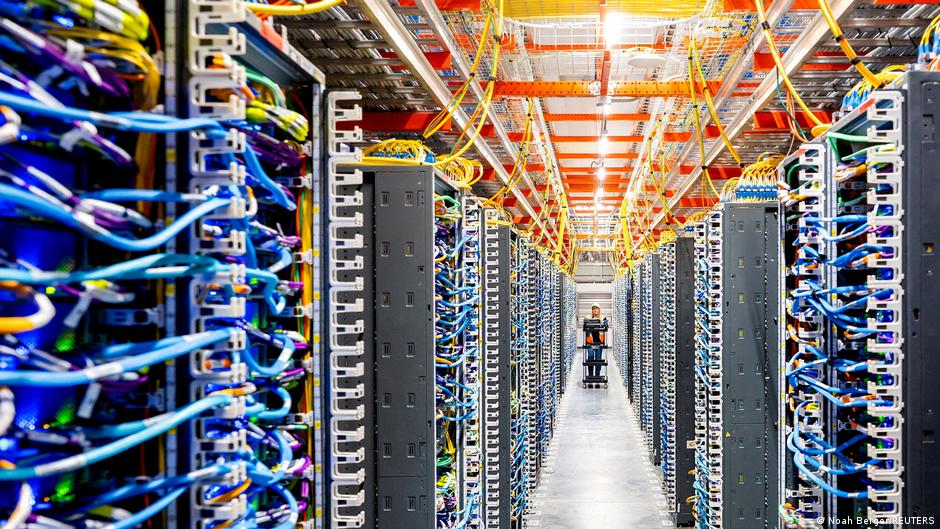
DE-CIX Frankfurt is the world's leading internet exchange. At peak times, it handles more than 17 terabits of data traffic. This equates to the amount of data processed if almost 3.5 million people streamed a high-definition film simultaneously. Seventy-six such data centers are already operating in the greater Frankfurt region. Worldwide, there are about 12,000 of these complexes and many more are being built.
The internet is now an indispensable part of modern global society, and becoming ever more so. The rapid expansion of artificial intelligence, in particular, demands greater volumes of data. Massive server capacity is required to process and store this data and enable the smooth operation of cloud services and internet applications. Consequently, data centers are the backbone of the modern internet.