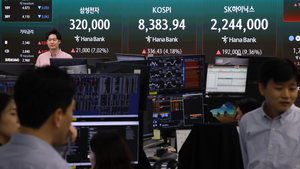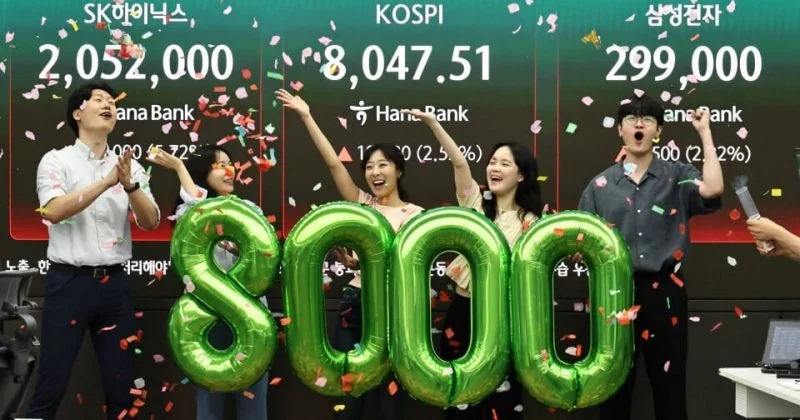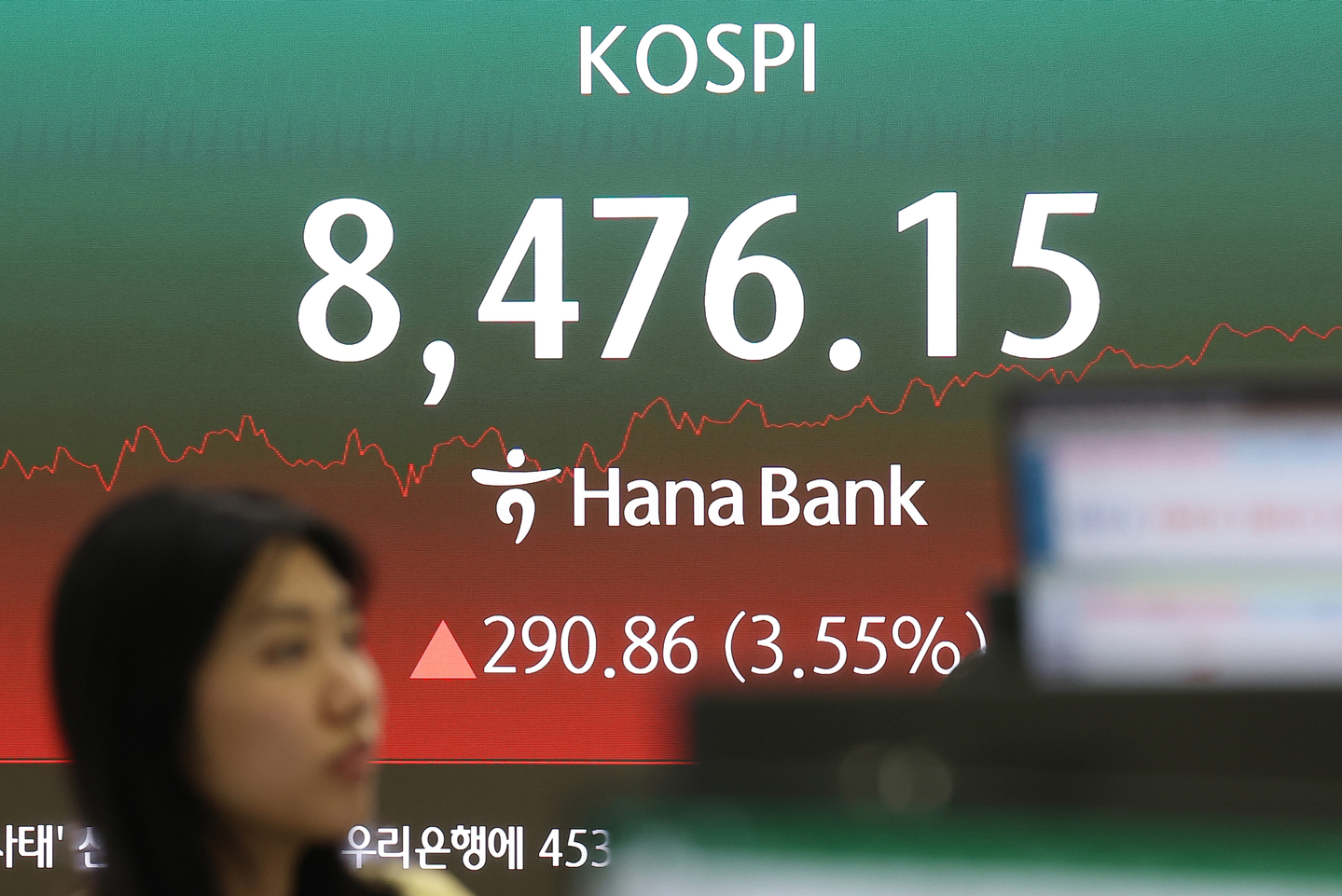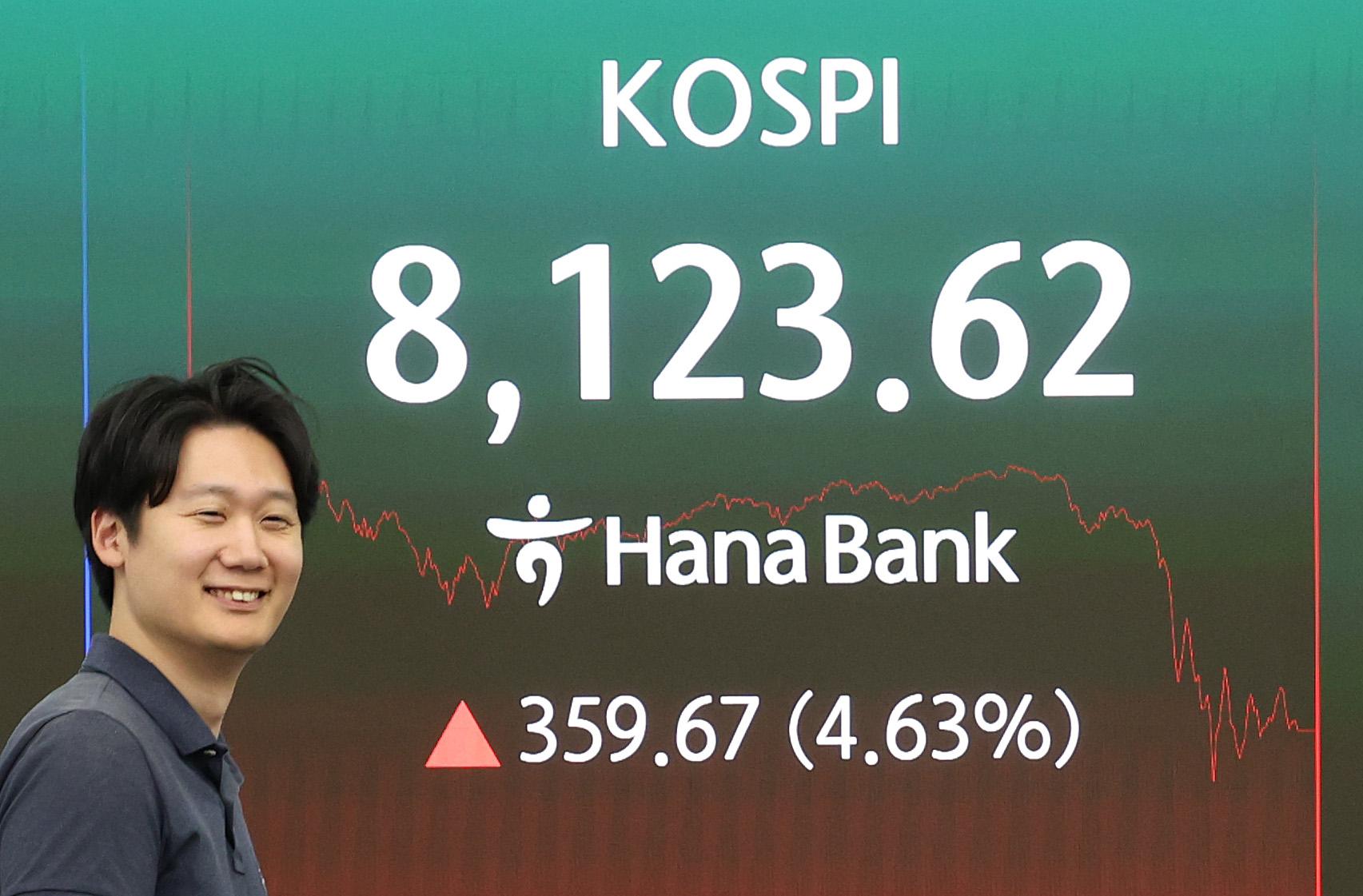
Analysts say policy reforms will test Kosdaq momentum in H2 Employees work at the dealing room of KB Kookmin Bank in Yeouido, western Seoul, on Thursday. The Kospi closed up 1.75 percent at 7,981.41, while the Kosdaq rose 1.20 percent to 1,191.09. (Newsis) Foreign investors have turned net buyers of Kosdaq shares this year, reversing last year’s heavy selling as expectations build that tougher delisting rules and broader capital market reforms will help clean up Korea’s junior bourse and narrow the chronic Korea discount.Foreign investors have net bought 2.7 trillion won ($1.81 billion) worth of Kosdaq stocks so far this year, compared with net sales of 2.6 trillion won during the same period a year earlier, according to Korea Exchange data released Thursday.Lee Geon-jae, head of research at IBK Investment & Securities, said foreign investors were no longer aggressively dumping Kosdaq shares as expectations for a second-half rebound grew.“Buying interest in small-cap stocks remains weaker than in Kospi-listed shares, but selling pressure has clearly eased compared with last year,” Lee said.“The second half of the year will be a key test of whether the government’s reforms can revive the Kosdaq market.”The shift comes as the government and financial regulators press ahead with the value-up program — including corporate governance reforms, shareholder-friendly policies and tax measures aimed at boosting investor confidence — as part of broader efforts to attract foreign capital and reduce the Korea discount.A central pillar of the reforms is tightening listing and delisting standards to improve market quality and shareholder value.On Wednesday, the Financial Services Commission approved revisions to Korea Exchange listing rules as part of a sweeping delisting overhaul.Under the revised rules, stocks trading below 1,000 won from July will face new delisting criteria, while minimum market capitalization requirements will be gradually raised every six months to 50 billion won for Kospi-listed firms and 30 billion won for Kosdaq companies.The reforms also widen delisting targets to include firms under full capital impairment during semiannual reviews and lower the disclosure penalty threshold to 10 points. Regulators also plan tighter scrutiny of attempts to avoid delisting through reverse stock splits and similar measures.While the Kospi has sharply outperformed this year, gains on the Kosdaq have been more muted. The Kospi has surged more than 85 percent since the start of the year, while the Kosdaq has risen around 30 percent.Much of the rally has been concentrated in heavyweight semiconductor stocks such as Samsung Electronics and SK hynix amid optimism over artificial intelligence investment.To reduce concentration in the Kospi and revive the Kosdaq market, authorities are shifting away from liquidity-focused support measures toward policies aimed at improving the quality and competitiveness of smaller listed firms.Previous efforts largely centered on tax incentives and liquidity support, but critics argued they allowed financially weak companies to remain listed for too long.Kim Dae-jun, a researcher at Korea Investment & Securities, said the latest reforms differ from past measures because they focus on improving market quality rather than simply increasing the number of listed companies.“The most notable changes are the reforms to listing and delisting systems,” Kim said. “If weak companies can be removed more quickly, concerns over Kosdaq undervaluation can ease while reducing investors’ opportunity costs.”
Foreign investors return to Kosdaq after year of heavy selling
Foreign investors have turned net buyers of Kosdaq shares this year, reversing last year’s heavy selling as expectations build that tougher delisting rules and
533 words~2 min read