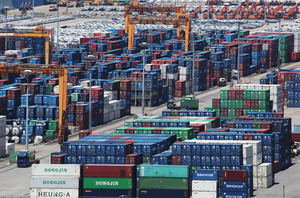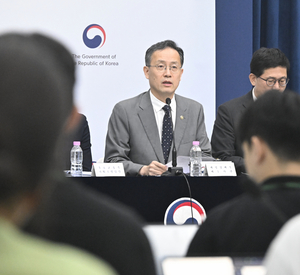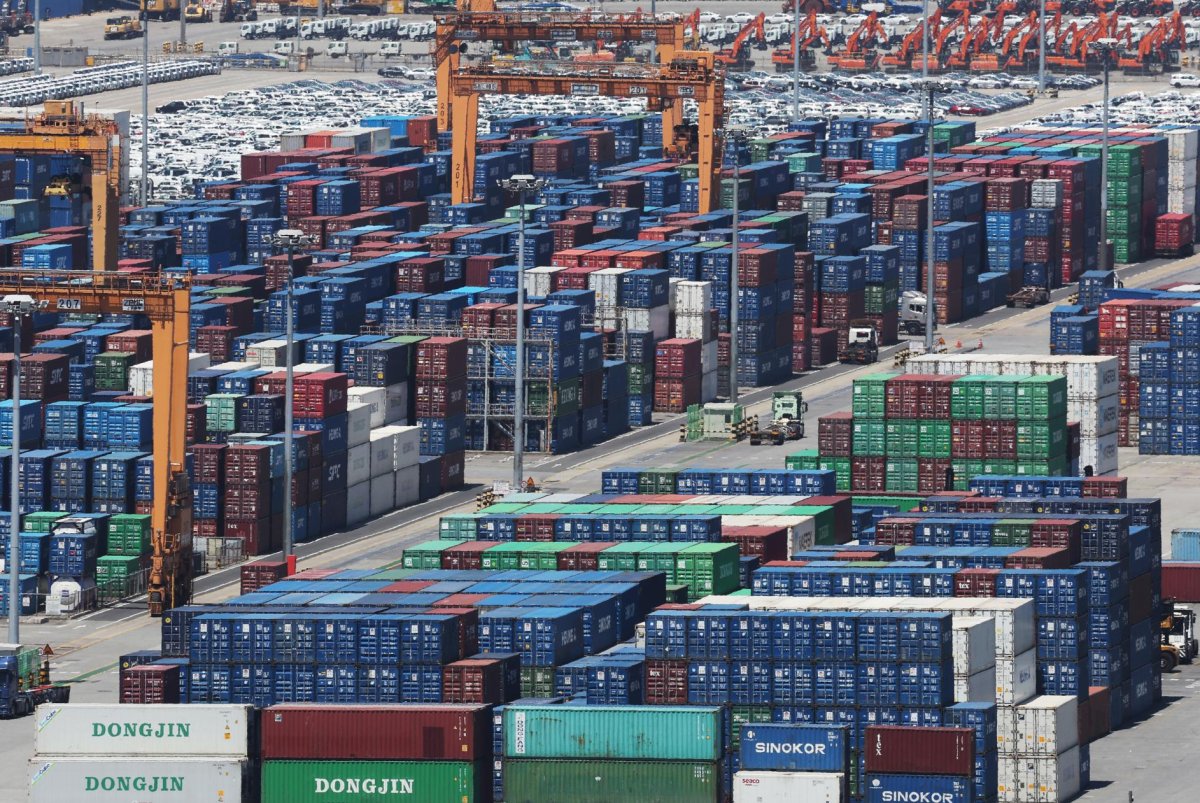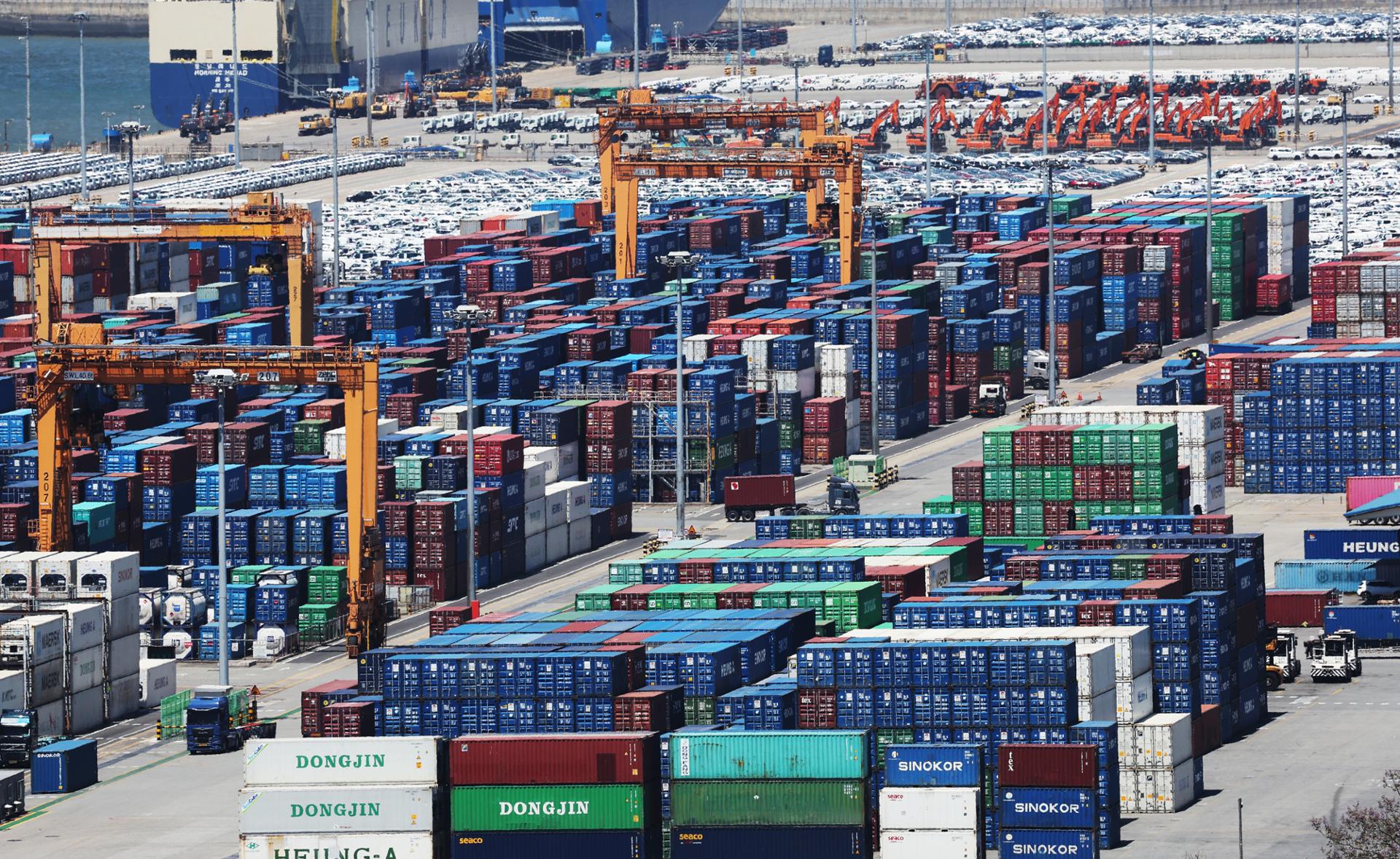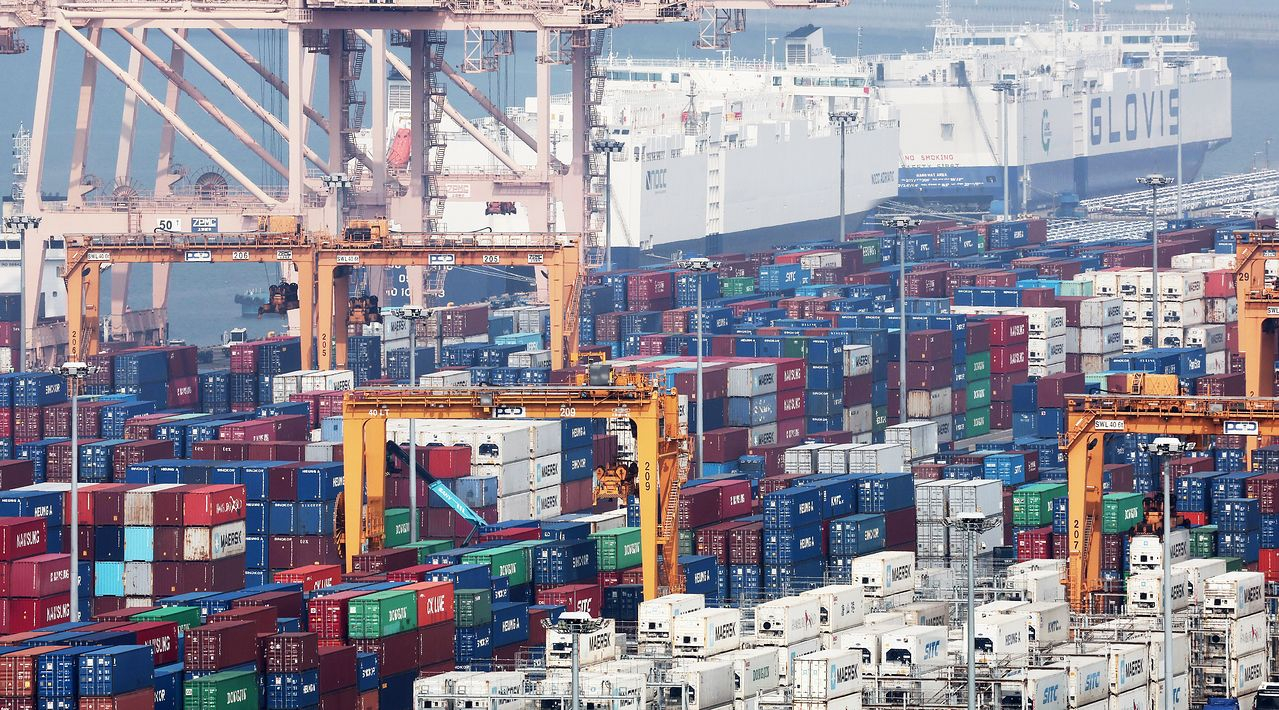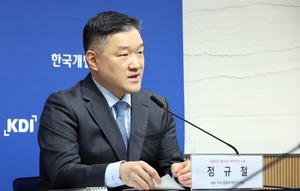
State-run think tank says semiconductor upcycle could drive further expansion Jung Kyu-chul, senior director at the Deptartment of Macroeconomic and Financial Policies at Korea Development Institute, speaks at a press briefing held in Sejong City, Wednesday. (Newsis) South Korea's state-run think tank Korea Development Institute raised its 2026 growth outlook for the country to 2.5 percent on Wednesday, saying robust semiconductor exports outweighed uncertainties stemming from the Middle East conflict.The institute forecast the gross domestic product of Asia's fourth-largest economy to grow 2.5 percent this year, up 0.6 percentage point from its previous forecast. Growth is expected to moderate to 1.7 percent in 2027.KDI had projected 1.9 percent growth for this year in February, before the outbreak of the Middle East conflict, but opted to raise, rather than lower, its outlook despite heightened geopolitical uncertainties."We judged that the positive impact from semiconductor exports was larger than the adverse effects of the Middle East war," Jung Kyu-chul, senior director at the Deptartment of Macroeconomic and Financial Policies at KDI, said at a briefing held in Sejong City.Jung added that semiconductors are expected to account for more than 0.3 percentage point of the 0.6 percentage-point upward revision to the growth outlook."The demand for semiconductors is strong, but supply has not been able to keep up, pushing prices up significantly," he said."If production capacity can expand more quickly, exports could increase further, and economic growth may improve beyond the current projection."Supported by the AI-driven memory boom cycle, Korea's exports are projected to rise 4.6 percent this year, while facility investment is expected to increase 3.3 percent. Private consumption is also forecast to grow 2.2 percent this year, aided in part by the supplementary budget.The think tank viewed that the Korean economy is in an expansionary phase, as growth is projected to outpace the country's potential growth rate — estimated in the mid-1 percent range — this year and next.KDI's latest growth forecast is higher than projections given by major policy institutions, including the Bank of Korea's 2 percent forecast from February, the International Monetary Fund's 1.9 percent estimate issued in April, the Organization for Economic Co-operation and Development's 1.7 percent projection from March and the government’s 2 percent outlook released in January.The estimate broadly aligns with projections made by global investment banks. JPMorgan, for instance, projected the Korean economy to expand 3 percent this year, while Goldman Sachs forecast 2.5 percent, reflecting the ongoing semiconductor boom.Still, elevated oil prices amid the Middle East conflict remain a drag on the economy, with the KDI projecting consumer inflation to rise to 2.7 percent this year, the highest since 2023, on higher energy costs and recovering demand.“The current forecast assumes tensions stemming from the Middle East conflict will ease somewhat in the second half, but persistently high oil prices could weigh on growth,” Jung said, adding that if elevated oil prices continue into the second half, the economy could underperform the forecast.
KDI raises Korea's 2026 outlook to 2.5% on chip boom
South Korea's state-run think tank Korea Development Institute raised its 2026 growth outlook for the country to 2.5 percent on Wednesday, saying robust semicon
487 words~2 min read