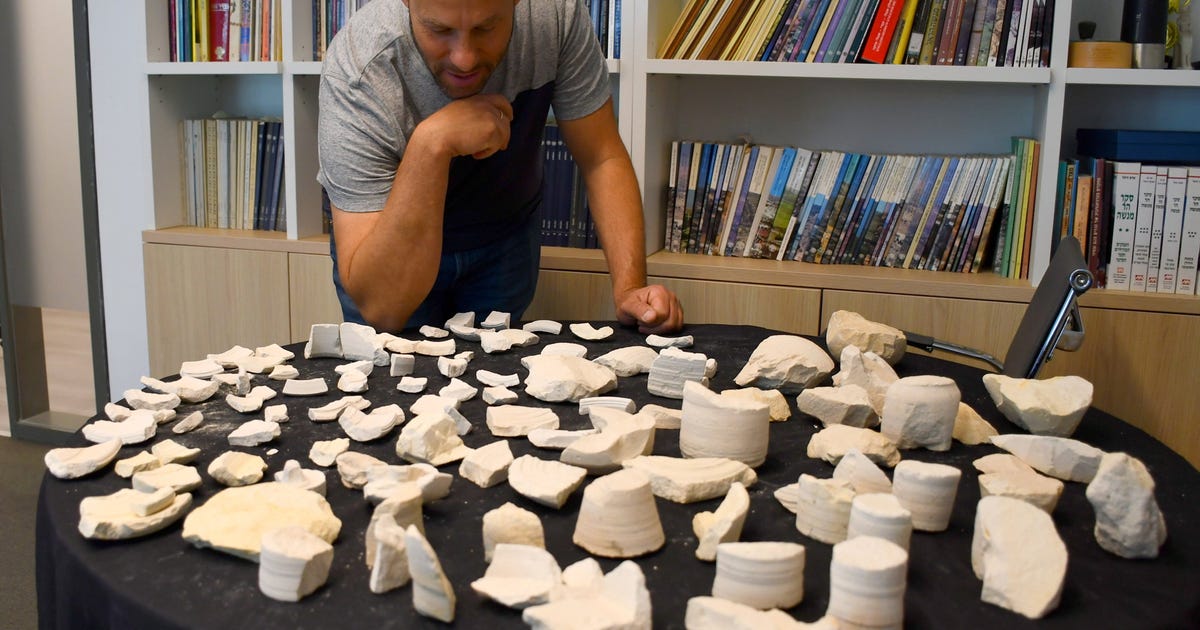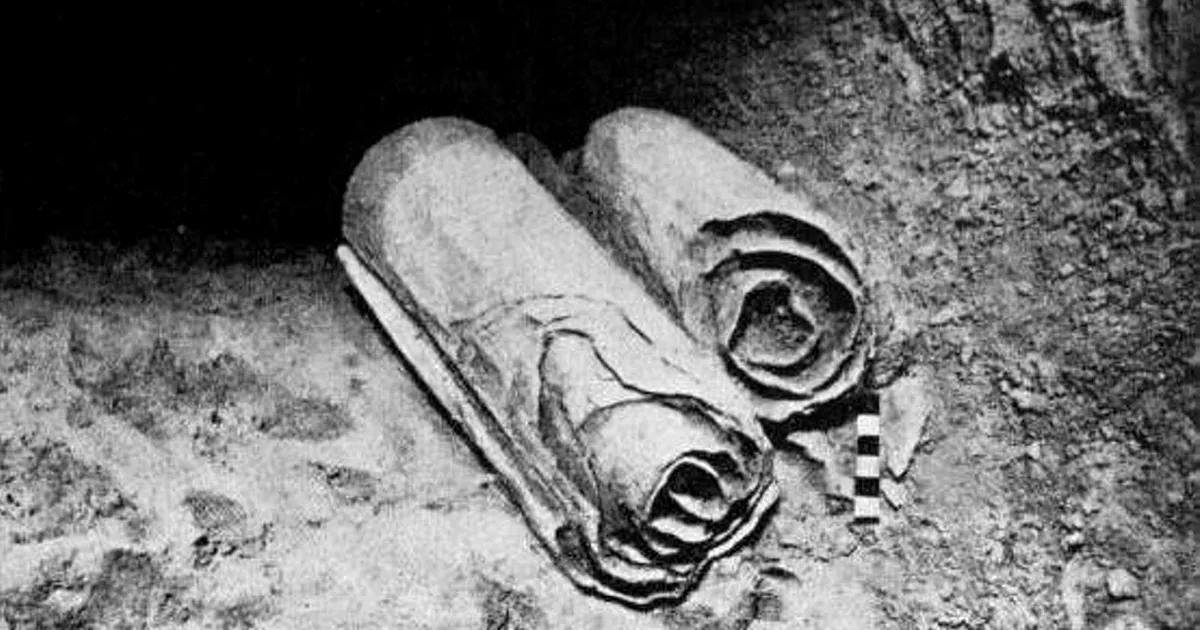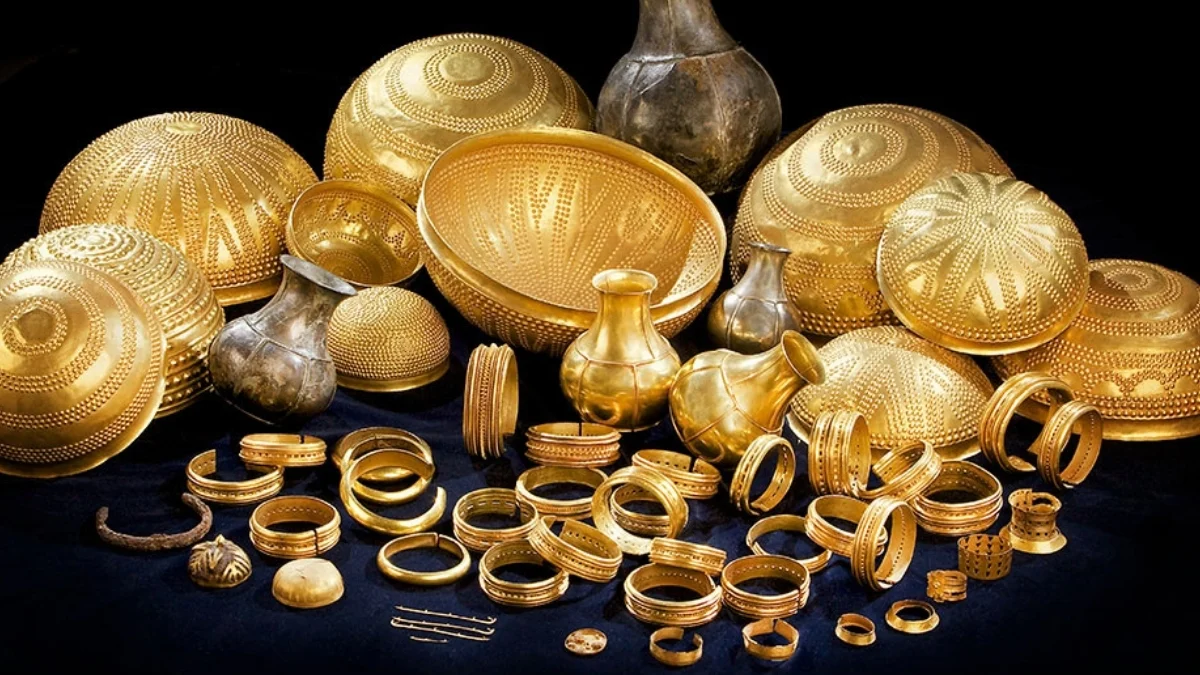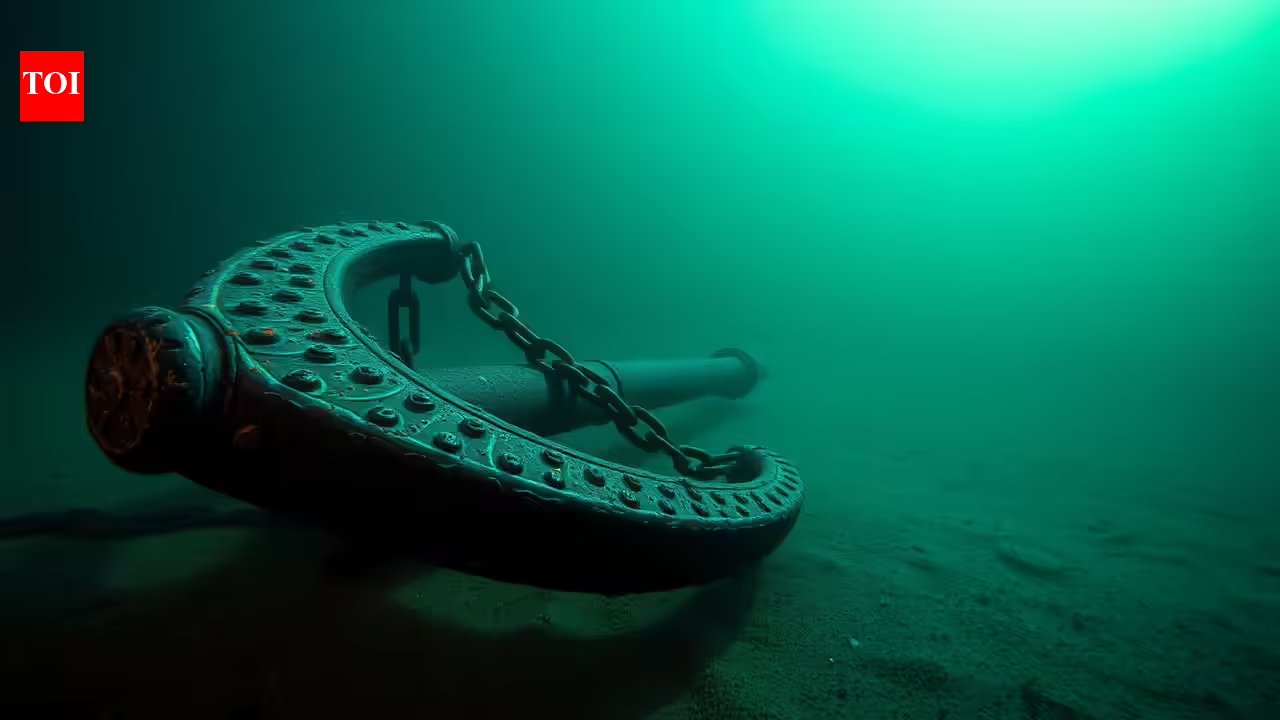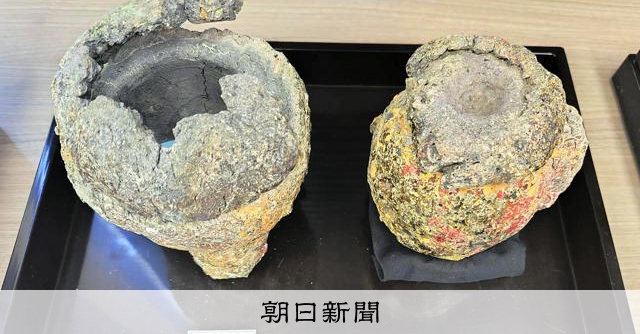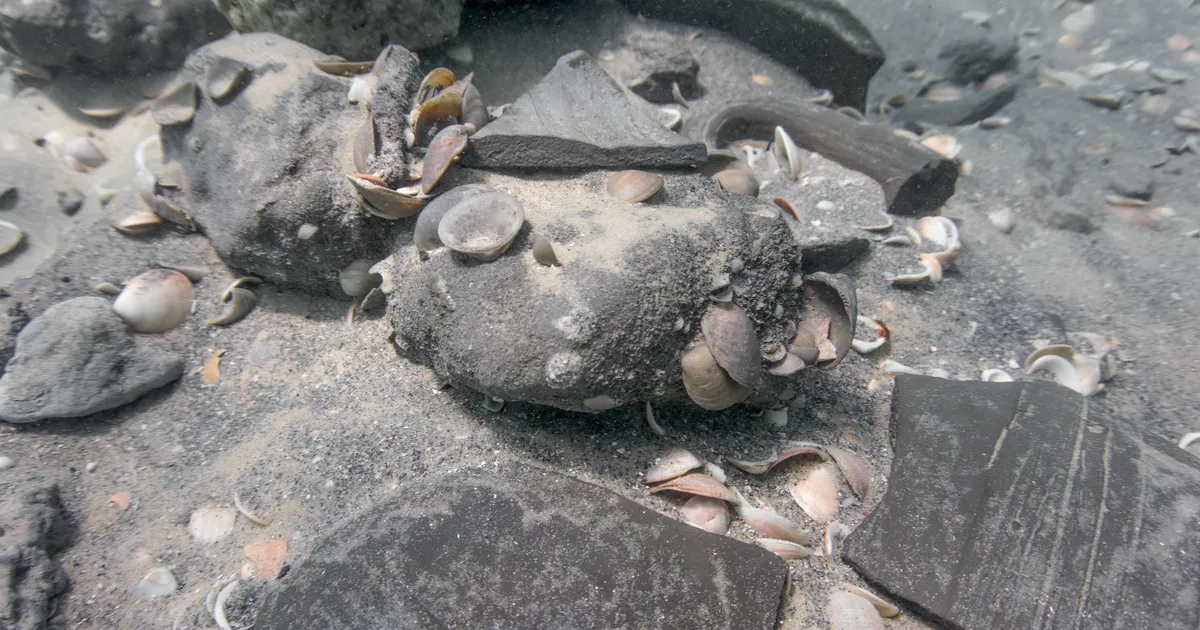
Current sectionArchaeologyLumps of iron coated in slag sank with a ship at Dor in northern Israel, showing that cities didn't smelt iron ore themselves after allShare to FacebookShare to XArticle printing is available to subscribers onlyPrint in a simple, ad-free formatSubscribeComments: Zen reading is available to subscribers onlyAd-free and in a comfortable reading formatSubscribeIron blooms discovered encased in slag at the bottom of Dor harbor. Credit: Marko RunjajićIron blooms discovered encased in slag at the bottom of Dor harbor. Credit: Marko RunjajićApril 28, 2026Nine masses of unworked iron called "blooms" found at the bottom of Dor Lagoon off northern Israel have changed our understanding of the iron industry in antiquity. Chiefly, they have changed our assumption that iron was shipped around the ancient world only in the form of semi-finished blocks called billets, or bars of refined metal. That would have been similar to the ancient trade in copper and lead, which were transported in the form of ingots.But at least sometimes, iron was shipped in a cruder state called blooms, a porous mass of iron with particles of slag and charcoal, according to the article published in March in Heritage Science by Tzilla Eshel, Tom Levy, and Assaf Yasur-Landau of the University of Haifa with colleagues. This had not been expected.The earliest iron production method, the bloomery process, involved heating the ore in a furnace with coal. This process was in use from the Early Iron Age to the Middle Ages. The earliest known blooms were found in the Neo-Assyrian city of Khorsabad from about 2,800 years ago.Heating ore was the first step in the ancient iron production technique. The next was removing the slag and other inclusions, which involved primary smithing by hammering, and the working assumption had been that this was done while the bloom was still red-hot.Iron blooms discovered at Dor harbor Credit: Marko RunjajićIron blooms discovered at Dor harbor Credit: Marko RunjajićIn other words, making the bloom and the next stage of hammering out the impurities would always be done at the same place, it was assumed; and this would help explain why blooms are so rare in the archaeological record. Only hundreds have been found from the period of the metal-mad Romans through to the Middle Ages and a mere 13 from earlier.That is probably not least because the whole raison d'etre of blooms was to be refined further into billets and bars for further processing into final products. But we continue.All the early blooms were found in Europe, none in the Levant. Here the only find of the blooms was 93 of them in a shipwreck from the Crusader period in the 12th century. That ship also had iron bars and final products (nails) on board.Anyway, the assumption was that in the Iron Age, iron was transported only as billets or bars and indeed a shipwreck found off Kyrenia, Cyprus from the late fourth century or early third century B.C.E. had rusted billets on board. That paper deduced that that the ship wasn't leaving Cyprus, it was going there because the iron in the billets wasn't Cypriot in origin.Dor Lagoon. Credit: Tomer AppelbaumDor Lagoon. Credit: Tomer AppelbaumNow in March Israeli archaeologists reported on nine blooms at the bottom of Dor harbor from about 2,600 years ago, which would have gotten there because a ship sank. The find of unworked blooms on the seabed argues against the assumption that in antiquity, blooms were not transported; that early metalsmiths would immediately "strike while the iron was hot," taking the red-hot bloom from the bloomery and then and there, hammer them into beautiful billets.But raw blooms on the seabed show the assumptions were wrong. Other finds with the Dor blooms included amphorae, a composite lead-and-wood anchor, and pottery that helped date the cargo to the seventh or sixth century B.C.E. "This is the earliest archaeological evidence known today of the maritime transport of iron blooms in the state they emerged from the smelting process," points out Eshel, who led the research.Making the cities bloomLet us be clear that the earliest iron production was in the Bronze Age, but it wasn't smelted. It was hammered out of richly laden ore. Even earlier iron artifacts are known, such as a pharaoh's knife but they had been made using iron-rich meteorite, not the terrestrial element.Apropos, the "Copper Age" precedes the "Iron Age" yet copper (and lead) were transported as pure ingots while iron had to settle for blooms? Yes, because their production process was different.The ancient copper and lead production process involved heating the ore until the metal liquefied and flowed out. It was easy to purify a metal that melts. That does not happen in iron production, Eshel explains. The iron doesn't melt, only the slag liquefies. As the slag flows out, the heated iron ore consolidates with the charcoal and some bits left over of slag. The result is the bloom, which isn't solid like a copper ingot, but quite porous.Iron blooms discovered at Dor harbor. Credit: Marko RunjajićIron blooms discovered at Dor harbor. Credit: Marko RunjajićMelted lead or copper can be poured into a mold, creating ingots; great lumps of iron and coal can't. You get a lump.Is the iron pure? Yes except for the holes and remaining slag and dirt but the iron is quite clean, with some carbon from the coal. Further processing may involve more carbon enrichment from coal, creating carbonized iron which is what we call steel.Where did all this begin? It seems this smelting process resulting in blooms, which are further worked into billets or bars, emerged in Anatolia, or possibly Cyprus, she answers – not the southern Levant, despite an earlier theory in that direction. This would have been in the Late Bronze Age or possibly the early Iron Age.We just note that the "Bronze Age" and "Iron Age" are old monickers that have grimly hung on and they do not denote that humankind en masse suddenly switched from knapping rocks to smithing. Early use of metal was rare; it would have been quite the luxury; and in our parts, iron only came into common use in roughly the 10th century B.C.E., Eshel says.The blooms at Dor are from the late seventh or early sixth centuries B.C.E., a time when the industry had become established. Where were they made? We don't know yet – they may have been made in Israel for shipping abroad, or made abroad and were being brought to Dor. There was some local iron production, Eshel says – there's iron ore in Jordan. It's a very abundant metal, and there could have been local sources in antiquity that we don't know about.Dor Lagoon. Credit: Tomer AppelbaumDor Lagoon. Credit: Tomer AppelbaumIron is quite the delicate flower itself. Why didn't the blooms rust to the point of being no more after 2,600 years on the seabed?Ha. That is the crux. The whole assumption had been that when one made a raw iron bloom, one didn't leave it that way but would immediately move it from the bloomery to the next furnace for further "consolidation" before it rusted. But they didn't do that. Why not? Because they had resolved that problem. The blooms that survived the ages of aquatic abuse had been coated in slag, which prevented the water from penetrating and corroding the iron. And thus they sat there until divers brought them out of the sea in 2025."There had been argument over the nature of how metalsmiths worked in the cities," Eshel explains. "One opinion had been that the entire chain of production was in the cities – that the ore was transported to the city centers and iron was produced there; that they weren't importing iron, but ore."Which would be decidedly odd, she says, and what was the evidence of that? Blooms, that's what – blooms were found and the archaeologists assumed that meant ore had to have been there, because blooms are hit while hot, to make billets.The discovery that blooms were being shipped changes our understanding of activity in the cities during the Iron Age. The cities may not have been producing the blooms, they may have imported them for further processing. And the smiths learned about steel. Carbon naturally gets added to iron during heating and in time, smiths learned how to control the proportions.It is true that iron rusts like a demon while steel does not but each metal has its advantages, Eshel explained – steel may not decay at a raindrop but it's more brittle than iron. One would be dismayed if one's blade snapped off mid-attack. But anyway, from the Iron Age onwards, iron became more common than copper and replaced it for all working tools and weapons, and then peace did not descend on the Middle East.In the NewsThe Mysterious Copper Scroll and the End of DaysThe Ghosting Protocols: Cancel Culture in Ancient Egypt and RomeIron Masses Found on Israeli Seabed Change Understanding of Early MetalworkingUnusual Remains Found in Pompeii Reopen Questions About Vesuvius' EruptionWhen Israel and Aram Went to War, How Did the Biblical Shepherds Feel About It?Remembering and rebuilding two years laterICYMIWhatsApp Co-founder Donates Record-breaking $200 Million to Jerusalem HospitalLeaked Video of Arab Lawyer's Violent Arrest Contradicts Israel Police Account'A Slave Economy': Inside Israel's ultra-Orthodox Parallel StateConstruction Begins on Bypass Road to Bring 'One Million' Israelis to West BankZionism Didn't Go Wrong, It Was Always Built This WayIsraeli Artists Slam Venice Biennale Participation: 'Again, Israel as a Victim'
Iron masses found on Israeli seabed change understanding of early metalworking
Lumps of Iron Coated in Slag Sank With a Ship at Dor in Northern Israel, Showing That Cities Didn't Smelt Iron Ore Themselves After All
1,571 words~7 min read