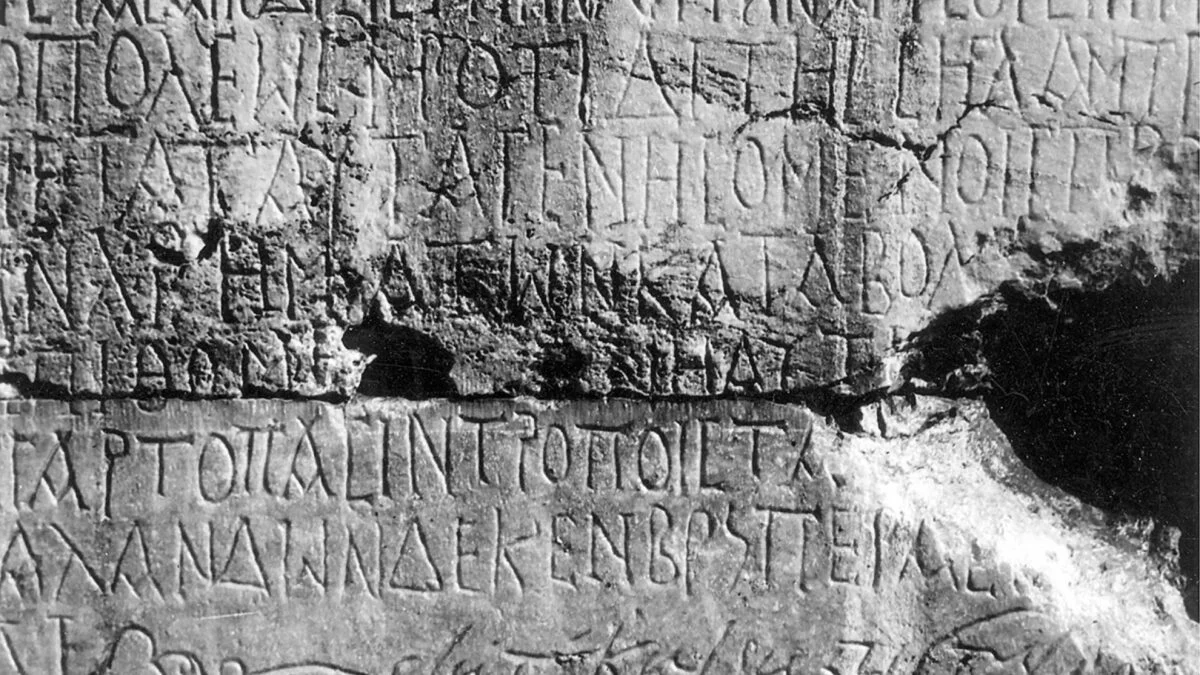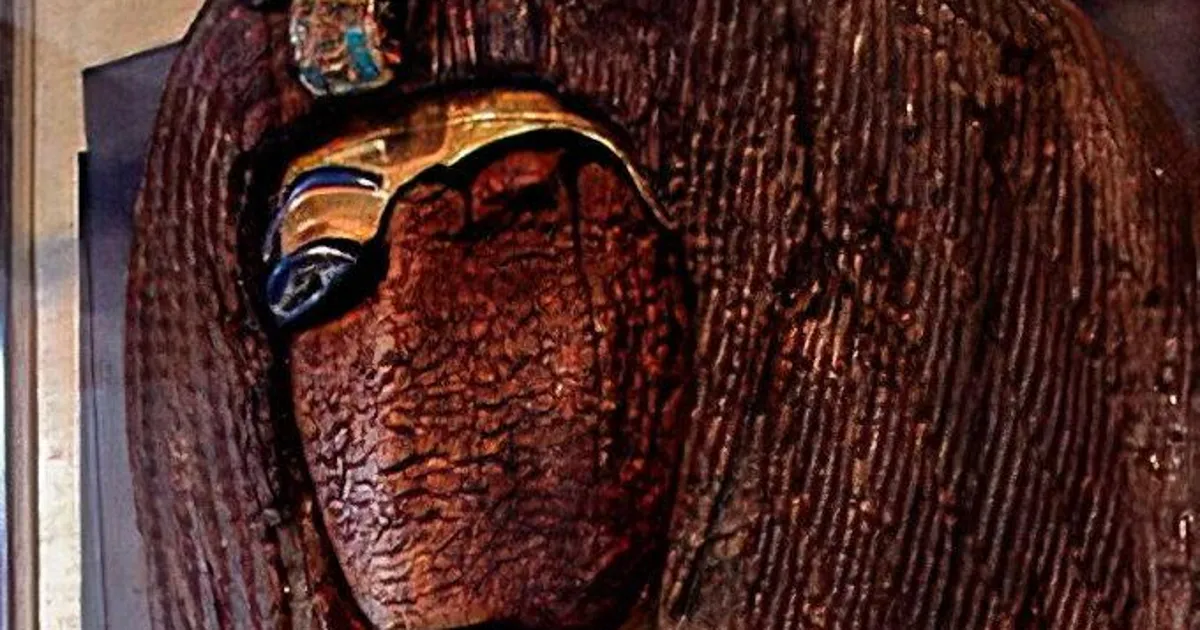
Cancel culture isn't a modern invention. Long before viral outrage, the ancient Egyptians were erasing names from monuments, while the Romans elevated the practice into a formal state protocolCancellation of political figures seems as old as politics itself. When statues of controversial figures are dismantled or landmarks are renamed, it reflects a profound shift in the leadership or in the collective judgment, signaling that these people or places no longer embody the ideals a society wishes to project. In ancient Rome, just like today politicians weaponized this "deletion" to appease the crowds, staging the removal of monuments as a high-visibility performance of progress. They were strategically dismantling the "relics of the past" in the hope of consolidating modern public support behind themselves.However, whereas today "cancellation" often unfolds in virtual space and headlines, in ancient Egypt and Rome it required a hammer, a chisel, and sometimes a formal decree that consigned a person to oblivion. Modern historians refer to the practice as damnatio memoriae, the "condemnation of memory." Hatshepsut censored (Damnatio memoriae). Temple at Deir el-Bahari. Credit: Hedwig StorchHatshepsut censored (Damnatio memoriae). Temple at Deir el-Bahari. Credit: Hedwig StorchSpiritually executed in Egypt While the term of cancel culture is a modern invention, the ancient Egyptians and Romans enforced the underlying principle with a ruthless conviction. This was not a quiet erasure. It was a loud, deliberate, and unmistakably public damnation, often carried out directly after one's death. Names were hacked from inscriptions, faces on statues were defaced, achievements were reassigned or diminished. In a culture in which reputation was meant to outlive the body, such post-mortem obliteration was the harshest sentence imaginable for the family. Condemnation of memory was a key tool in Egyptian politics for thousands of years before Rome even existed. In the land of the pharaohs, the practice involved not only removing a name from the annals of history; it was essentially a spiritual extirpation. Defaced images in a relief in the Temple of Hatshepsut at the Luxor's west bank, Egypt Credit: Matyas Rehak / Shutterstock.comDefaced images in a relief in the Temple of Hatshepsut at the Luxor's west bank, Egypt Credit: Matyas Rehak / Shutterstock.comTo the ancient Egyptians, a person's name and image weren't trivial designations: they were anchors for the soul. The 'Ka', or vital life force, depended on these physical markers. To erase a name from a temple wall was to effectively cause a "second death," cutting the deceased off from the world, leaving them deaf to prayers and deprived of the ritual nourishment needed to sustain them in the afterlife. Hence, physically assaulting one's name following death was regarded as spiritual execution. The two most famous examples are those of Akhenaten, known as the "heretic king", and Hatshepsut, the female pharaoh whose rule challenged the traditional Egyptian concept of a male-dominated kingship. The process of their "deletion" was systematic. Statues were pulled down and thrown into pits or smashed into pieces. Names were removed and sculptures were mutilated. Noses were targeted in order to "suffocate" the spirit of the deceased, and the hands were smashed to prevent them from accepting offerings. Sometimes, a greedy ruler would overwrite his predecessor's name, effectively usurping the earlier king's legacy and claiming the grand monuments as his own creation.A defaced statue of Hatshepsut wearing the khat headdress, circa 1479–1458 B.C.E. , at the Metropolitan Museum of Art Credit: Metropolitan Museum of ArtA defaced statue of Hatshepsut wearing the khat headdress, circa 1479–1458 B.C.E. , at the Metropolitan Museum of Art Credit: Metropolitan Museum of ArtThe administration of dustMoving onto ancient Rome, formal cancellation procedures typically began in the Senate. Following the death of a disgraced emperor or high-ranking official, senators would issue a formal decree to strip the individual of their legacy, while simultaneously making a spectacle of their disgrace. The job of overturning a legacy was multi-faceted. Teams of laborers were dispatched to public arches and temples to physically scratch names in stone inscriptions. When it came to statues, rather than waste expensive marble, Romans often opted to recycle. The statues of a condemned leader would have their faces replaced with the likeness of their successor (a face-lift for the empire), and their portraits would be blurred into obscurity. Indeed, archaeological evidence reveals systematic "upcycling" of imperial marble, especially under Caligula. Since most full-length statues were modular, comprised of two pieces that would be assembled together after manufacture, the design made political upheaval a simple matter in the workshop. When the political winds shifted, a head of a dishonored ruler could have been easily replaced by that of a successor. Nose removed and cross carved onto forehead of bust of Augustus Credit: José Luiz Bernardes Ribeiro / CC BY-SA 3.0Nose removed and cross carved onto forehead of bust of Augustus Credit: José Luiz Bernardes Ribeiro / CC BY-SA 3.0Moreover, the erasure extended to any written records. All laws, decrees, and official acts issued by the condemned individual were declared void, resetting the imperial clock. Thus many Roman emperors and high officials suffered a "second death," though we must stress that the Senate only resorted to such measures in only a minority of instances. However, swapping heads on statues occasionally failed, as in the case of the sculpture of Augustus as pontifex maximus, which suffers from awkward proportions.Augustus as Pontifex Maximus Credit: Marie-Lan Nguyen / From the Via Labicana, RomeAugustus as Pontifex Maximus Credit: Marie-Lan Nguyen / From the Via Labicana, RomeOne of the most famous cases of "cancellation" was that of Marc Anthony, following his defeat by Octavian (later Augustus). The Senate passed a decree forbidding any future Antonius descendants from using the name Marcus ever again. This was a strike against the family "brand," designed to ensure that no future Roman could ever carry the full name of the man who almost became Rome's ruler. Antony's birthday (January 14) was officially declared an unlucky day or "black day" (dies vitiosus). It was considered unwise to conduct public business on that day, effectively turning his birthday into a day of misfortune. In his case, however, the cancellation was only "partial". Instead of removing Anthony's name from history entirely, the Senate chose to preserve his legacy as a cautionary tale – they wanted to ensure that the public remembered him as a traitor and a loser who had been corrupted by the East. One could argue that the measures only increased his fame. There were also cases of soft cancellation. Upon the news of Caligula's assassination, the Senate's jubilation was so profound that they quickly moved to erase his name from public records and destroy his statues. This attempt at a formal damnatio memoriae was, however, short-lived, as his successor, Claudius, intervened to block the decree, recognizing that public condemnation of his nephew would ultimately tarnish the prestige of the imperial lineage. The resolute Claudius opted for a quieter and less dramatic measure: he annulled his predecessor's official acts and ordered the removal of his likenesses under the cover of night. Roman-period bust of Germanicus, Claudius' brother, in military dress. The nose was been broken and a cross carved on the forehead by Christians in late antiquity. British Museum. Credit: AndonicORoman-period bust of Germanicus, Claudius' brother, in military dress. The nose was been broken and a cross carved on the forehead by Christians in late antiquity. British Museum. Credit: AndonicOThe great performer's tourThe first emperor to suffer formal damnatio memoriae was Nero. This emperor regarded himself as a world-class artist. While the fringes of the Empire were fracturing under the weight of intense local resistance, the heart of its leadership was elsewhere. Late in 66 C.E., Nero departed for a 15-month tour of Greece, leaving the administration of Rome in the hands of a freedman. This extended sabbatical was less a diplomatic mission and more a self-indulgent stage tour. According to ancient sources, the emperor embraced the persona of a performer, often appearing barefoot with unkempt hair to emphasize his devotion to the arts. In a grand, perhaps impulsive, gesture of "Philhellenism," he even granted several Greek cities their freedom as a tribute to their historical legacy. However, Nero's return to Rome in February 68 C.E. marked the beginning of his downfall. The senate felt disrespected, the military felt ignored, and the tax-paying provinces were exhausted by the costs of his artistic whims. Following the deadly fire that tore through Rome, destroying roughly 70 percent of the city's buildings, the unbothered emperor seized the opportunity and began the construction of his "Golden House" on the cleared land in the heart of Rome. A dig from 2014 on the Palatine, revealing that Nero's revolving dining room was a real thing: it rested on the arches in the foregroundA dig from 2014 on the Palatine, revealing that Nero's revolving dining room was a real thing: it rested on the arches in the foregroundThis wasn't just a palace; it was a surrealist theme park featuring luxurious pavilions amid "wildernesses," vineyards, and even a massive artificial lake where a dense urban neighborhood once stood. Moreover, according to ancient historians, he treated his inner circle of favorites to the ultimate imperial shopping spree. They claimed the bill for these handouts topped two billion sesterces, an amount so astronomical it could have paid for the entire Roman military several times over. By prioritizing his favorites instead of the legions, he lost their respect and loyalty. Seeing the army desert Nero, the battered Senate officially declared him a hostis (public enemy). The fallen ruler was stripped of his citizenship and legal protections. Under Roman law, any citizen could kill a hostis without trial. Facing execution, Nero fled the city that he once ruled. With a little "help" from his secretary, a former slave named Epaphroditus, he succeeded in plunging a dagger into his throat. His reported final words were, "What an artist dies in me!". The systematic erasure of his memory began immediately upon the news of his death. Even his architectural marvel, the Domus Aurea, was ultimately razed to the ground. On top of what had been his house, Emperor Trajan built his baths; while the Colosseum rose where his private lake once shimmered. These moves served as a symbolic gesture of returning the land to its rightful owners – the inhabitants of Rome. Pope Leo XIV carries a 1.5-meter wooden cross during the Via Crucis, the Good Friday Stations of the Cross procession at the Colosseum in Rome, April 2026 Credit: Gregorio Borgia/APPope Leo XIV carries a 1.5-meter wooden cross during the Via Crucis, the Good Friday Stations of the Cross procession at the Colosseum in Rome, April 2026 Credit: Gregorio Borgia/APA living god diesAmong other prominent figures who suffered "cancellation" was Domitian, whose reign became associated with terror. The despised emperor exiled and executed uncooperative senators and critics. In a radical departure from Roman tradition, he asked to be addressed as Dominus et Deus ("Lord and God"). While living deification was common in the East, it was anathema to Rome, where emperors were typically deified only after death. Unlike Caligula, whose claims to divinity during life were seen as pure madness, Domitian formalized his status as a requirement for all official communication. Making things worse, he embarked on a spree of monumental spending, including the construction of a new palace. To mask the atmosphere of terror, Domitian adopted a populist strategy: supplying "bread and circuses" to the people of Rome and securing the army's loyalty through a substantial pay raise for the legions, which was the first such increase in over a century. However, these bribes could not buy him safety within his own walls. Late in the morning on September 18, 96 A.D., Emperor Domitian was lured into a private emergency meeting where he was assassinated in the presence of his terrified wife, Domitia. Overjoyed by the news, the Senate held a special session, ordering that his statues be demolished or dismembered and that his name be chiseled from every public inscription across the Roman Empire. Lucius Aelius Sejanus suffered damnatio memoriae following a failed conspiracy to overthrow emperor Tiberius in AD 31. This coin from Augusta Bilbilis, originally struck in 31 C.E. to mark Sejanus' consulship, has the words L. Aelio Seiano obliterated. Credit: Classical Numismatic Group, Inc.Lucius Aelius Sejanus suffered damnatio memoriae following a failed conspiracy to overthrow emperor Tiberius in AD 31. This coin from Augusta Bilbilis, originally struck in 31 C.E. to mark Sejanus' consulship, has the words L. Aelio Seiano obliterated. Credit: Classical Numismatic Group, Inc.The erasure of his legacy was so thorough that even coins bearing his likeness were recalled and melted down. "How delightful it was, to smash to pieces those arrogant faces, to raise our swords against them, to cut them ferociously with our axes, as if blood and pain would follow our blows,." The Roman author and administrator Pliny the Younger wrote."Erasing" Domitian gave his successor, Nerva, the political legitimacy needed to distance himself from tyranny and signal a renewed partnership with the Senate. Another famous example was that of the unstable emperor Commodus, who was also condemned post-mortem, immediately after his assassination (though his good name was later rehabilitated by Septimius Severus for political reasons). The motivations were very similar to those of Domitian, yet Commodus had arguably surpassed his predecessor in sheer absurdity. Though he inherited a stable and prosperous empire from his father, he steadily undermined its foundations. He ruled erratically, leaving governance in the hands of corrupt and unqualified officials. Commodus spent most of his free time in the arena fighting defenseless or sick animals and wounded opponents to maintain the illusion of always winning. The public was not impressed by the man who saw himself as the living incarnation of Hercules. To the Roman elite, the sight of an emperor performing as a gladiator was humiliating and was viewed as a clear sign of mental condition. By stepping into the arena, Commodus effectively stripped the imperial office of its prestige. Like Nero, Commodus intended to rename the eternal city after himself, hoping to name it Colonia Commodiana. This was more than just an ego trip for the inhabitants of the Eternal City – it was the quintessential act of a tyrant who considered Rome as his property. On December 31, 192 C.E., Commodus was strangled, following his announcement the day before that he would take on the consulship while dressed as a gladiator. That was the final blow for the Senate, which did not wait long to declare him a public enemy. Although the public badly wanted to drag his body through the Roman streets, his successor Pertinax intervened just in time. Damnatio memoriae of Commodus on an inscription. The abbreviation "CO" was later restored with paint. Museum of Roman History Osterburken Credit: DerHexer / Wikimedia Commons / CC-by-sa 4.0Damnatio memoriae of Commodus on an inscription. The abbreviation "CO" was later restored with paint. Museum of Roman History Osterburken Credit: DerHexer / Wikimedia Commons / CC-by-sa 4.0The public's fury, however, extended to his physical likeness. The many statues that once glorified Commodus as a hero were systematically smashed or toppled by the mob. Yet the official erasure of his legacy proved temporary. Only five years later, Septimius Severus, seeking to legitimize his rule by associating himself with the Antonine dynasty, compelled the Senate to rehabilitate the degenerate. The new emperor went so far as to have him deified, transforming what had once been Commodus's lifelong ambition into a posthumous promotion.A mother weeps, but winner takes all Come his time, when Septimius Severus died, he left the empire to his two sons, famously advising them to "be harmonious, enrich the soldiers, and scorn all others." They dismissed the first piece of advice, and a dying father's worst nightmare became reality. The siblings were unable to find a common ground or a compromise on any political matter. They even considered splitting the Roman Empire into two: Caracalla would rule the West (Europe and North Africa) from Rome, and Geta would rule the East (Asia and Egypt) from Antioch or Alexandria. Their mother, Julia Domna, reportedly wept, asking them whether they had a plan to divide her between themselves, too. In late December 211, Caracalla expressed a desire for reconciliation. He arranged a meeting in their mother's private apartments. When Geta entered, he was stabbed to death by centurions standing by his brother's side. Geta died in his mother's arms. His death, however, was not enough for the new solo ruler. Caracalla enacted a damnatio memoriae ordering Geta's face to be "photoshopped" out of every official portrait and monument in the Empire. The Severan Tondo serves as the most striking illustration of the practice. On the painted panel, Geta's face was erased, leaving his father, mother, and brother to stand alone next to a blank space. Geta erased in the Severan Tondo, from circa AD 200, painting of Roman Emperor Septimius Severus with his wife Julia Domna, with their sons Geta and Caracalla in front Credit: Carole Raddato / Following HadrianGeta erased in the Severan Tondo, from circa AD 200, painting of Roman Emperor Septimius Severus with his wife Julia Domna, with their sons Geta and Caracalla in front Credit: Carole Raddato / Following HadrianCaracalla's purge didn't stop with his own blood. He executed anyone who was close to Geta, from high-ranking senators to household servants. The contemporary historian Cassius Dio claimed that about 20,000 people were killed in the aftermath. Roughly 69 years after Caracalla's death came Maximian. Despite his humble origins as the son of shopkeepers, he forged a path to power through a distinguished military career. He was initially appointed by Diocletian as Caesar (junior emperor) and, shortly after, elevated to Augustus (senior emperor). Mention of Geta erased from an inscription after his damnatio memoriae, Museo Archeologico Nazionale di Cagliari Credit: Photo by Giovanni Dall'Orto, 2016Mention of Geta erased from an inscription after his damnatio memoriae, Museo Archeologico Nazionale di Cagliari Credit: Photo by Giovanni Dall'Orto, 2016Thus Diocletian and Maximian ruled together as co-emperors. The arrangement paved the way for the Tetrarchy, established in 293 C.E., by the generous Diocletian, who expanded the system to four rulers (two senior emperors (Augusti) and two junior emperors (Caesares). In 305 A.D., the founding emperor voluntarily abdicated, "convincing" Maximian to step down alongside him, for Diocletian's ruling system required both senior emperors to step down so their juniors could become the new Augusti. But unlike Diocletian (who had also come from a modest background and rose to power through the ranks of the Roman army), who handed in his notice and retired to his hometown in Croatia to grow cabbages, Maximian had little enthusiasm for retirement. Constantine the Great, who entered the imperial business in 306 C.E., was proclaimed emperor by his father's troops after the death of Constantius Chlorus, who was one of the original "members" of the Tetrarchy. While the new ruler was campaigning on the Rhine frontier, Maximian attempted a final bid for power. He attempted a coup against Constantine, who was his son-in-law, while the latter was campaigning on the Rhine. The move proved to be a big miscalculation for Maximian. He was killed, and his condemnation was unique because it wasn't the result of being a bad emperor in the traditional sense. His cancellation was the final blow to a failed political comeback. Much like Commodus, eventually Maximian experienced posthumous rehabilitation. After Constantine's victory over his rivals, he ironically deified Maximian to reinforce his imperial legitimacy and the continuity of the Roman emperors' authority following a period of civil war within the Tetrarchy.The great irony of damnatio memoriae was that it often left "ghosts" behind. The act almost never succeeded in erasing someone from memory. If anything, it had the opposite effect. The attempt to "cancel" a figure instead left visible traces, reminding the public of the person's treason or tyranny. With time, the practice became less about making people forget and more about public condemnation. Echoes of this idea persist today – the internet condemns, but it doesn't forget anything.
The ghosting protocols: Cancel culture in ancient Egypt and Rome
Cancel Culture Isn't a Modern Invention. Long Before Viral Outrage, the Ancient Egyptians Were Erasing Names From Monuments, While the Romans Elevated the Practice Into a Formal State Protocol
3,336 words~15 min read