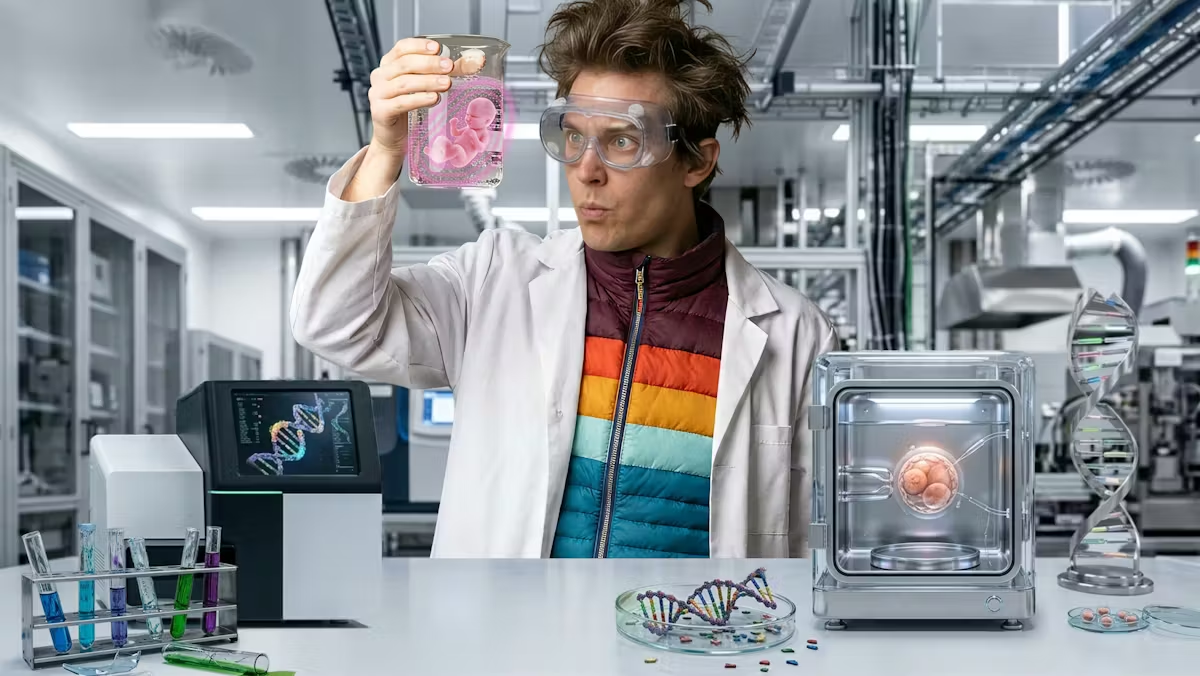
Why personalized gene editing, genetic resurrections and embryo scoring made our list.January 16, 2026Stephanie Arnett/MIT Technology Review | Adobe Stock Earlier this week, MIT Technology Review published its annual list of Ten Breakthrough Technologies. As always, it features technologies that made the news last year, and which—for better or worse—stand to make waves in the coming years. They’re the technologies you should really be paying attention to. This year’s list includes tech that’s set to transform the energy industry, artificial intelligence, space travel—and of course biotech and health. Our breakthrough biotechnologies for 2026 involve editing a baby’s genes and, separately, resurrecting genes from ancient species. We also included a controversial technology that offers parents the chance to screen their embryos for characteristics like height and intelligence. Here’s the story behind our biotech choices. A base-edited baby! In August 2024, KJ Muldoon was born with a rare genetic disorder that allowed toxic ammonia to build up in his blood. The disease can be fatal, and KJ was at risk of developing neurological disorders. At the time, his best bet for survival involved waiting for a liver transplant. Then he was offered an experimental gene therapy—a personalized “base editing” treatment designed to correct the specific genetic “misspellings” responsible for his disease. It seems to have worked! Three doses later, KJ is doing well. He took his first steps in December, shortly before spending his first Christmas at home.
Three technologies that will shape biotech in 2026
Why personalized gene editing, genetic resurrections and embryo scoring made our list.
822 words~4 min read