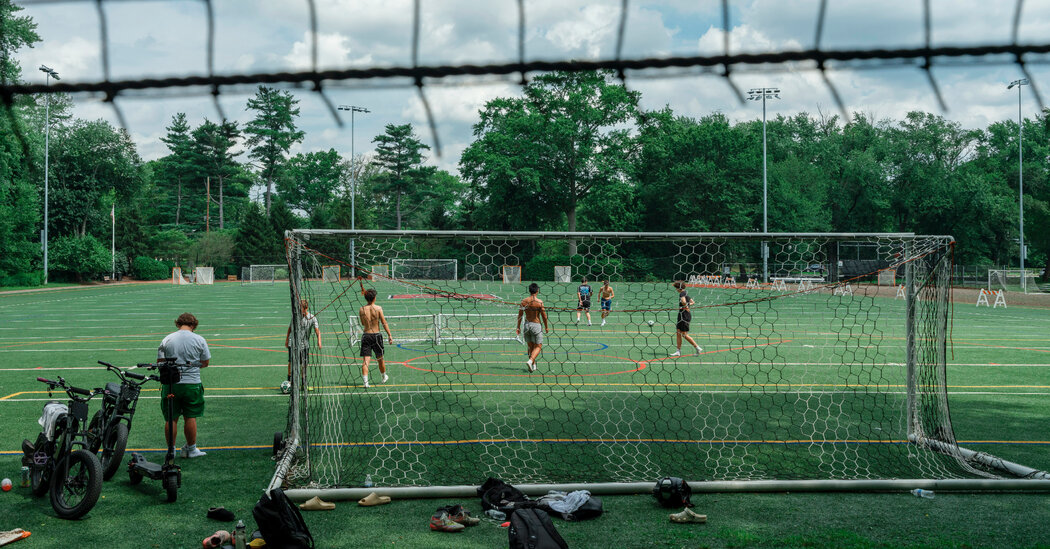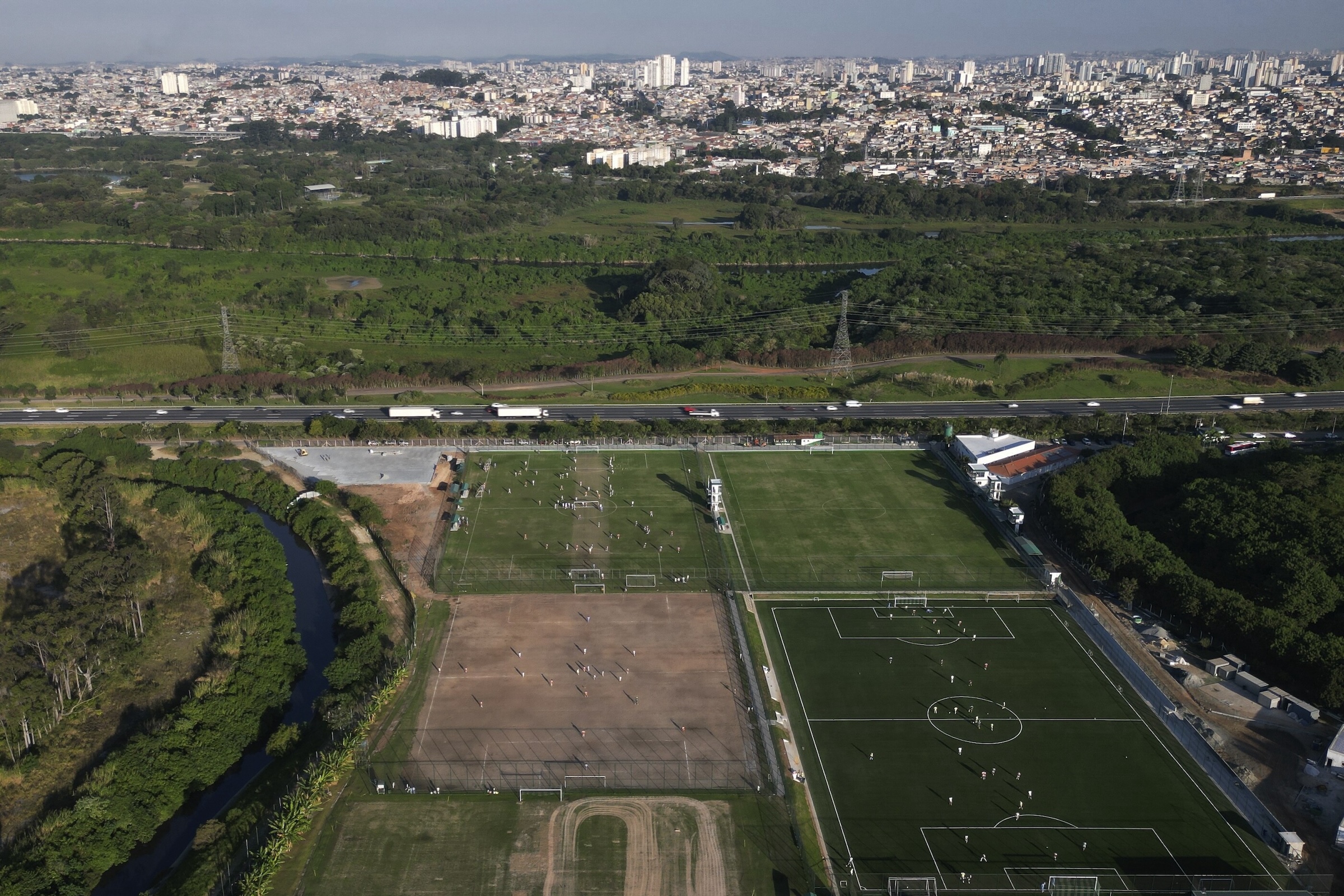
Around the country, heated debates are taking place over whether to install artificial turf, pitting neighbors against each other.April 9, 2026Adobe Stock A rare warm spell in January melted enough snow to uncover Cornell University’s newest athletic field, built for field hockey. Months before, it was a meadow teeming with birds and bugs; now it’s more than an acre of synthetic turf roughly the color of the felt on a pool table, almost digital in its saturation. The day I walked up the hill from a nearby creek to take a look, the metal fence around the field was locked, but someone had left a hallway-size piece of the new simulated grass outside the perimeter. It was bristly and tough, but springy and squeaky under my booted feet. I could imagine running around on it, but it would definitely take some getting used to. My companion on this walk seemed even less favorably disposed to the thought. Yayoi Koizumi, a local environmental advocate, has been fighting synthetic-turf projects at Cornell since 2023. A petite woman dressed that day in a faded plum coat over a teal vest, with a scarf the colors of salmon, slate, and sunflowers, Koizumi compulsively picked up plastic trash as we walked: a red Solo cup, a polyethylene Dunkin’ container, a five-foot vinyl panel. She couldn’t bear to leave this stuff behind to fragment into microplastic bits—as she believes the new field will. “They’ve covered the living ground in plastic,” she said. “It’s really maddening.” The new pitch is one part of a $70 million plan to build more recreational space at the university. As of this spring, Cornell plans to install something like a quarter million square feet of synthetic grass—what people have colloquially called “astroturf” since the middle of the last century. University PR says it will be an important part of a “health-promoting campus” that is “supportive of holistic individual, social, and ecological well-being.” Koizumi runs an anti-plastic environmental group called Zero Waste Ithaca, which says that’s mostly nonsense. This fight is more than just the usual town-versus-gown tension. Synthetic turf used to be the stuff of professional sports arenas and maybe a suburban yard or two; today communities across the United States are debating whether to lay it down on playgrounds, parks, and dog runs. Proponents say it’s cheaper and hardier than grass, requiring less water, fertilizer, and maintenance—and that it offers a uniform surface for more hours and more days of the year than grass fields, a competitive advantage for athletes and schools hoping for a more robust athletic program.
Is fake grass a bad idea? The AstroTurf wars are far from over.
Around the country, heated debates are taking place over whether to install artificial turf, pitting neighbors against each other.
3,822 words~17 min read