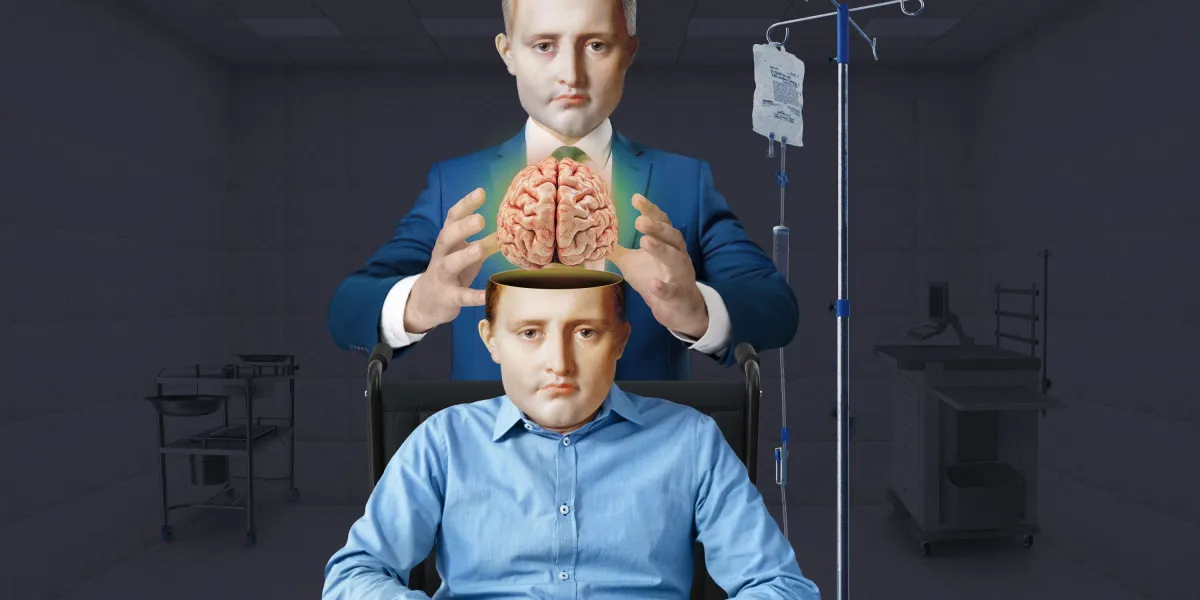
After operating in secrecy for years, a startup company called R3 Bio, in Richmond, California, suddenly shared details about its work last week—saying it had raised money to create nonsentient monkey “organ sacks” as an alternative to animal testing. In an interview with Wired, R3 listed three investors: billionaire Tim Draper, the Singapore-based fund Immortal Dragons, and life-extension investors LongGame Ventures. But there is more to the story. And R3 doesn’t want that story told. MIT Technology Review discovered that the stealth startup’s founder John Schloendorn also pitched a startling, medically graphic, and ethically charged vision for what he's called “brainless clones” to serve the role of backup human bodies.
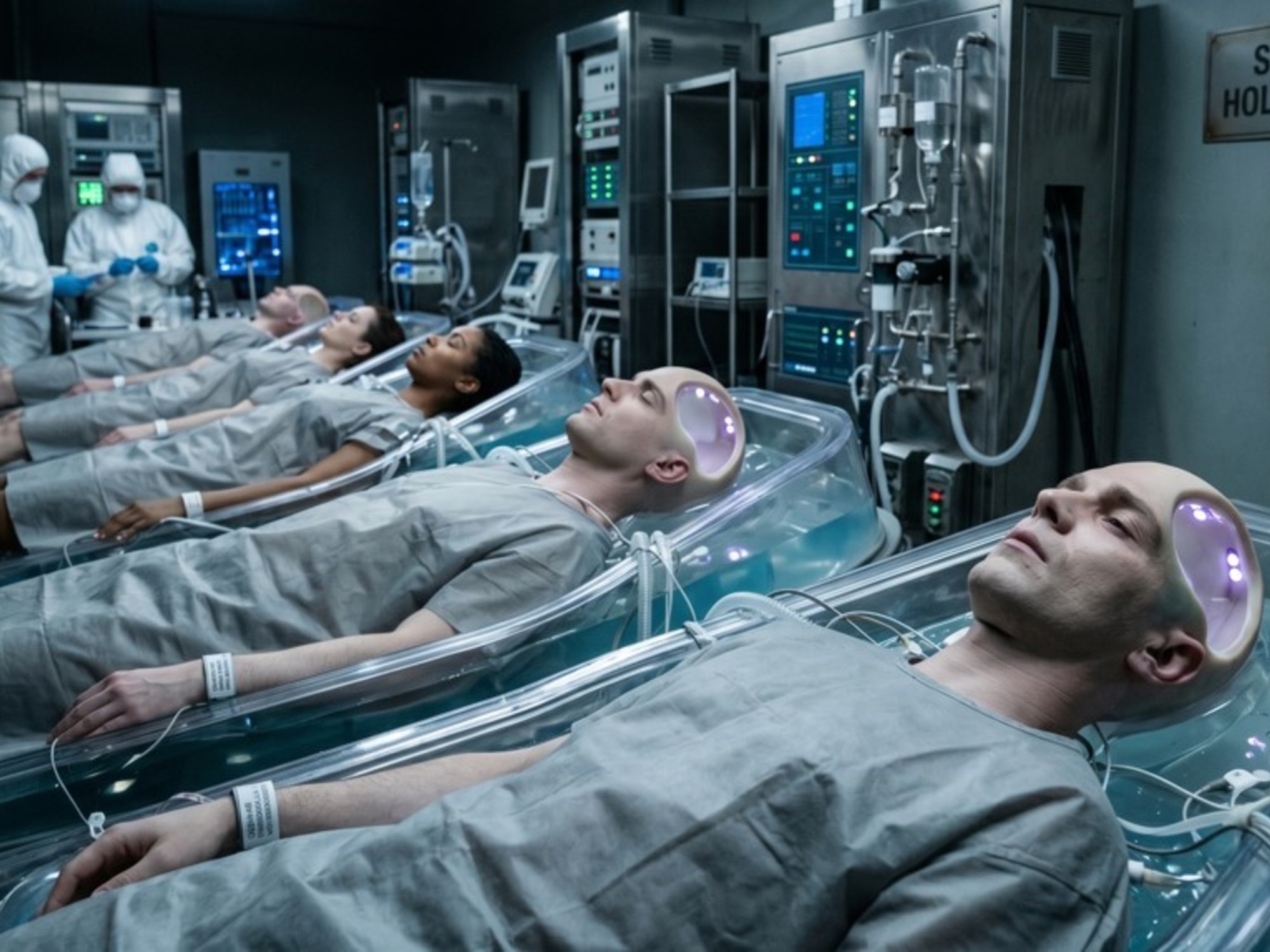
Imagine it like this: a baby version of yourself with only enough of a brain structure to be alive in case you ever need a new kidney or liver. Or, alternatively, he has speculated, you might one day get your brain placed into a younger clone. That could be a way to gain a second lifespan through a still hypothetical procedure known as a body transplant.
The fuller context of R3’s proposals, as well as activities of another stealth startup with related goals, have not previously been reported. They’ve been kept secret by a circle of extreme life-extension proponents who fear that their plans for immortality could be derailed by clickbait headlines and public backlash. And that’s because the idea can sound like something straight from a creepy science fiction film. One person who heard R3’s clone presentation, and spoke on the condition of anonymity, was left reeling by its implications and shaken by Schloendorn’s enthusiastic delivery. The briefing, this person said, was like a “close encounter of the third kind” with “Dr. Strangelove.” A key inspiration for Schloendorn is a birth defect in which children are born missing most of their cortical hemispheres; he’s shown people medical scans of these kids’ nearly empty skulls as evidence that a body can live without much of a brain. And he’s talked about how to grow a clone. Since artificial wombs don’t exist yet, brainless bodies can’t be grown in a lab. So he’s said the first batch of brainless clones would have to be carried by women paid to do the job. In the future, though, one brainless clone could give birth to another. Last Monday, the same day it announced itself to the world in Wired, R3 sent us a sweeping disavowal of our findings. It said Schloendorn “never made any statement regarding hypothetical ‘non-sentient human clones’ [that] would be carried by surrogates.” The most overarching of these challenges was its insistence that “any allegations of intent or conspiracy to create human clones or humans with brain damage are categorically false.” But even Schloendorn and his cofounder, Alice Gilman, can’t seem to keep away from the topic. Just last September, the pair presented at Abundance Longevity, a $70,000-per-ticket event in Boston organized by the anti-aging promoter Peter Diamandis. Although the presentation to about 40 people was not recorded and was meant to be confidential, a copy of the agenda for the event shows that Schloendorn was there to outline his “final bid to defeat aging” in a session called “Full Body Replacement.” According to a person who was there, both animal research and personal clones for spare organs were discussed. During the presentation, Gilman and Schloendorn even stood in front of an image of a cloning needle. Pressed on whether this was a talk about brainless clones, Gilman told us that while R3’s current business is replacing animal models, “the team reserves the right to hold hypothetical futuristic discussions.” MIT Technology Review found no evidence that R3 has cloned anyone, or even any animal bigger than a rodent. What we did find were documents, additional meeting agendas, and other sources outlining a technical road map for what R3 called “body replacement cloning” in a 2023 letter to supporters. That road map involved improvements to the cloning process and genetic wiring diagrams for how to create animals without complete brains.