Organizational transformationHow your company can adapt to a complex world. by Jana Werner and Phil Le-BrunFrom the Magazine (November–December 2025)Biodiversity Heritage LibrarySummary. Leer en españolLer em portuguêsPostBuy CopiesThe metaphor for business organizations has long been the machine. Like machines, most companies are designed to create efficient, predictable outcomes; minimize risk; and eliminate variation. For decades this model—built on standardization, specialization, and control—helped companies create and deliver products with unfailing efficiency. And in some cases, it still does.Read more on Organizational transformation or related topics Organizational change and Organizational developmentA version of this article appeared in the November–December 2025 issue of Harvard Business Review.PostBuy CopiesRead more on Organizational transformation or related topics Organizational change and Organizational development
Become an Octopus Organization
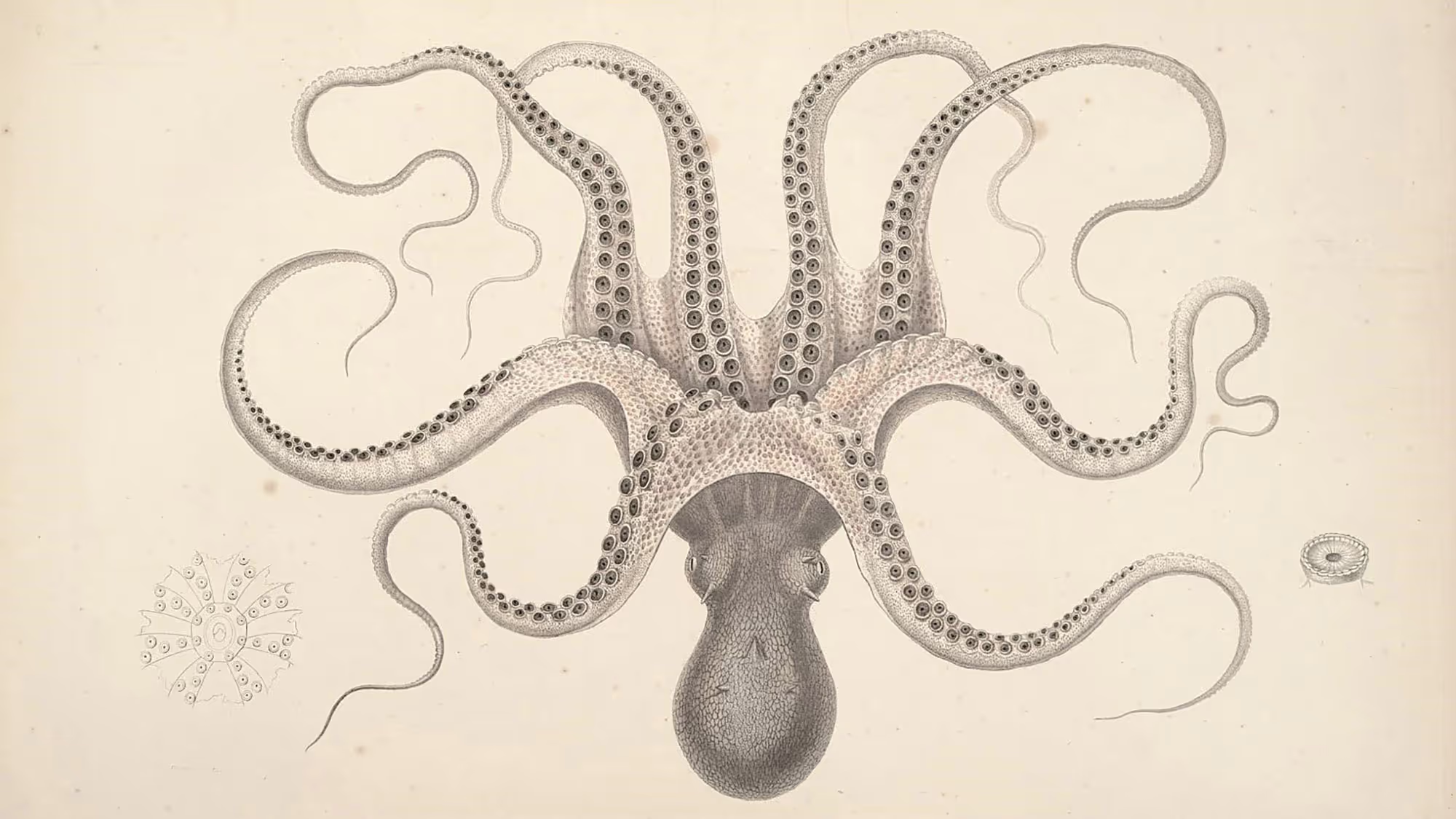
As companies pour trillions into transformation efforts, few see lasting results. That’s because most organizations approach change like machines—rigidly, predictably, and from the top down, argue Amazon Web Services enterprise strategists Jana Werner and Phil Le-Brun. In this article, adapted from their forthcoming book The Octopus Organization (Harvard Business Review Press, 2025), the authors offer a radically different paradigm: the Octopus Org. Modeled after one of nature’s most adaptive and intelligent creatures, the Octopus Org distributes decision-making, senses change in real time, and continually adapts. Unlike “Tin Man” organizations that view business as complicated but controllable, Octopus Orgs recognize the truly complex nature of today’s world, which is nonlinear, uncertain, and constantly evolving. The key to thriving in it is to change antipatterns —deep-seated habits that compromise clarity, ownership, and curiosity. The shift to this model doesn’t unfold in predictable, scalable phases. It happens organically, as local teams solve meaningful problems and share what works. The prize? Greater adaptability, deeper engagement, stronger innovation, and, ultimately, lasting advantage.