The most dangerous AI decision a leader can make is not the wrong bet. It is making no conscious bet at all — and letting default behavior fill the void.
Most organizations already have an AI strategy. They just did not choose it. It emerged from competitive pressure, inertia, and the cumulative weight of decisions that were never framed as strategic. The result is not chaos — it is something more insidious: a coherent posture that no one consciously designed and that is now surprisingly difficult to change.
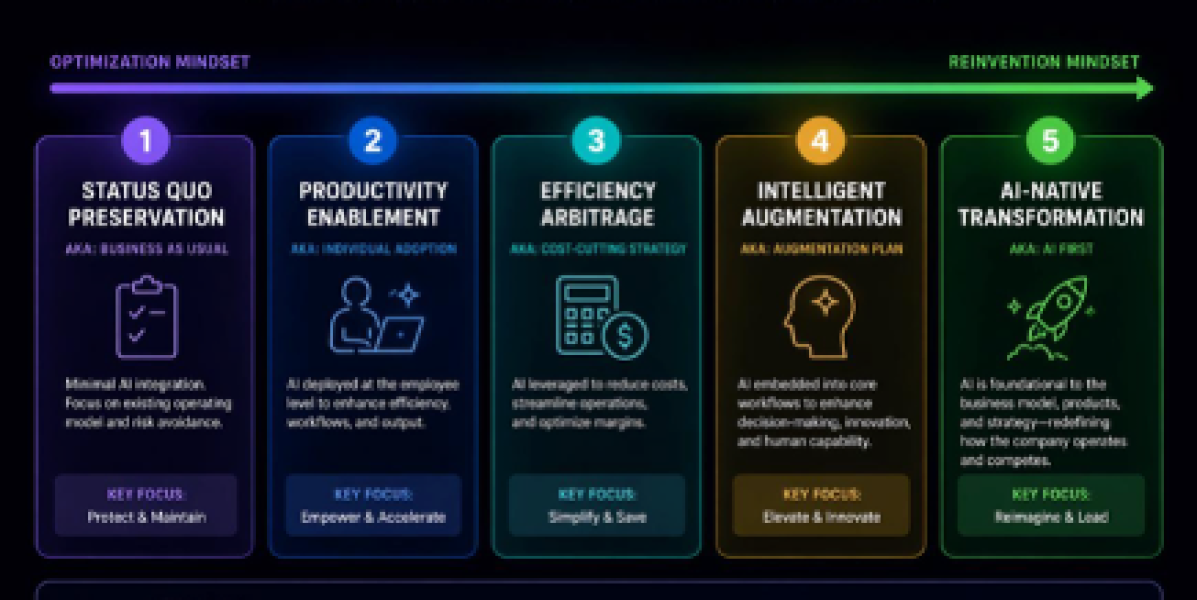
The evidence is everywhere. Across industries, individual productivity is rising — employees use AI to finish work faster, reclaim time, and quietly outperform their measured targets. Yet organizational output is flat. This is not a technology failure. It is a strategy failure: the predictable consequence of an accidental bet on individual enablement that no one consciously made. Some organizations celebrate pockets of AI-driven value — a champion here, a successful pilot there — without asking why those wins haven’t spread. The answer is almost always the same: the underlying bet was never named, so it could never be replicated.
Another pattern is equally telling. Some organizations celebrate pockets of AI-driven value — a champion here, a successful pilot there — without asking why those wins haven’t spread. The answer is almost always the same: the underlying bet was never named, so it could never be replicated.