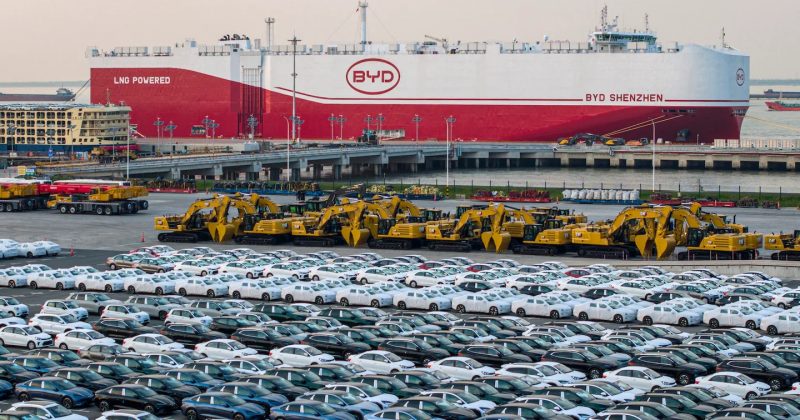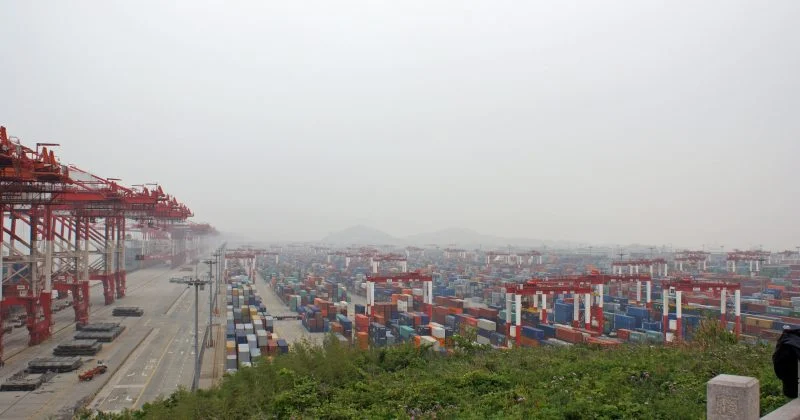
In 2001, China joined the World Trade Organization, sparking a manufacturing surge for the country. China became the “world’s factory,” and its export rate grew 30% each year from 2001 to 2006, more than double the growth rate from the previous five years.
While the U.S. reaped the benefits of cheap imports from its new normalized trade partner, the American manufacturing sector took a beating: China’s production explosion accounted for 59.3% of all U.S. manufacturing job losses between 2001 until 2019—about 4 million jobs. Economists David Autor, David Dorn, and Gordon Hanson coined this phenomenon the “China shock.”
A quarter of a century later, some economists have compared this industrial transformation and today’s rise of AI. Like the China shock, AI growth has been associated with a shift in labor: Despite many economists seeing little evidence, so far, of mass job displacement as a result of AI, tech companies have used the technology to justify laying off thousands of workers. Last month, Snap CEO Evan Spiegel announced the reduction of about 1,000 roles at the company, 16% of its staff. Klarna CEO Sebastian Siemiatkowski anticipates AI shrinking the company’s white-collar workforce by one-third by 2030.