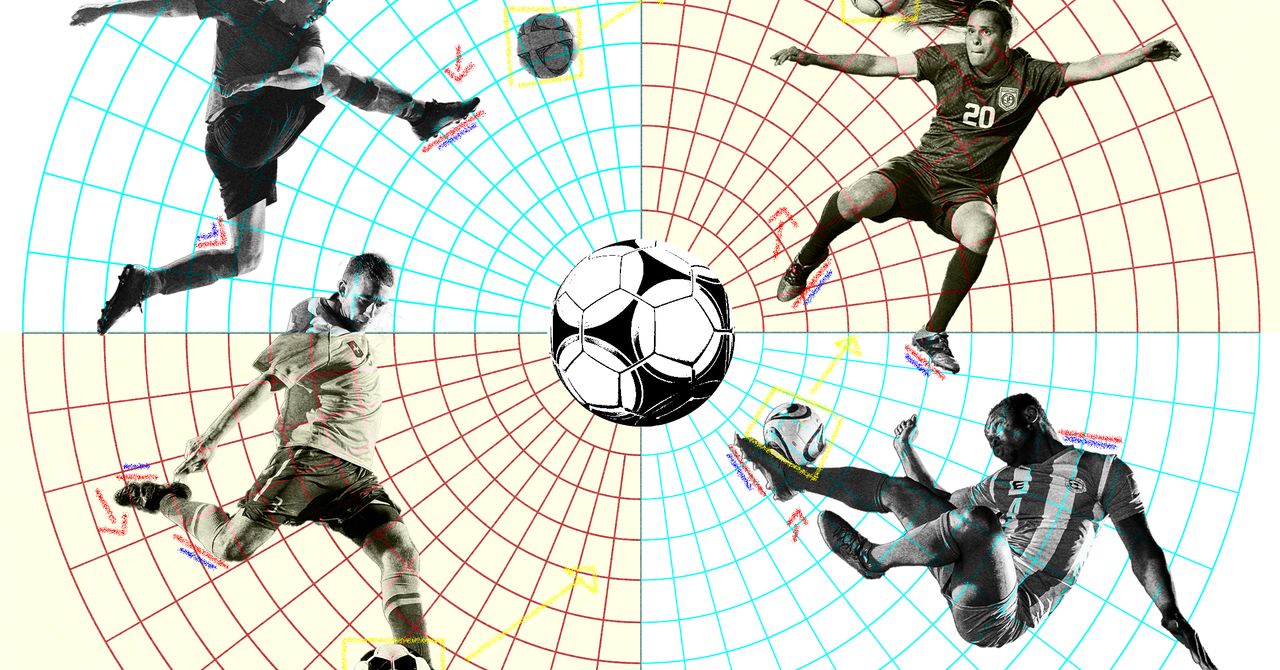
THE ROLE OF advanced analytics in sports is a contentious subject. To its defenders, data-driven pragmatism is a natural evolutionary step in the way we play and watch games. For detractors, the approach prioritizes results above all else and drains the soul from a pursuit that should be spontaneous and joyful.
As someone who is neither pragmatic nor spontaneous, I don’t qualify for either camp, though I find the very notion of applying this kind of research to soccer fascinating and even admirable. The game is resistant to orderly examination by design. Like preparing a tax return for a housecat, it takes a stupendous amount of ingenuity just to figure out which questions to ask, to say nothing of finding the answers.
While baseball can be a spreadsheet task, soccer matches amount to meandering free-verse written in 90-minute chunks. Luke Bornn is a data scientist who specializes in movement studies. Thanks to his background analyzing complex bodies in motion, he realized he was uniquely suited to explore the nature of such an evasive game. While at Los Alamos National Laboratory, Bornn worked on ways to detect how much damage helicopter blades can sustain before it compromises the chopper’s ability to stay airborne. He has mapped climate data to predict crop yield and studied how herds of massive land mammals move about the fruited plain. The ebb and flow of a soccer match, while mysterious, were not altogether unfamiliar, and he has pioneered ways to quantify some of the game’s amorphous spirit.