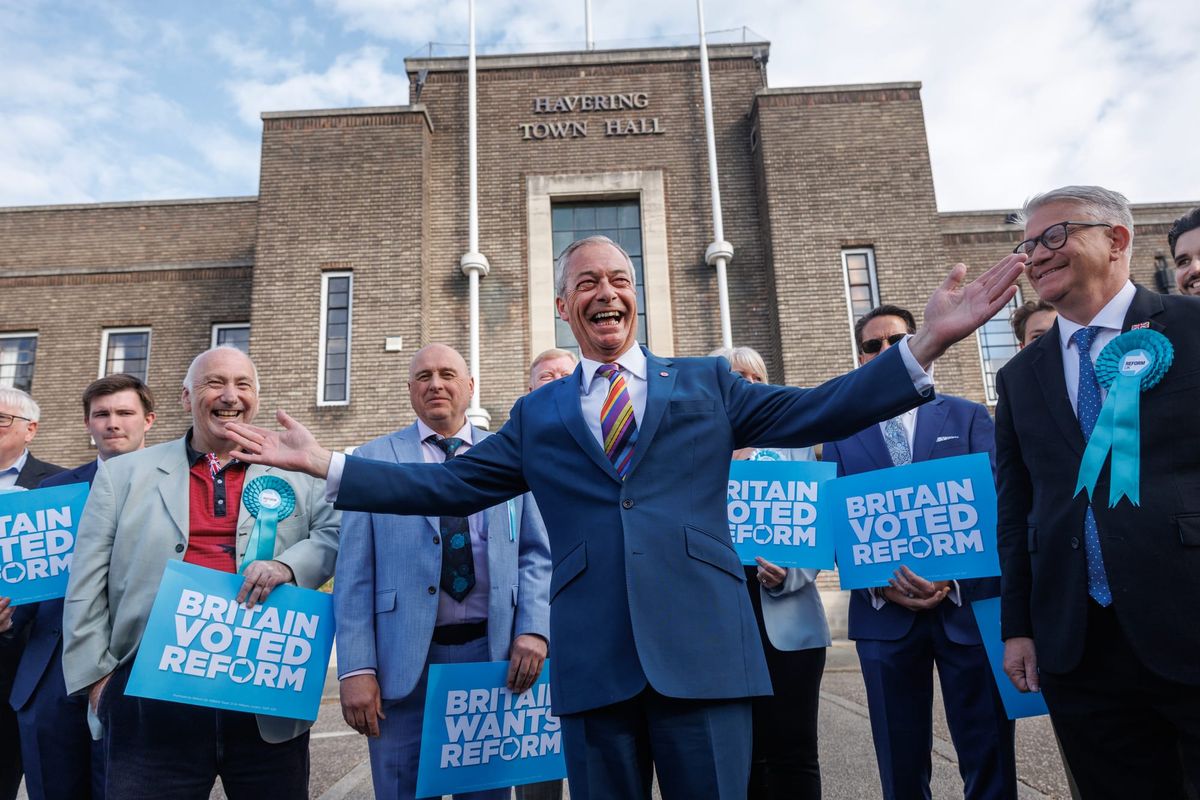
Nigel Farage’s ascent to power is not inevitable, and his party’s success in the May elections will expose its major weaknesses
T
here is no sugarcoating the fact that on the basis of last week’s elections, Reform UK is now the largest party in British politics, if only by vote share. It is still a long way from ever winning power at Westminster, but we don’t need to look far to see whether a Reform government would try to make good on its various threats – because Reform is our local version of an international wave of populist rightwing nationalism.
This loosely connected movement has declared its hostility to the checks and balances that prevent democracy from becoming a tyranny of the majority, or even of those with only a plurality of support. It can be chaotic and destructive, like Nigel Farage’s beloved Donald Trump, or slow and grinding like the recently departed Hungarian government of Viktor Orbán. But we can make a reasonable guess as to what life under a Reform government might look like – and I suspect it’s something that neither you nor I would welcome.
Yet Reform’s success is not inevitable. With hundreds more seats in English local government and a sizeable presence in Scotland and Wales, Reform has an unprecedented opportunity to convince people it is a genuine contender for power. But this masks a number of weaknesses, not least the fact that its share of the vote dipped compared with last year’s local elections. Reform benefited this time from a more fragmented political landscape overall, but it’s possible its support has hit a ceiling, at least for the moment.