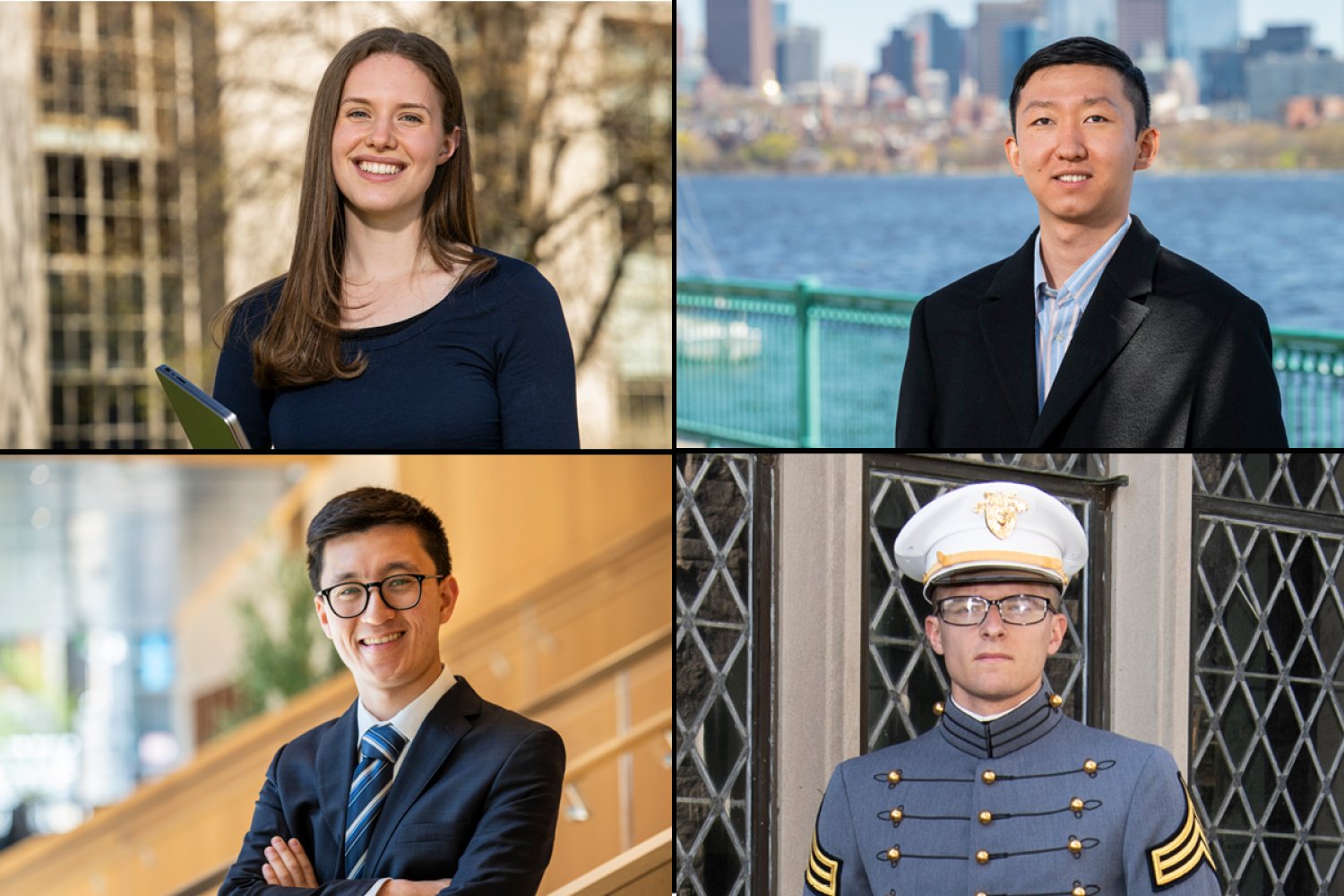
The Hertz Foundation has named its Fellows for 2026.gettyThe Hertz Foundation has named 19 recipients of the highly prestigious 2026 Hertz Fellowship in the applied sciences, engineering and mathematics.Considered to be one of the most competitive graduate fellowships in the country, the Hertz Fellowship is awarded to students intending to earn a PhD in applied physical and biological sciences, mathematics or engineering at an institution in the United States. To be eligible, students must be a college senior, first-year graduate student, or in a “gap period” preparing to apply to graduate school; they also must be citizens or permanent residents of the United States.Hertz Fellows receive up to five years of financial support — a stipend, full tuition and an additional stipend for those with dependent children — that may total as much as $250,000.This cohort of fellows represent a wide range of disciplines — including astrophysics, materials science, chemistry, robotics, plant sciences, and neuroscience. The winners completed their undergraduate studies at 15 different universities, with Harvard University leading the way with four fellows and The Ohio State University with two. The new fellows will conduct their doctoral research at some of the nation’s most distinguished research universities; five will study at Harvard, four each at Stanford University and MIT, three at Princeton University, and one each at Duke University, University of California at San Francisco, and the California Institute of Technology. The full list of recipients can be found here. The 2026 Hertz Fellows are preparing to investigate a wide range of issues, including developing RNA-based tools to fight drug-resistant bacteria, building a satellite mission to locate the universe’s missing matter, studying spacecraft communication and the use of AI in space, using genomics and molecular breeding to develop resilient crops requiring fewer chemicals, and developing new treatments for neuroimmune diseases.MORE FOR YOUOne unique expectation of the Hertz Foundation is that it requires applicants for the fellowship make a non-binding moral commitment to make their skills available to the United States in times of national emergency. “Throughout history, science and technology have played essential roles in overcoming major challenges facing society, from creating vaccines that fight global epidemics to developing technology that predicts natural disasters. We leave it up to each fellow to determine in their eyes whether the nation faces a truly serious challenge and if they are positioned to use their knowledge and abilities to address it,” according to a statement at the Foundation’s website.“Year after year, the Hertz Fellowship identifies individuals whose ambitions go far beyond personal achievement. This class is no exception,” said Stephen Fantone, chair of the Hertz Foundation board of directors, in a press release. “Our newest Hertz Fellows are committed to solving problems that matter for our national security, our health and our future.”In addition to financial support, Hertz Fellows also receive other benefits, including mentoring, networking and potential partnerships with influential science and technology organizations such as the Gates Foundation, Lawrence Livermore National Laboratory, Analog Devices and the American Physical Society.“The strength of the Hertz Fellowship has always been its commitment to the long view — supporting fellows not just through graduate school but throughout their lives,” said Wendy Connors, president of the Hertz Foundation. “The 2026 class joins a community that spans generations and disciplines, and we are committed to their success.”The Hertz Foundation was established by auto industry enterpreneur John D. Hertz and his wife Fannie in 1957. Across the Foundation’s 63-year history of awarding fellowships, more than 1,300 Hertz Fellows have been selected. They include two Nobel laureates; 11 winners of Breakthrough Prizes, and three fellows who have been awarded MacArthur Foundation grants. The fellows also have won the Turing Award, the Fields Medal, the National Medal of Technology, the National Medal of Science and the Wall Street Journal Technology Innovation Award. In addition, 53 fellows have been named members of the National Academies of Sciences, Engineering and Medicine, and 37 are fellows of the American Association for the Advancement of Science. Hertz Fellows hold more than 3,000 patents, have founded more than 375 companies and have created hundreds of thousands of science and technology jobs.
The Hertz Foundation Names 19 Fellows For The Class Of 2026
The Hertz Foundation has named 19 recipients of the highly prestigious Hertz Fellowship for doctoral study in the applied sciences, engineering and mathematics.
687 words~3 min read