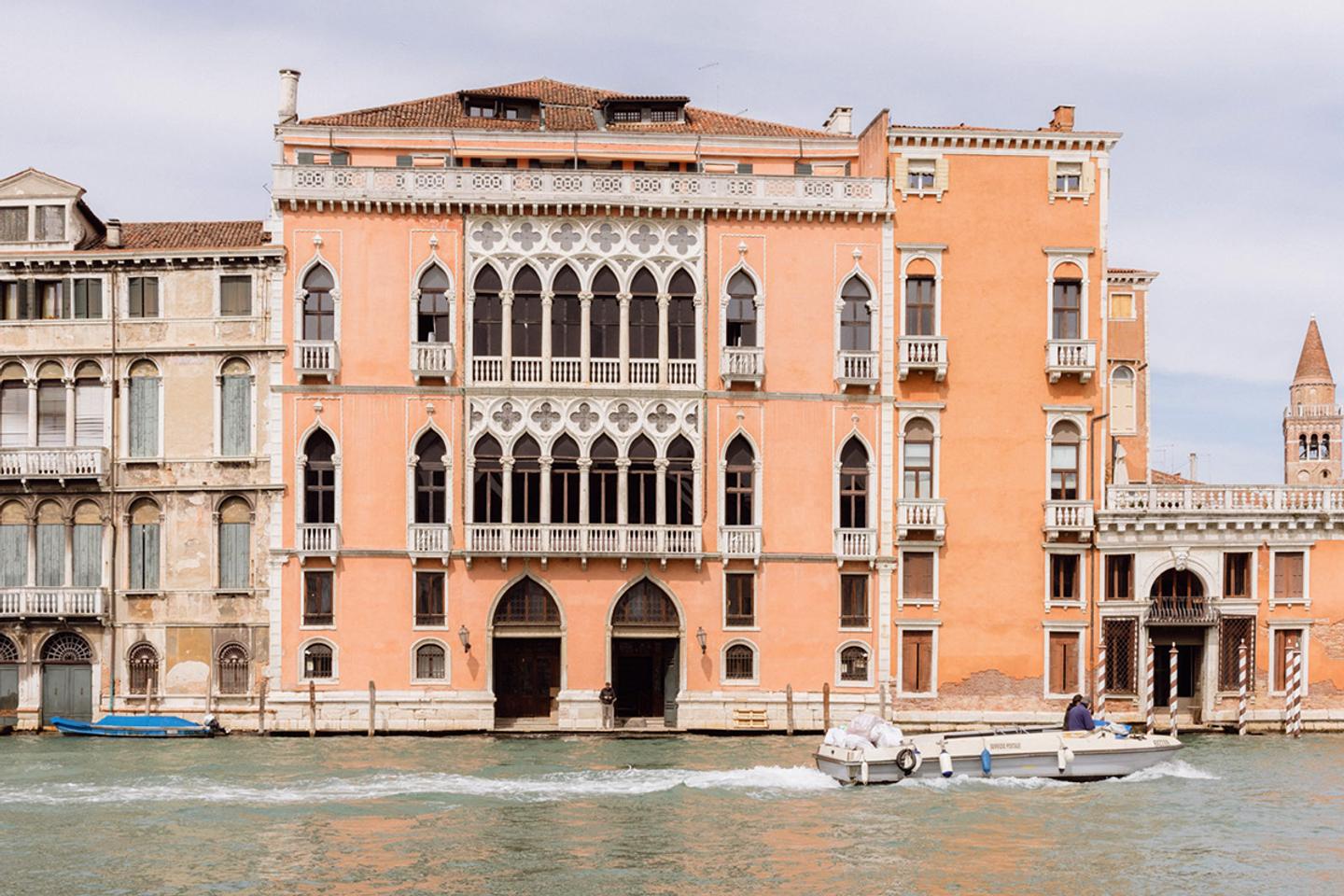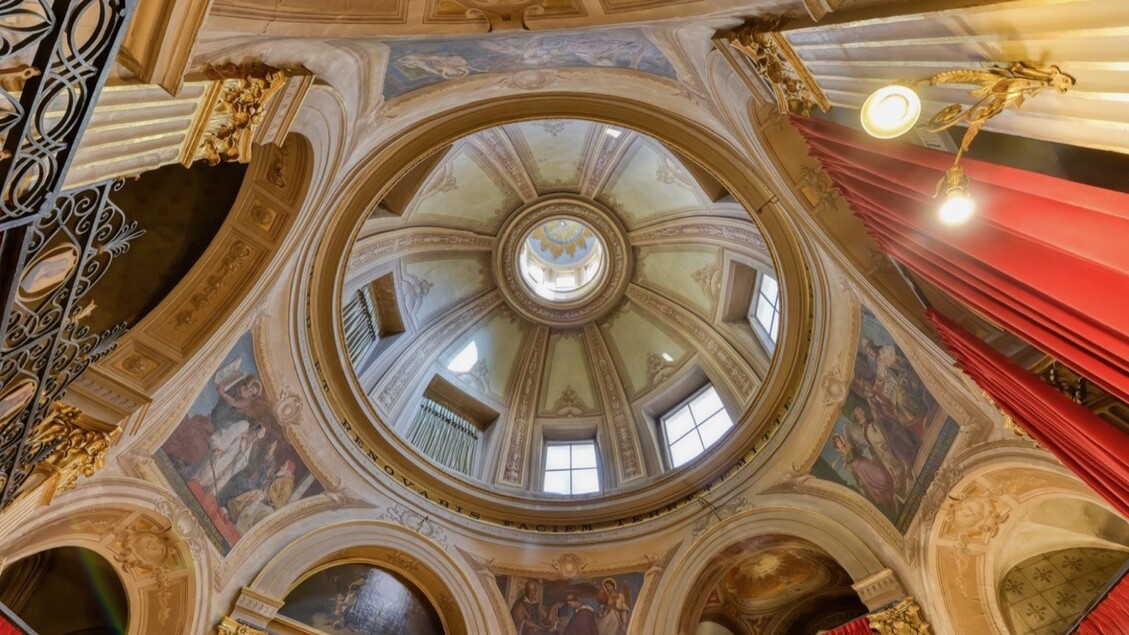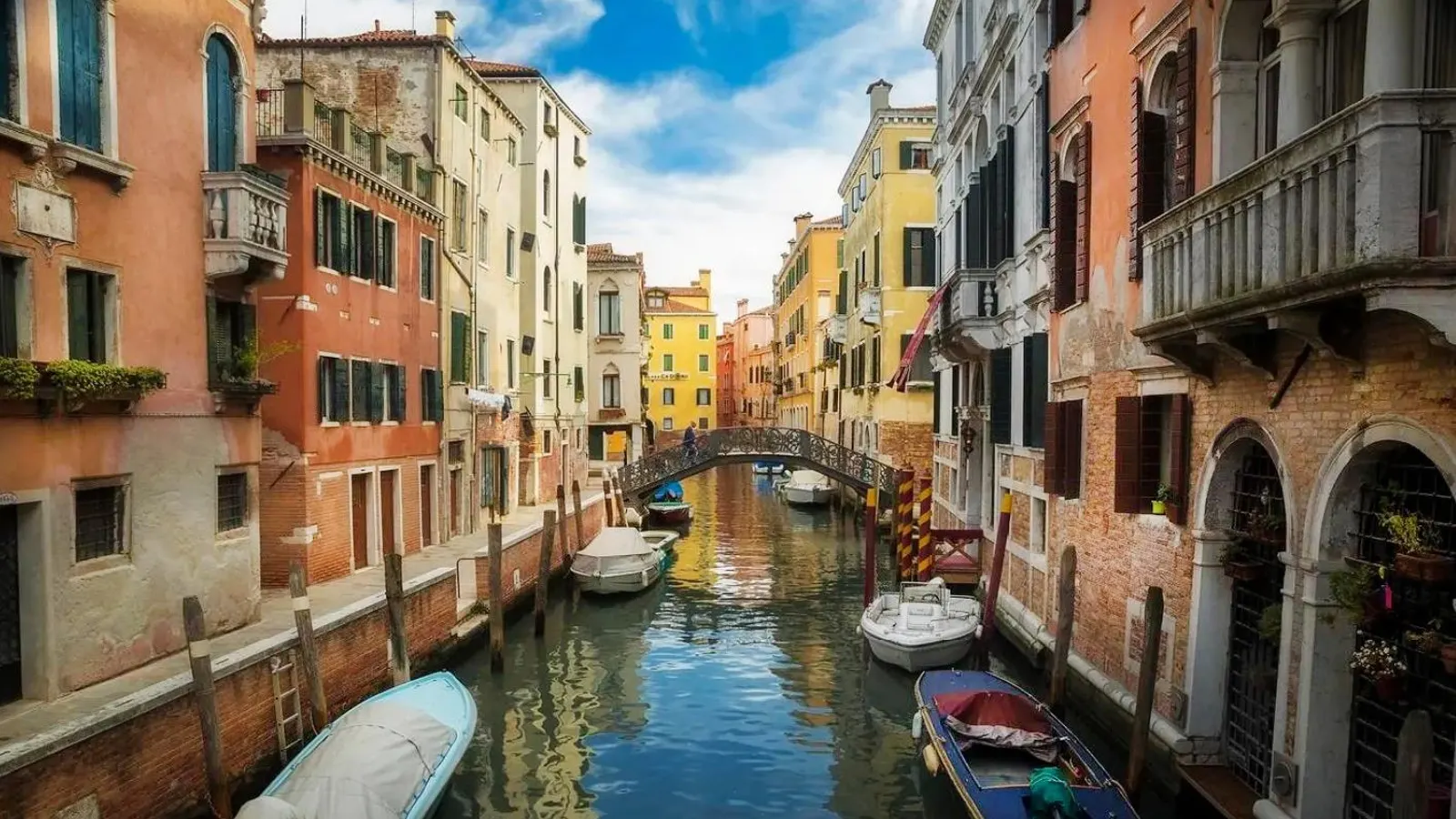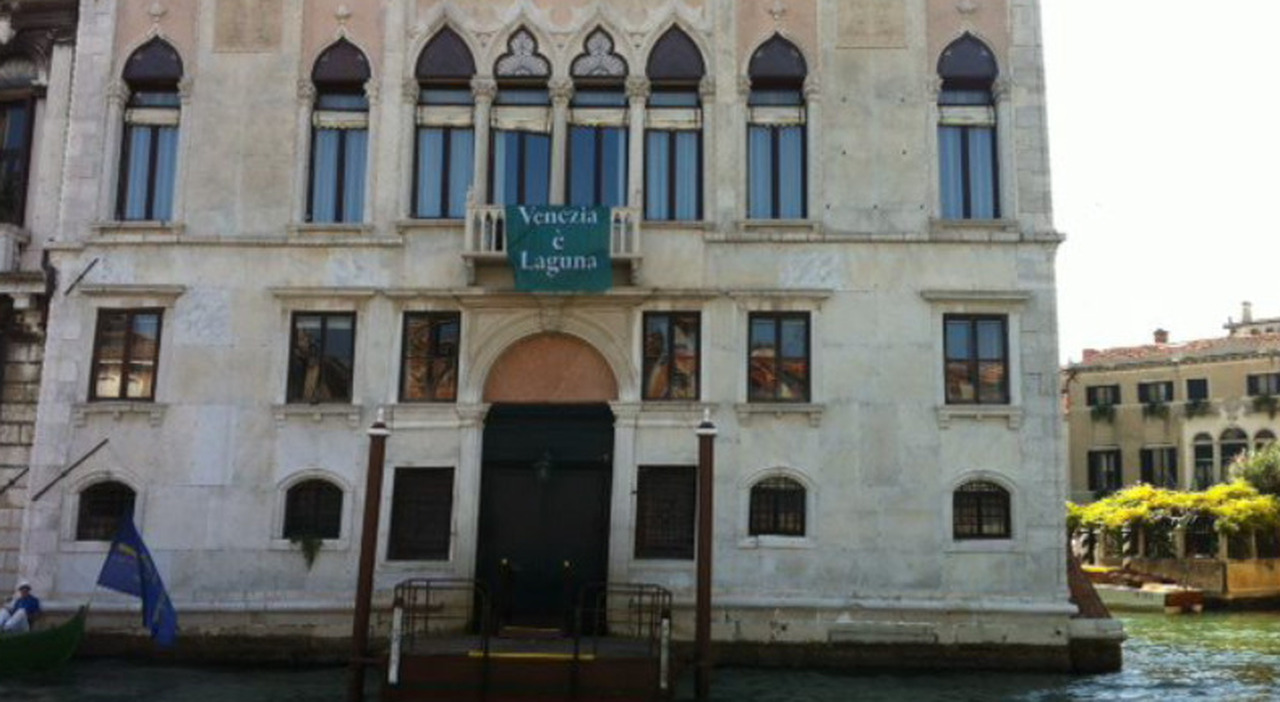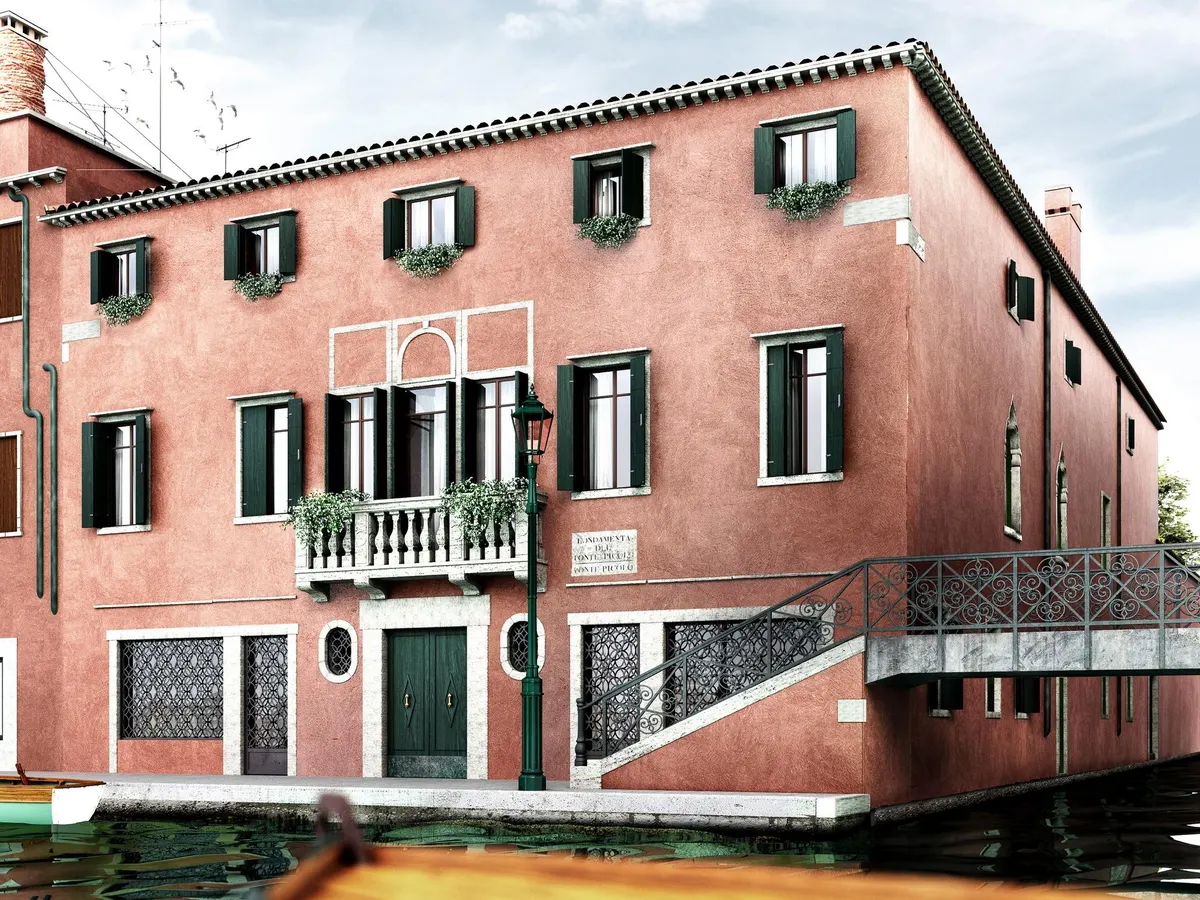
Behind the rather humble façade of Palazzo Ponte PIccolo, a former convent, is a world of residential Venetian luxury.courtesy Ravagnan'sWhen the well-heeled of the Americas and Europe embarked on their 18th- and 19th-century Grand Tours of Italy, the itinerary drew them towards the treasure-paneled galleries of Florence and Rome. With safety in crowds and a Baedeker to hand, much waited to be seen. Meanwhile, elsewhere, other earnest searching souls found themselves deliriously lost and utterly beguiled by the black romantic alleys and secretive waterways of Venice. Venice. The impossible jewel. Founded in the 5th century by men hammering wooden piles deep into the soft clay of a marsh lagoon, protection against marauding tribes of Huns. Millions of oak and larch piles that slowly petrified into the stone foundations that let Venice be built.The island of Giudecca embodies the calmer side of Venice—one where authenticity, history and a genuine neighborhood feel come together.ShutterstockWhat does anyone lost in this labyrinth of canals and tiny humped bridges know? That maps are useless. That overwhelming beauty lurks around every corner. And, for those who actually live in this scintillating city, marauded today by hordes of plodding tourists… knowing exactly where not to live is the signal of true Venetian citizenship.Is Venice really somewhere to reside, not just imagine? For the ancient families still busy in their palazzos (or part of them, at least), the answer is knotted into history and heritage. For outsiders looking in, one property now coming to market provides a particularly seductive opportunity—especially if they possess imagination enough of their own. Beyond San Marco and its mortgageable macchiatos is an island, amongst a city of islands, called Giudecca. Who lives here? The smart people who stay at Belmond Hotel Cipriani, Hilton Molino Stucky and the brand new Airelles are some. This is a centre of culture and refinement, old money, the essence of Venice beyond the tourist hubbub. Let’s say classic Riva Aquarama not public vaporetto. Giudecca has long been a retreat for the international elite, no names is still the order of the day. And it is here that an extraordinary residential opportunity arises. Permissions have already been granted for creating a collection of eight residences—a mix of grand apartments and pieds-à-terre, and amendments to the plan may be authorized.Render courtesy Ravagnan'sSitting directly on the Giudecca Canal, with a private water-gate and views across to the Accademia di Belle Arti di Venezia, is a 16th-century convent enclosing a contemplative scented herbal garden. Its name is Palazzo Ponte Piccolo. The prospect is to translate this significant historical building into a modern private residence—or a collection of eight residences, from grand canal-facing apartments to pied-à-terres hovering over the water. The expansive scented garden—a world of private contemplation.Render courtesy Ravagnan'sThe scale of the refurbishment gives the future owner scope to tailor the space to their specific wishes. In all, the property spans 3,000 square meters (32,300 square feet) including the shaded walkways of the expansive, planted, private garden that also accommodates the separate wellness spa. In fact “wellness spa” hardly covers the offering of three articulated swimming pools, gym and a glass sauna immersed in water. Render courtesy Ravagnan'sRender courtesy Ravagnan'sThe current owner of Palazzo Ponte Piccolo is a native Venetian, a respected developer of historic buildings. He can make available internationally acclaimed teams of architects and local artisans who employ, as one would expect, authentic traditional methods and materials. Istrian stone, Venetian terrazzo, fine Italian marble. High ceilings and exposed beams are part of the centuries-old ways of viewing the world and fashioning comfort here. Alongside a typically Venetian design dialect, a modern sustainability code will match international standards. High-level security engineering integrated into the building fabric will provide peace of mind without disturbing the historical narrative of place. Render courtesy Ravagnan'sRender courtesy Ravagnan'sInterest is expected not only from private investors. The direct canal access that facilitates deliveries suggests the estate might possibly fly a flag discreetly for a foundation headquarters or fashion atelier. Somehow, however, the connection to art persists. Render courtesy Ravagnan'sIf the Grand Tours of old sought the lessons that painting and statuary could provide, the future owner of Palazzo Ponte Piccolo will not be alone if their thinking turns in this direction. The refurbishment is being presented “art-ready” with arrays of controllable lighting and measures to protect private collections.Spanning around 3,000 square meters (32,300 square feet), Palazzo Ponte Piccolo is all about a scale that unfolds behind its modest exterior.Render courtesy Ravagnan'sShould inspiration be required, it lives and breathes just a short Riva-ride away on the banks of the Grand Canal. Peggy Guggenheim, the legendary collector, bought a palazzo there in 1949 where she lived the rest of her life championing modern art. She created a gallery in her garden and opened it to the public. With such precedent set, the Palazzo Ponte Piccolo might deservedly bring a new gala opening to Giudecca.Canalside access means Peggy Guggenheim's Venice is just a short Riva-ride away.Render courtesy Ravagnan'sPalazzo Ponte Piccolo is represented for sale by Michelangelo Ravagnan of Ravagnan’s, a member of Forbes Global Properties, on the market at €11,200,000 (around $12.8 million). Forbes Global Properties is the invitation-only network of top-tier brokerages worldwide and the exclusive real estate partner of Forbes.
In Venice, A $12.8 Million 16th-Century Convent Is Ready For Conversion
As the 61st Venice Biennale gets under way, an historic 32,000-square-foot palazzo comes to market.
872 words~4 min read