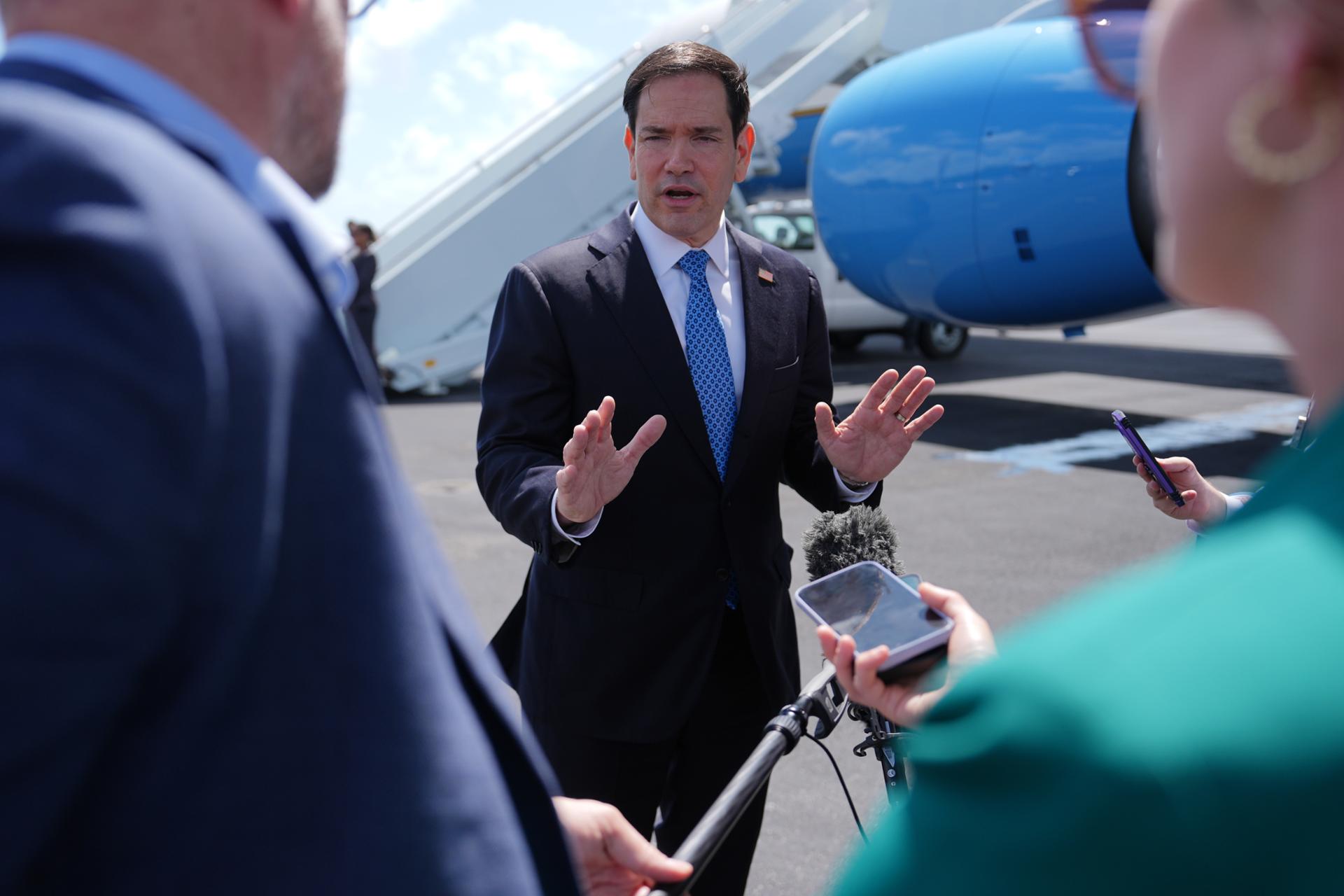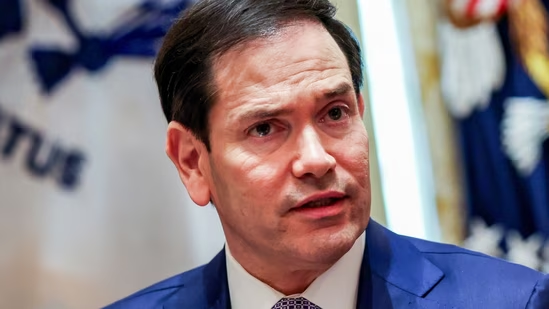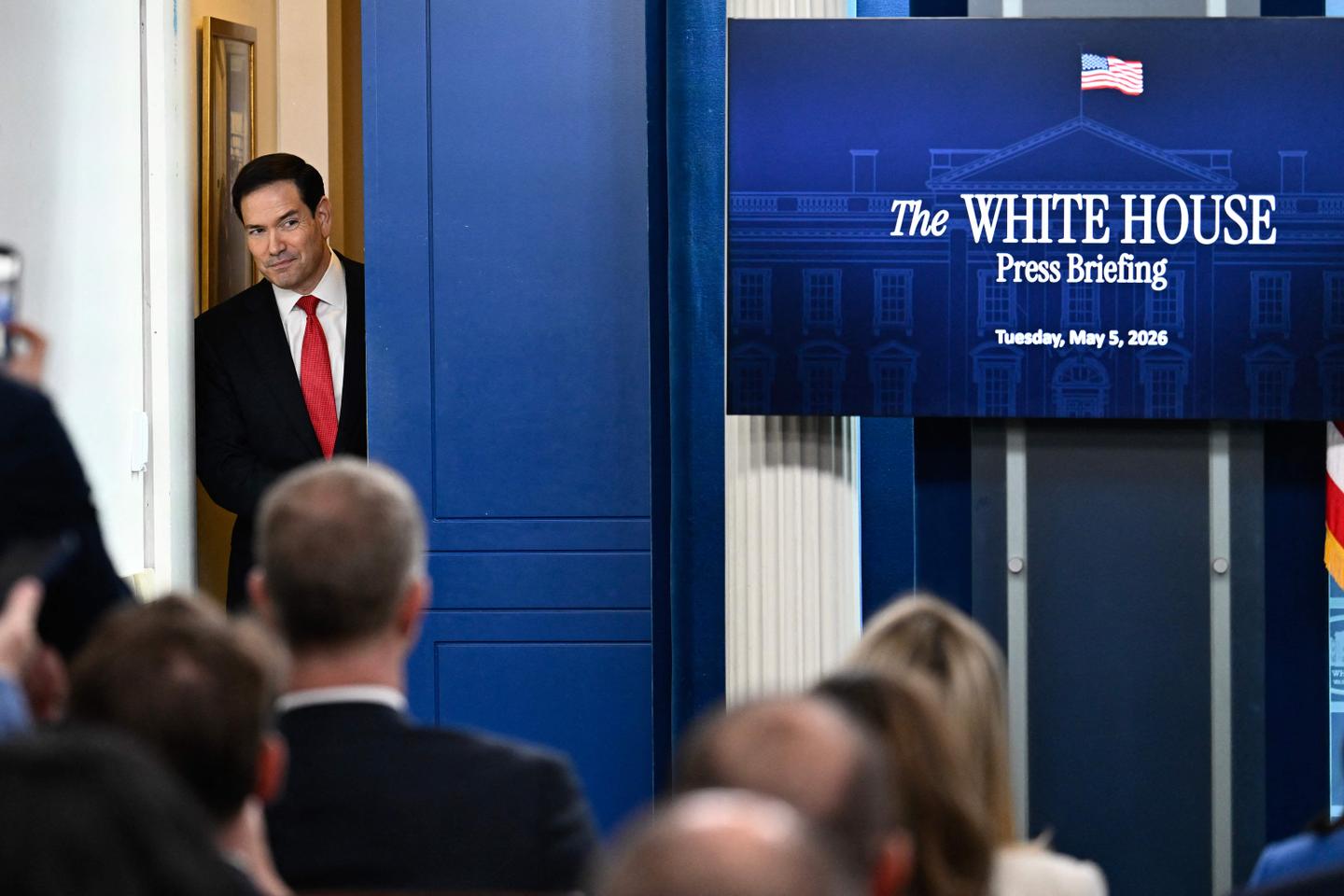
US Secretary of State Marco Rubio during a press conference at the White House in Washington, May 5, 2026. KENT NISHIMURA/AFP
Managing to appear calm and competent, even as a key figure in a dysfunctional and erratic US administration, is no small task. In truth, it's a remarkable feat. On Tuesday, May 5, Marco Rubio passed an oral test, mainly focused on the Middle East, during a visit to the White House press room. Standing in for spokesperson Karoline Leavitt, the secretary of state and national security adviser to President Donald Trump once again demonstrated his skill: defending the coherence of a war that lacks any.
Rubio explained that the US president had "answered the calls" from numerous countries to guide ships through the Strait of Hormuz. The goal of Operation "Project Freedom" was to rescue the roughly 23,000 civilian sailors from 87 countries stranded on those vessels. This "first step" toward reopening the strategic maritime passage was nevertheless almost immediately suspended by Trump, who cited progress in negotiations with Iran. A turn to the right, then to the left, and an administration still mired in confusion.
"The operation is over," Rubio also said of "Epic Fury," the bombing campaign halted by the ceasefire. This haste was due to growing pressure in Congress. For the sixth time since the start of the war, a Republican majority in the Senate, supporting the administration, rejected a resolution calling for an end to military hostilities under the War Powers Resolution of 1973. This piece of legislation stipulates that the White House cannot pursue an operation of this nature beyond 60 days without Congressional authorization – a period that expired on May 1.