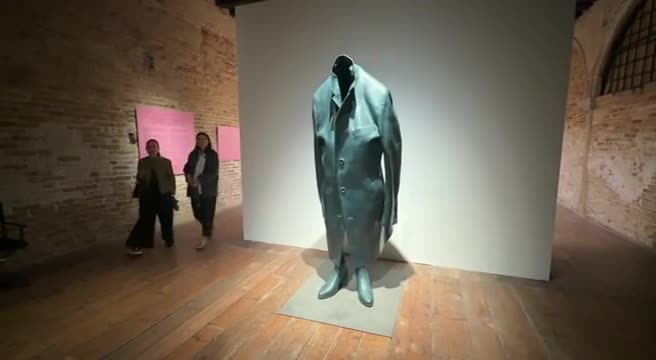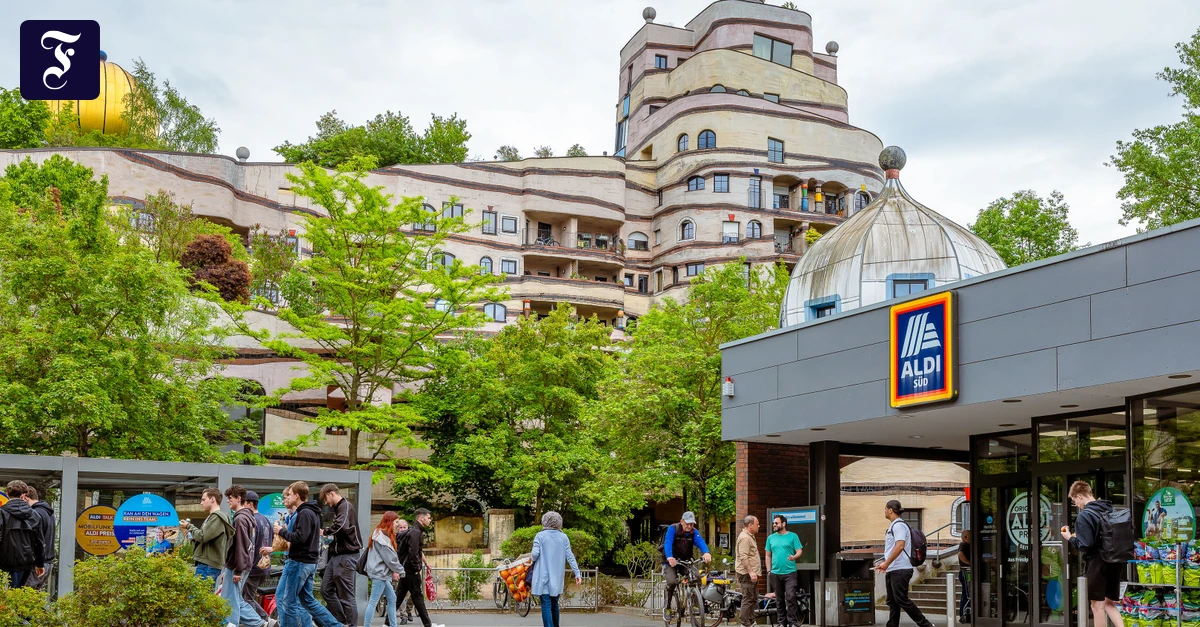
Erwin Wurm is telling me about the time his long-horned sheep showed him up in Brazil. “At the moment we have 18 sheep,” says the Austrian artist whose playful, psychologically-charged sculptural works of bloated cars and houses, giant phallic pickles and eerily empty clothes critique consumer culture. He lives and works in a 12th-century estate in Limberg, a village in Lower Austria, where his herd of ewes and lambs live inside “Fat House”, his 2003 installation of a suburban home puffed up like a monumental marshmallow.
“Some years ago, I had a show in Brazil and ‘Fat House’ was sent over there,” he says. “I flew to Rio de Janeiro and when I entered the work, I smelt my sheep. It was intensely embarrassing.” With its combination of high art and absurdity, it’s a very Wurm moment.
‘Fat House’ (2003) by Erwin Wurm © Erwin Wurm, Bildrecht Wien, 2026
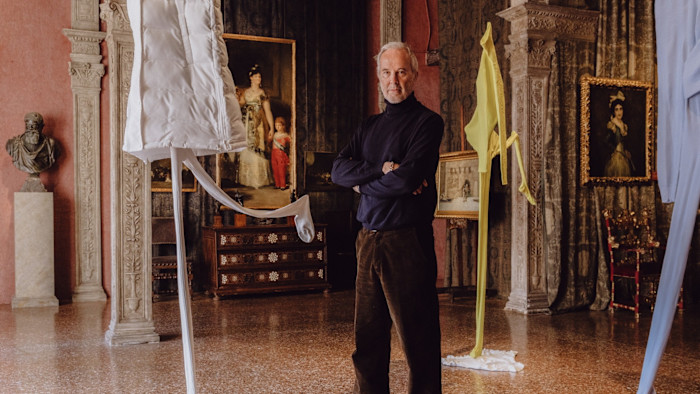
Wurm is on a video call from Venice where he has been installing an exhibition at Museo Fortuny, a 15th-century palazzo that was once the home and studio of the Spanish fashion designer Mariano Fortuny. Even on screen, the 71-year-old artist is an affable presence — self-possessed, quietly amused — crisply dressed in a collarless, black Austrian Janker jacket. He looks more like a Habsburg grandee than a conceptual artist. But his impish smile belies the spruce look.