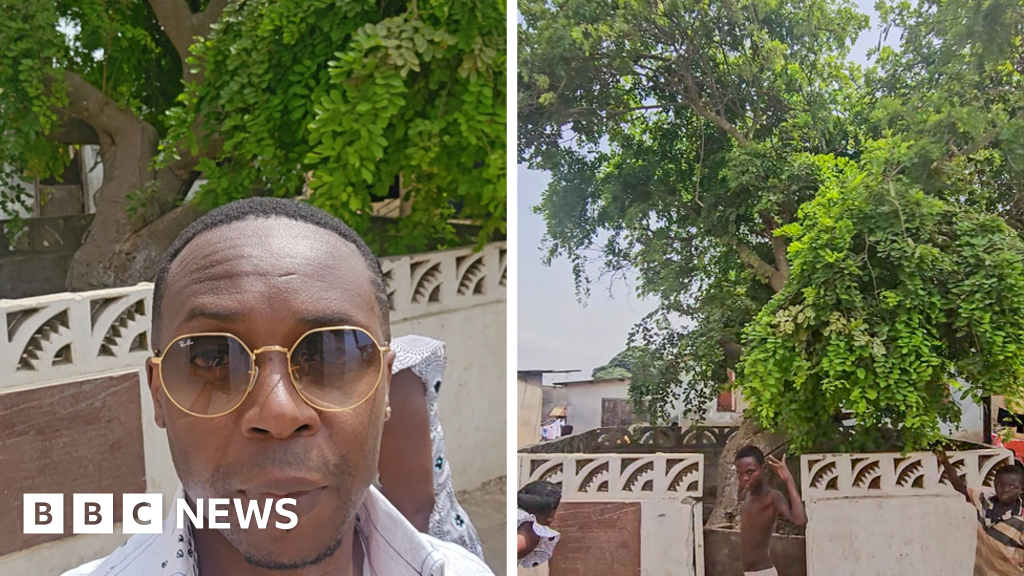
At the edge of the Atlantic Ocean, in the Ghanaian fishing town of Apam, there is a tree that most people barely notice.
It stands on a stretch of red clay earth, rooted between two landmarks that tell very different chapters of Ghana's history.
On one side is Fort Patience, built by the Dutch in 1697 during the era of European trading forts along what was then known as the Gold Coast, and used to trade in gold, ivory and enslaved people.
On the other is the Apam Methodist Church, a symbol of the Christian faith that spread through coastal communities in the centuries that followed.
Fishermen pass it before dawn, carrying their nets towards the shoreline. Children drift past it after school, their routines shaped by the same paths their parents and grandparents once walked.