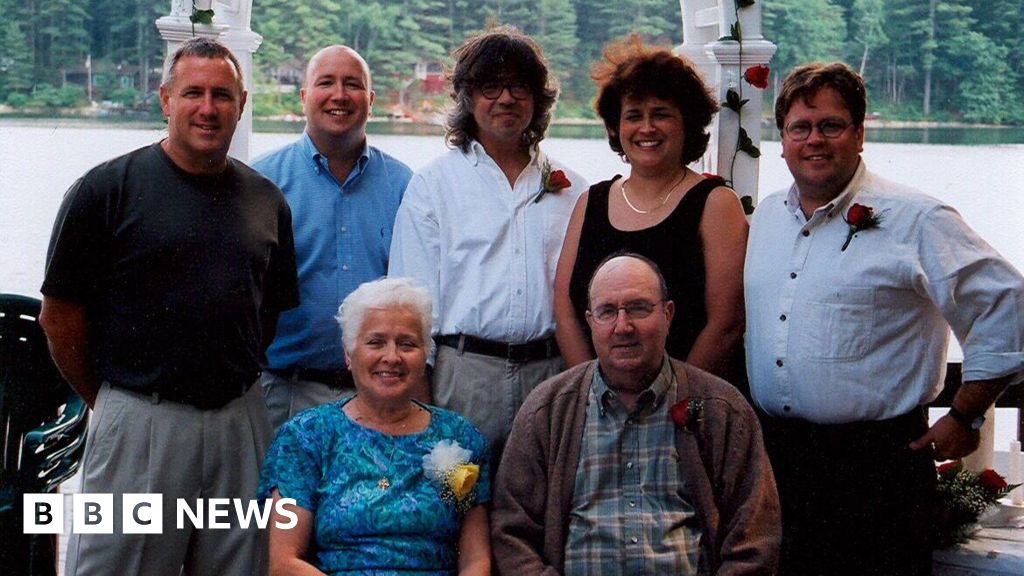
As the youngest of five children, Joe Boucher learned a lot from his older brothers and sister - how to ride a bike, how to navigate the miles of forest behind their house and how to skate and play hockey. But one thing he didn't really pick up from them is how to speak French.
Although both of Boucher's parents were of French-Canadian descent and spoke French with each other, it was once illegal to teach French in school in the US state of Maine, where the Bouchers lived. And so his siblings, amongst themselves, defaulted to English.
"Shame was heaped upon French speakers as being second-class citizens," he recalls.
More than a million French-Canadians moved from Canada to the New England region of the US in the 19th and 20th Century, mostly to seek jobs in mills or on farms. At the time, the law made it difficult for Canadians to pass on citizenship to their children born in the US. And so, generations of so-called "lost Canadians" were born.
A new law, which came into force in December, aims to correct that historical inequity, by allowing not just the children of Canadians to claim citizenship, but anyone who can prove an ancestral tie.