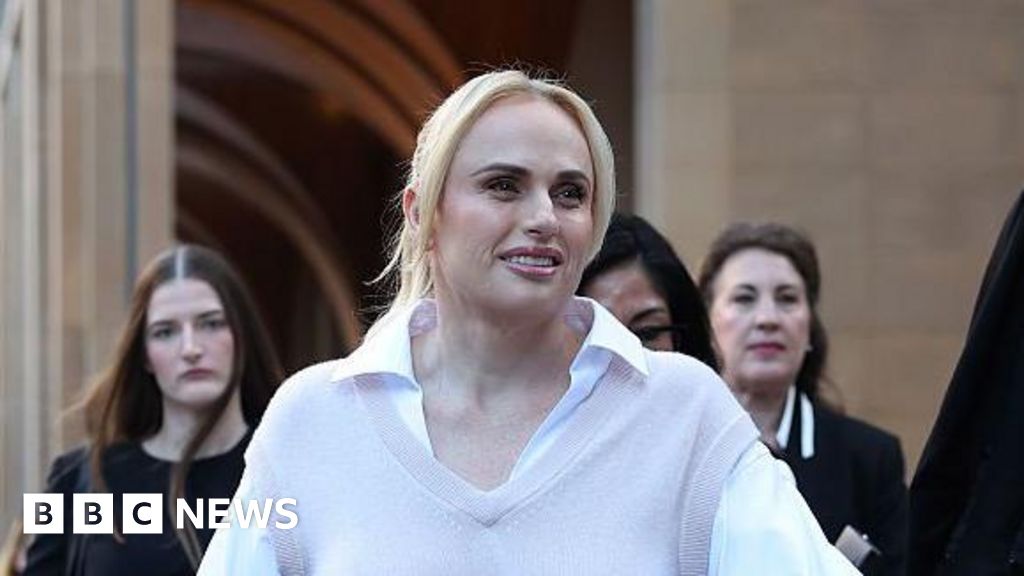
Wilson is not the first high profile respondent to change her wardrobe for court, but fashion can also help plaintiffs express themselves when speech is constrained
Pitch Perfect star Rebel Wilson is being sued for defamation by actor Charlotte MacInnes. The trial has seen Wilson arrive in court wearing various iterations of white button-down shirt beneath neutral knitwear or suiting, paired with cropped black trousers and heels. Similar to the undeniably demure, court-appropriate uniform she also adopted during her trial against Bauer Media in the 2010s, her courtroom aesthetic sits in stark contrast to her usual glittery, vivacious style.
This isn’t the first time a celebrity’s courtroom look has diverged from their regular wardrobe. While it shouldn’t materially affect the outcome of a case, famous or not, how one presents at trial can carry real consequences.
When a criminal matter proceeds to trial it will typically be before a judge and jury. During which, the presumption of innocence is a fundamental, but not impermeable, right of an accused. “Jurors, in particular, bring their own life experience and unconscious biases with them, and despite clear directions, people tend to judge quickly and often harshly,” says Emma Turnbull, accredited criminal law specialist and director of Emma Turnbull Lawyers in Sydney.