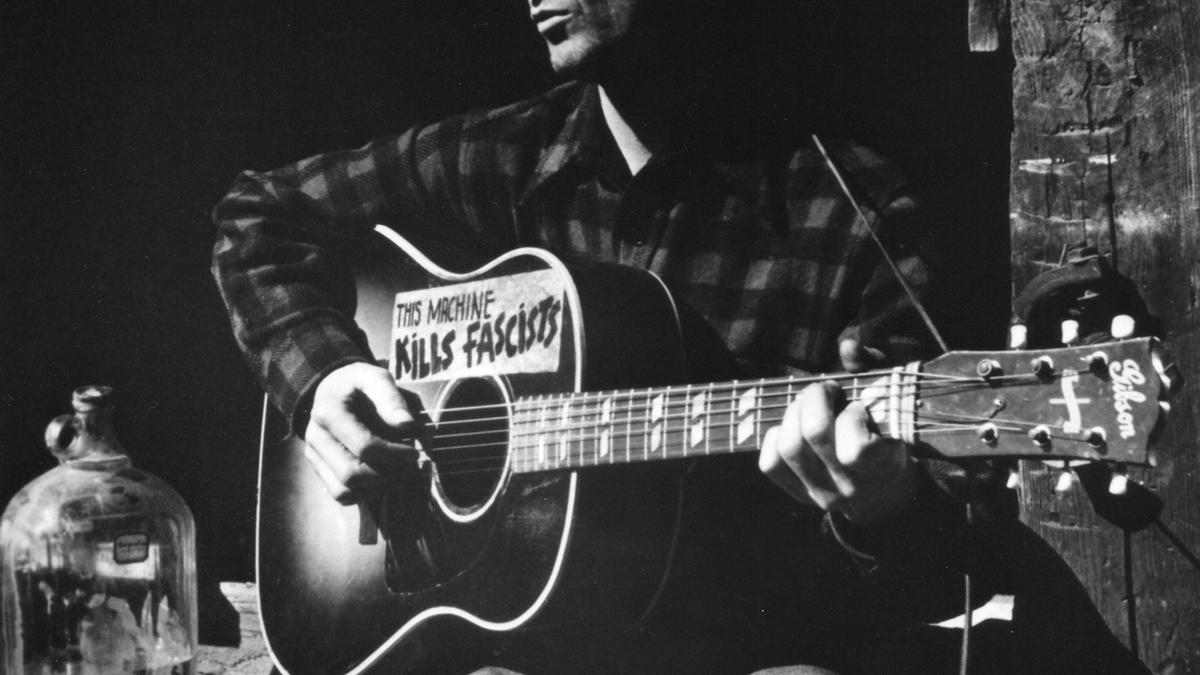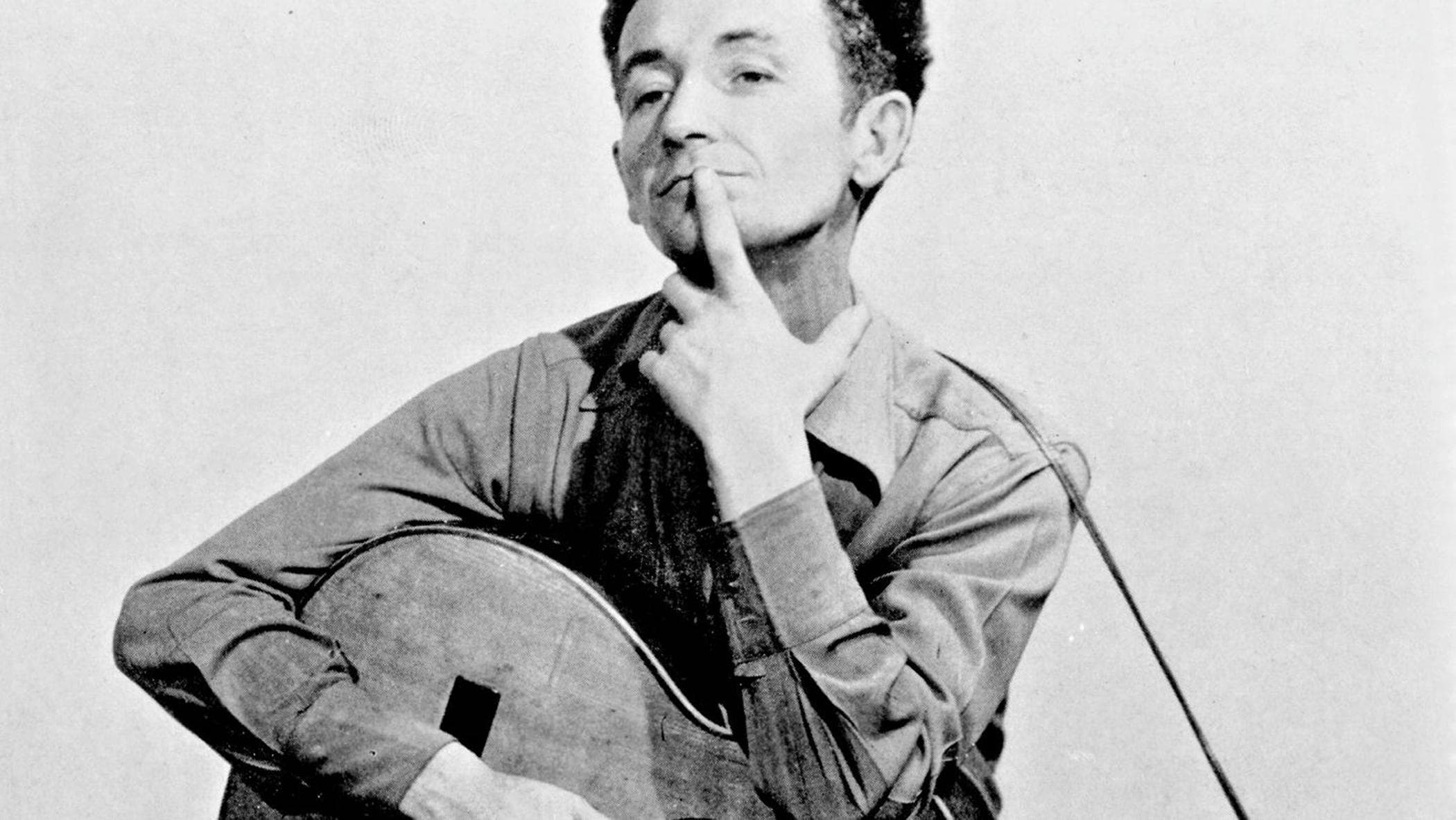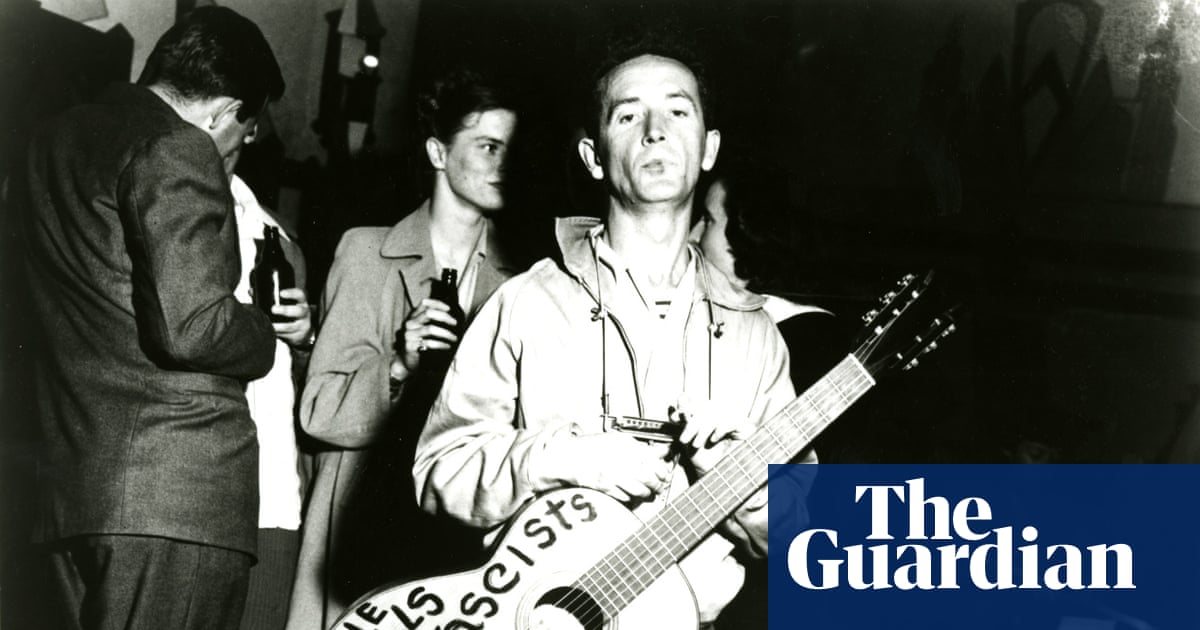
A timely exhibit at NYU celebrates the anti-fascist folk artist – despite the university’s recent suppression of campus protests
B
ea Esteves Mendez knew as much about Woody Guthrie as most people her age – which is to say, she knew This Land is Your Land – when one of her professors put on a recording of All You Fascists last semester. It’s an upbeat folk anthem written at the height of the second world war that connects the forces of oppression abroad with those, like Jim Crow, that festered at home. “Well I’m a gonna tell you fascists, you may be surprised, people in this world are getting organized,” Guthrie sings, shouts, whoops and whistles in his distinctive Oklahoma twang. “You’re bound to lose. You fascists bound to lose.”
“It was our first time really sitting down to listen to a Woody Guthrie song, and we were like, ‘Wow,’” said Mendez, 19, a sophomore at New York University. “‘This could have been written today.’”
The salience of Guthrie’s classic American protest music to today’s political environment is the central theme of Woody Guthrie: What This Guitar Might Do, a new exhibition at NYU’s Clive Davis Institute of Recorded Music in downtown Brooklyn. Curated by Mendez and three of her fellow students, the show features a cozy recreation of Guthrie’s apartment on Mermaid Avenue in Coney Island – complete with three guitars, two accordions, a keyboard, a turntable, and enough chairs, books and notepads to round out an afternoon jam session – as well as more than 130 reproductions of archival materials from the Woody Guthrie Center in Tulsa, Oklahoma.