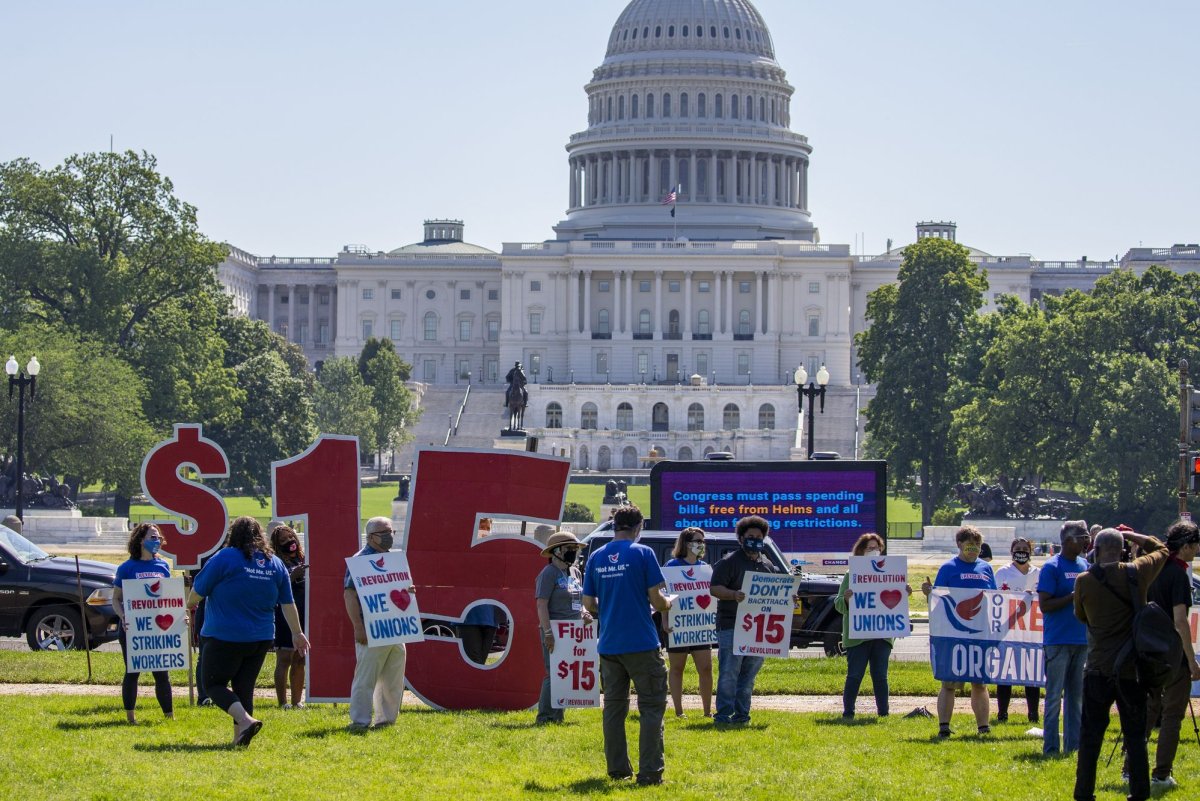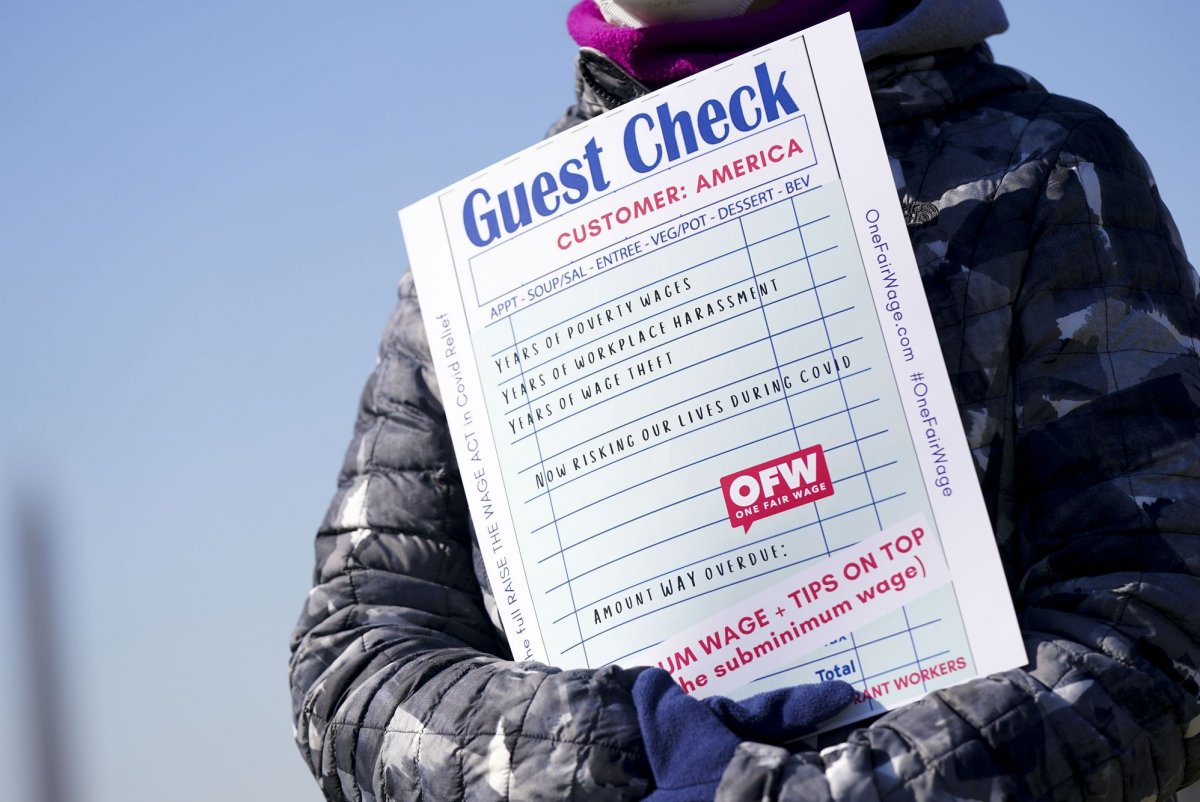
Representatives in Congress are starting a new push to raise the federal minimum wage to $25 an hour.
A group of Democratic representatives, including Reps. Delia Ramirez (D-Ill.) and Analilia Mejia (D-N.J.), introduced the Living Wage for All act on Tuesday, a bill that would gradually raise the federal minimum wage to $25 an hour. If enacted, the bill would require large employers (those with 500 or more employees nationwide or that have gross annual revenues of $1 billion or more) to bring their minimum wage to $25 by 2031, with smaller employers following by 2038.
From there, the federal minimum would rise periodically to ensure it is always equal to two-thirds of the national median wage, which is around $31 an hour as of the first quarter of 2026, according to Bureau of Labor Statistics data.
Currently, the federal minimum wage sits at $7.25 an hour and hasn’t increased since 2009. Most states have local minimum wages higher than the federal level, but five states — Alabama, Louisiana, Mississippi, South Carolina and Tennessee — don’t have their own state minimum. Georgia, Oklahoma and Wyoming have minimums below the federal level. Workers in these states are generally subject to earn the federal minimum, according to the National Conference of State Legislatures.