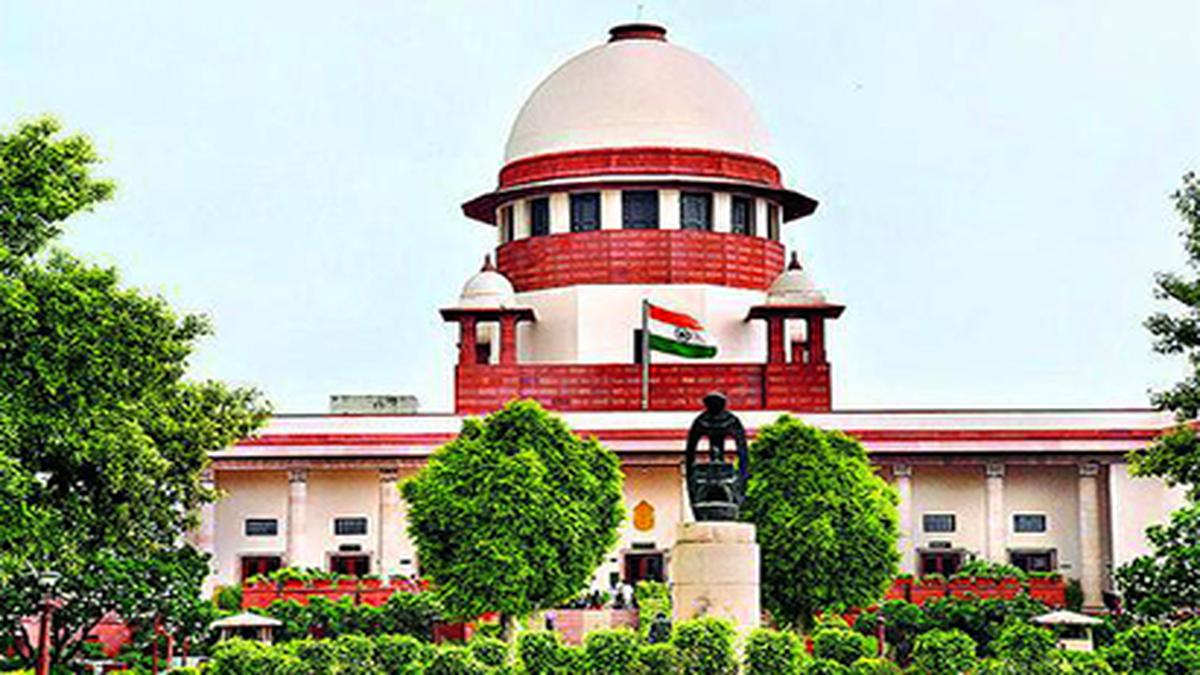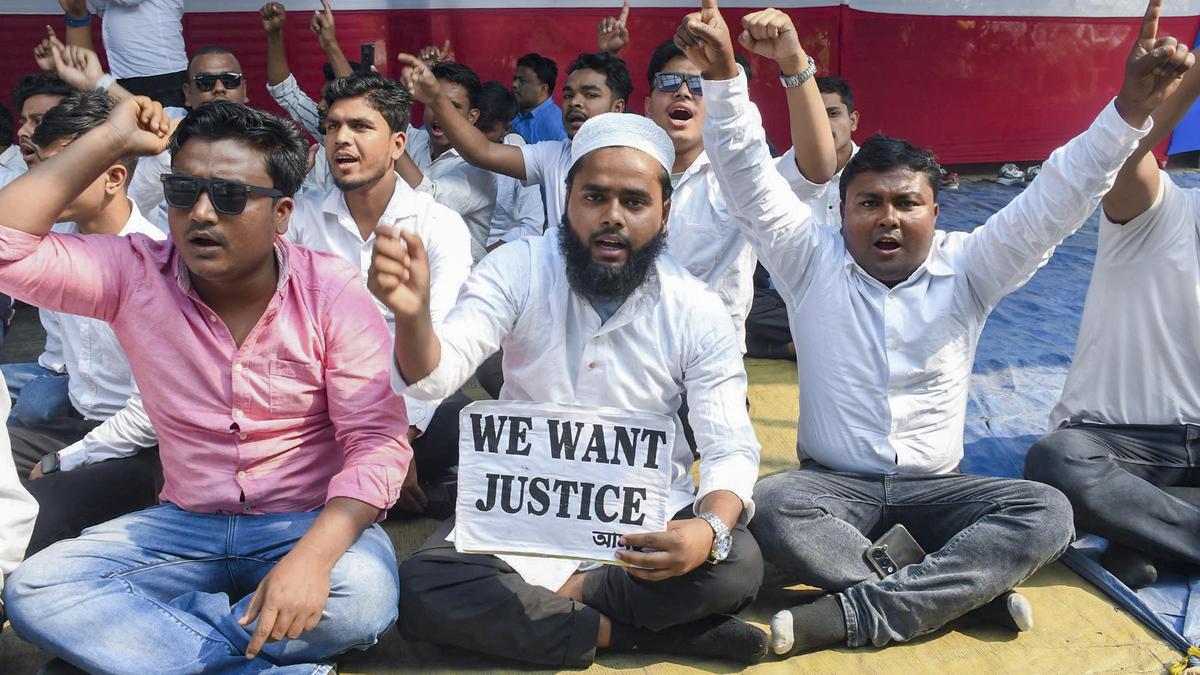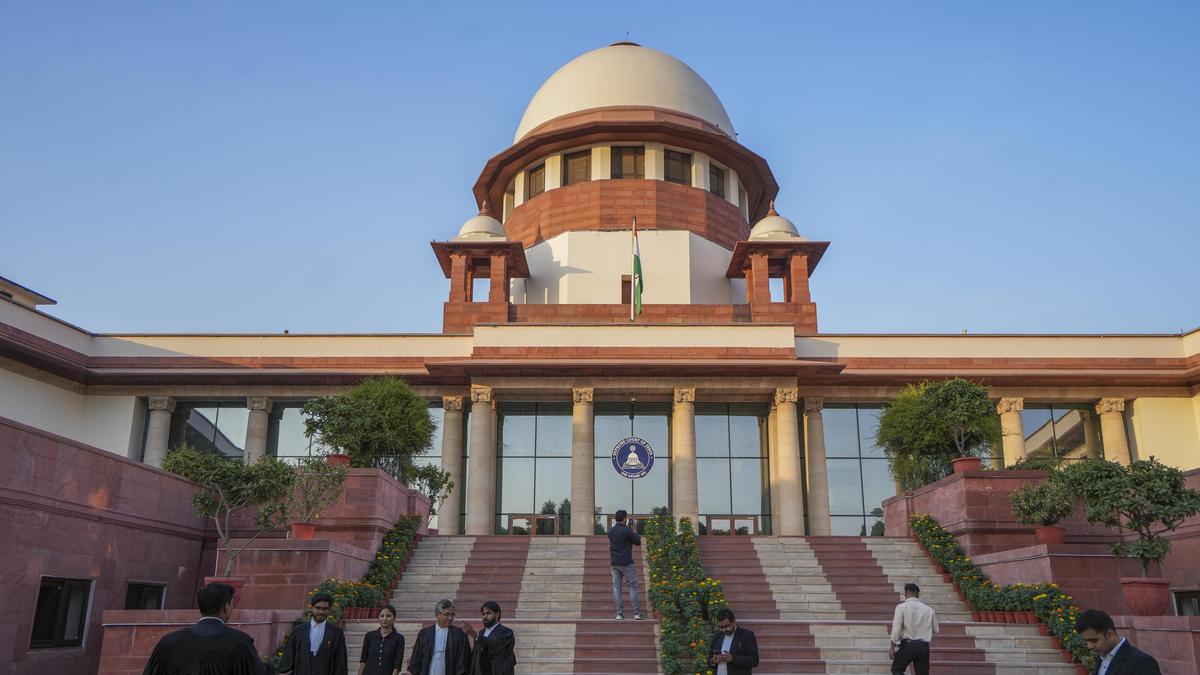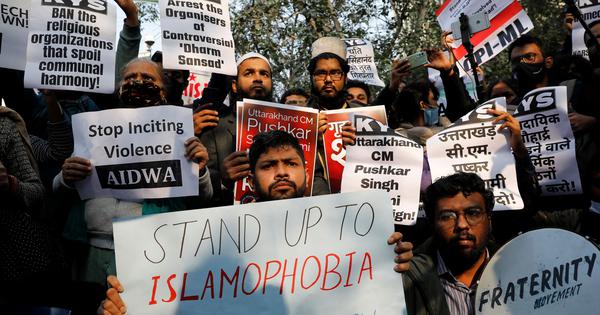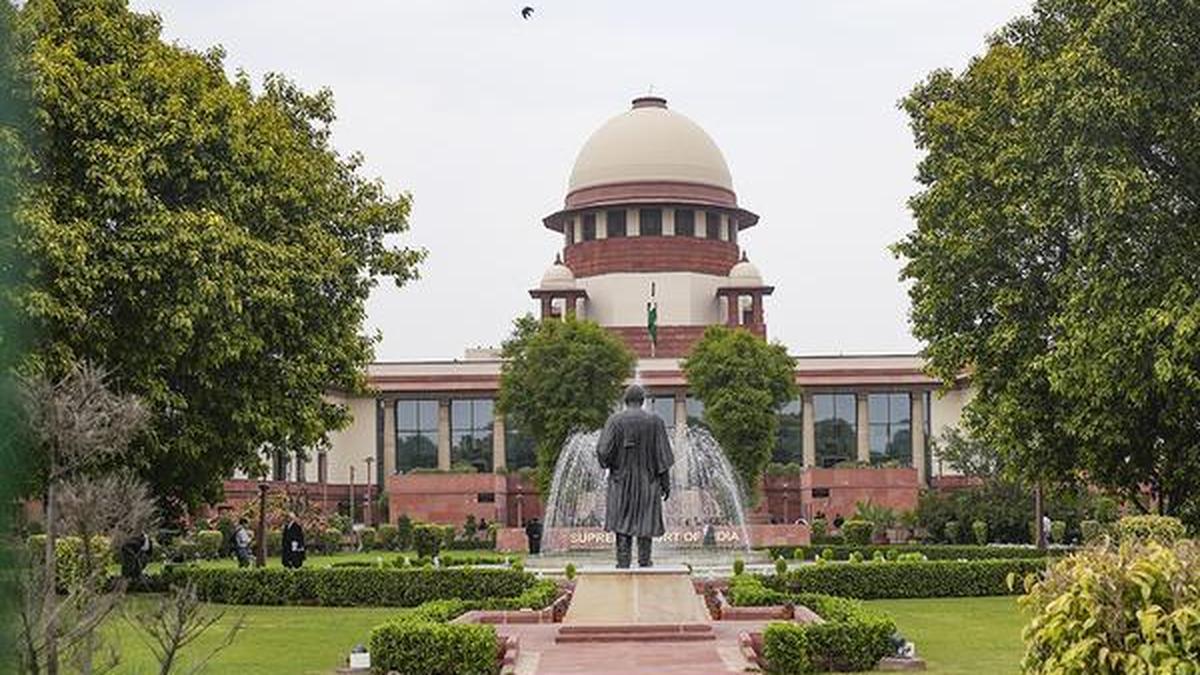
The court reiterated its earlier judgments that police officers must register FIRs immediately on receiving a complaint about hate speech
| Photo Credit: Getty Images/iStockphoto
The Supreme Court on Wednesday (April 29, 2026) said that hate speech and rumour-mongering stemmed from an “us versus them” mindset and worked to corrupt a sense of fraternity in a diverse society. However, the court declined to direct the enactment of specific laws against hate speech and crimes, instead calling for effective enforcement of existing laws that cover the offence.“Hate speech, at its core, stems from a perception of difference that breeds exclusion, where the ‘other’ is viewed as alien, inferior, or undeserving of equal regard,” a Bench of Justices Vikram Nath and Sandeep Mehta observed in a 125-page judgment.Justice Nath cautioned that as long as the binary of “us” and “them” persisted, the promise of fraternity would remain unrealised, and true constitutional belonging would prove elusive.“Hate speech is not merely a deviation from acceptable discourse; it is fundamentally antithetical to the constitutional value of fraternity and strikes at the moral fabric of our Republic. It also runs counter to the deeper civilisational ethos of India…. The philosophical underpinning of this ethos finds expression in the ancient maxim of ‘vasudhaiva kutumbakam’, the idea that the entire world is one family,” the top court said.‘Court cannot legislate’The court left it to the Union government and legislative authorities to consider bringing any specific laws to address the bane of hate speech.“While we decline to issue directions of the nature sought, we deem it appropriate to observe that issues relating to ‘hate speech’ and ‘rumour mongering’ bear directly upon the preservation of fraternity, dignity and constitutional order,” Justice Nath said.The judgment said the court cannot enter into the exclusive legislative domain and craft laws against hate speech.“The constitutional role of the judiciary is primarily to interpret and apply the law, and not to legislate… Any attempt by courts to prescribe detailed statutory schemes or to frame provisions akin to legislation would amount to judicial law-making and would impermissibly trench upon the functions assigned to the legislature,” Justice Nath reasoned.Better enforcement is keyThe court said hate crimes continue to result in bloodshed because of poor enforcement of existing laws, and not because of a dearth of laws to address the issue and to punish the perpetrators.“It cannot be contended that the law is either silent or deficient in addressing grievances arising from conduct that disturbs public order or fosters inter-group hostility. Any deficiency lies not in the absence of law, but in its application and enforcement in specific cases. The function of this court is not to create new offences or construct parallel regulatory regimes, but to ensure faithful implementation of the remedies already envisaged under law,” the court said.The court pointed to provisions in the Bharatiya Nyaya Sanhita (BNS) such as Sections 196 (promoting enmity), 197(1) (prejudicial to national integration), 299 (outraging religious feelings), 302 (wounding religious feelings), and 356 (promoting enmity/mischief), which already cover hate crimes. The court noted that Section 173(4) of the Bharatiya Nagarik Suraksha Sanhita (BNSS), 2023, even allows a complainant to send the substance of information in writing via post to the Superintendent of Police (SP) if a local police station refuses to register a cognisable offence.‘Prior sanction not needed’Justice Nath said the statutory architecture of both the substantive penal law (BNS) and the procedural one (BNSS) is designed to ensure a free and fair investigation, if necessary, under the supervisory gaze of the jurisdictional magistrate. The court said it was up to the law enforcement authorities to ensure a faithful and even-handed implementation of the existing laws.The court added that prior sanction is not necessary for a magistrate to take cognisance of a complaint about hate speech.The court reiterated its earlier judgments, especially in the Tehseen Poonawalla case of 2018, that police officers must register FIRs immediately on receiving a complaint about hate speech.The judgment came in a series of petitions, including one filed by journalist Qurban Ali, seeking separate laws for hate speech and crimes. The petitions had also highlighted the unabated presence of hate speech in society despite repeated Supreme Court judgments. Published - April 29, 2026 11:57 am IST