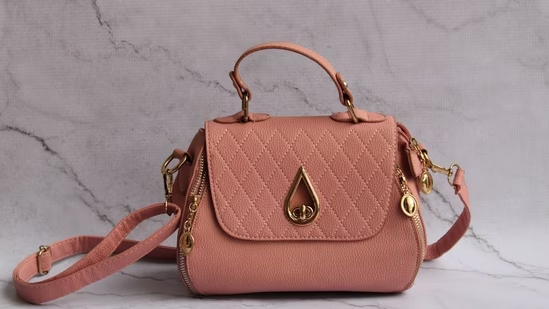
When Jenny Lei launched her handbag company Freja, she thought about how much she’d personally want to spend on a work tote as a 20-something in New York City, she says.
“I think a justifiable treat is less than $300. Above that, I start bargaining with myself,” says Lei, now 30, who launched Freja in 2019 after struggling to find an appropriate work tote for a job interview. Freja bags, made with vegan leather, now sell for $258 to $398 — more expensive than $62 nylon option from Baggu, but less than a $2,700 pre-owned Goyard carryall — to tens of thousands of customers each year, primarily in their 20s and 30s, says Lei.
A growing number of Gen Z and millennial shoppers are ditching budget and luxury brand products alike — and gravitating toward mid-priced retail items across a wide range of industries including clothing, jewelry and homeware, some marketing and retail experts say. The products are never the most expensive option, but they cost just enough to count as a splurge for young shoppers who’ve advanced enough in their careers to have some extra cash to spend.
Mid-priced products allow zillennial consumers, who aren’t immune to rising costs of living, the opportunity to treat themselves more frequently — compared with saving up for years to splurge on a single luxury item, says Jennie Liu, a Yale School of Management lecturer who researches branding. “Today’s consumer doesn’t want to wait, they don’t want to save up,” Liu says.