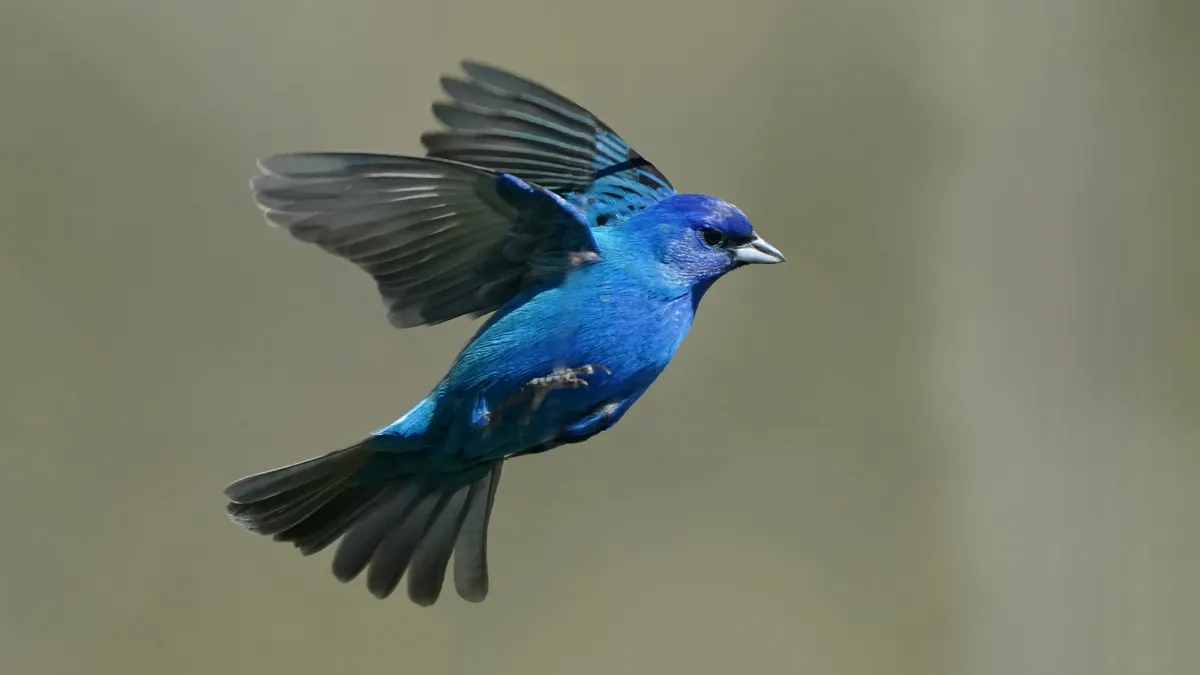
Hundreds of millions of birds are migrating across the United States over night. Here's what you can expect in your area, and how to keep them on track.Show Caption
Spring migrations runs between March 1 and June 15.Artificial lights and glass windows pose significant threats to migrating birds.Turning off unnecessary lights and adding patterns to windows can help ensure safe passage for birds.Birds are on the move as they take flight for their annual spring migration. Radar tracking allows you to follow along to see what birds are flying overhead as the birds move to their summer feeding grounds."The movements are massive," Andrew Farnsworth, a migration ecologist at Cornell University who works with the university's ornithology lab, previously told the Detroit Free Press. "On a big night in the spring, you're talking 450 [million] to 500 million birds flying under cover of darkness."It's a time of year when local birds that went south for the winter return or birds heading farther north stop to feed.Cornell University's Bird lab hosts a BirdCast Migration Dashboard that gives daily summaries of radar-based nocturnal bird migration. With it, you can watch the progress of birds as they flap their way across the nation and even track how many flew over your county the night before.The system uses radar because most species migrate at night, some at altitudes as high as 15,000 feet and aren't visible to the naked eye.Bird migration mapIn the contiguous United States, peak spring bird migration runs approximately between March 1 and June 15, though some species migrate earlier or later. Fall migration is generally between Aug. 1 and Nov. 15.Peak migration is defined by the seasonal window during which about 50% of nighttime bird migration traffic passes through an area. On the map below, you can see a wave of peak migration move up from the southernmost United States to the far north as temperatures slowly rise over the course of the spring."It's not until April that you really start to get the big bang of bird diversity," Farnsworth said. "The peak migration comes like a wave across the United States, breaking from south to north."Birds migrating in my area tonightBirdCast has live, local bird migration alerts so you can see who's flying through your area at any time.In the overnight hours of April 21st to 22nd, numbers were especially high around the Georgia-Florida border, the southern border of New Mexico and around Fargo, North Dakota.There's also a migration prediction map that shows upcoming nocturnal migrations. For example, the night of April 22 to 23, an estimated 277 million birds are predicted to be migrating in the United States. Areas of high migration include parts of Georgia and South Carolina, southern Texas and around the Arkansas-Mississippi-Tennessee borders.In Bexar County, Texas – home to San Antonio – an estimated 1,042,600 birds crossed the county overnight of April 21, including painted bunting, great crested flycatcher, western kingbird, yellow-rumpled warbler and indigo bunting.Safe bird migrationThe moon and starry night sky plays an essential role in the migratory process of birds. However, the increasing use of artificial lighting by humans has an impact on the safe travels of the birds.According to the U.S. Fish and Wildlife Service, artificial lights can:Reduce the visibility and cause the birds to be disoriented and divert off their migratory path.Cause exhaustion as birds circle lights or lit structures.Increase the risk of collision with glass structures.Expose the birds to predators.Disrupt the growth of the plants the birds rely on for food and shelter.One of the best and easiest things we can do to help migrating birds is to turn off unnecessary lights at night and close the blinds, shades and curtains around our homes.Simple swaps, such as opting for motion-activated lights, keeping exterior lights close to the ground and swapping in warmer-hued bulbs can help keep the birds on the right path.Birds are also at risk of colliding into glass on homes and other buildings. To prevent these sometimes fatal encounters, dress up your widows. This can be a easily done by adding a patterned window film, a screen or netting or decals. You can also opt to swap your windows for frosted, patterned or channel glass.Why do birds migrate?In North America, birds typically fly south for the winter before food is less available during the colder months, then back north in the spring to take advantage of growing insect populations, budding plants and good nesting locations.Come winter, those same birds will fly south again to escape the cold and find better food sources.There are five types to look for, with larger birds tending to make longer trips.Permanent residents: These are birds who don't always migrate, sometimes because there's enough food where they live. They can include the the American crow, the common raven, mourning doves, wild turkeys and in Florida, many types of herons.Altitudinal migrants: These are birds who change altitude, not location, generally up or down a mountain. Think of the Rocky Mountains and birds such as Clark's nutcracker, the mountain chickadee and rosy finches. Whether higher elevation birds move depends on local conditions.Short-distance migrants: These can include the eastern phoebe, the yellow-bellied sapsucker and the song sparrow.Medium-distance migrants: These are birds that migrate a few hundred miles. They might breed in the Northeastern U.S. and winter in the Southeast. Some breed in the eastern deciduous forests and migrate to Central and South America or the Caribbean. These are often shorebirds. Species include many types of warblers, the western tanager and the snow bunting.Long-distance migrants: These birds fly thousands of miles, often from the northern United States and Canada to wintering grounds in Central and South America, sometimes as far as 8,000 miles. These are often shorebirds, including birds that breed on the tundra and winter in southern South America. Some species include the arctic tern, Hudsonian godwit, long-tailed jaeger and the bobolink. The blackpoll warbler songbird can fly as far from Alaska to the Amazon.Exactly how birds know where and when to migrate, especially those that have never made the flight before, is still something of a mystery. Research shows that the length of the day, smell, the location of the sun and the stars and even sensing Earth's magnetic field are all involved.Part of this article originally appear in the Detroit Free Press.