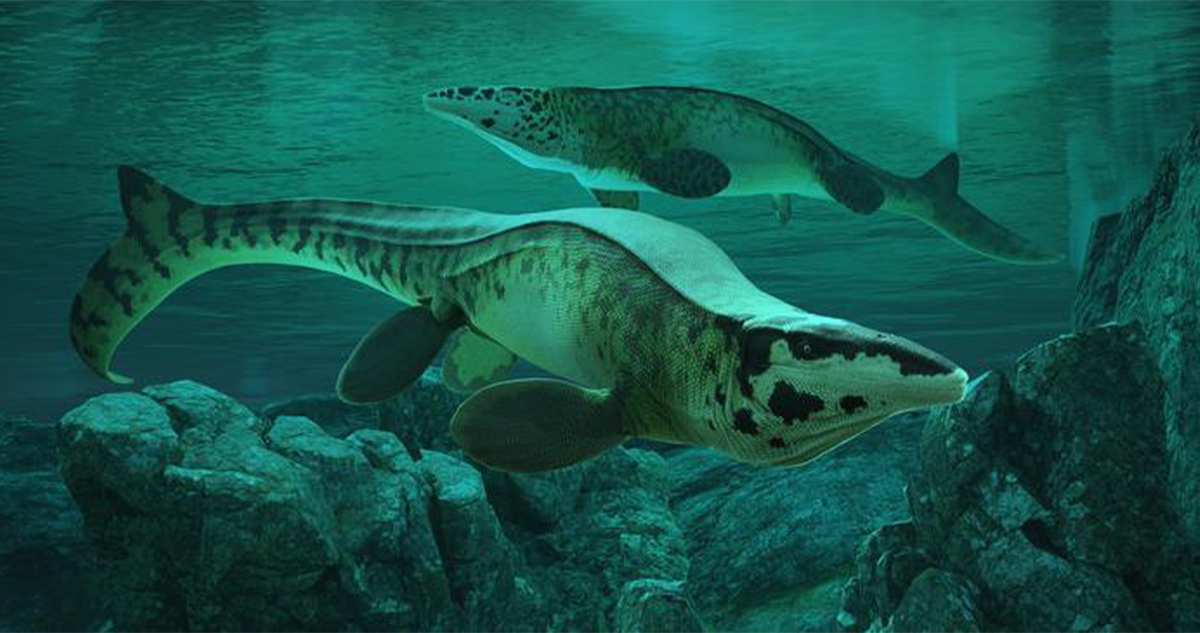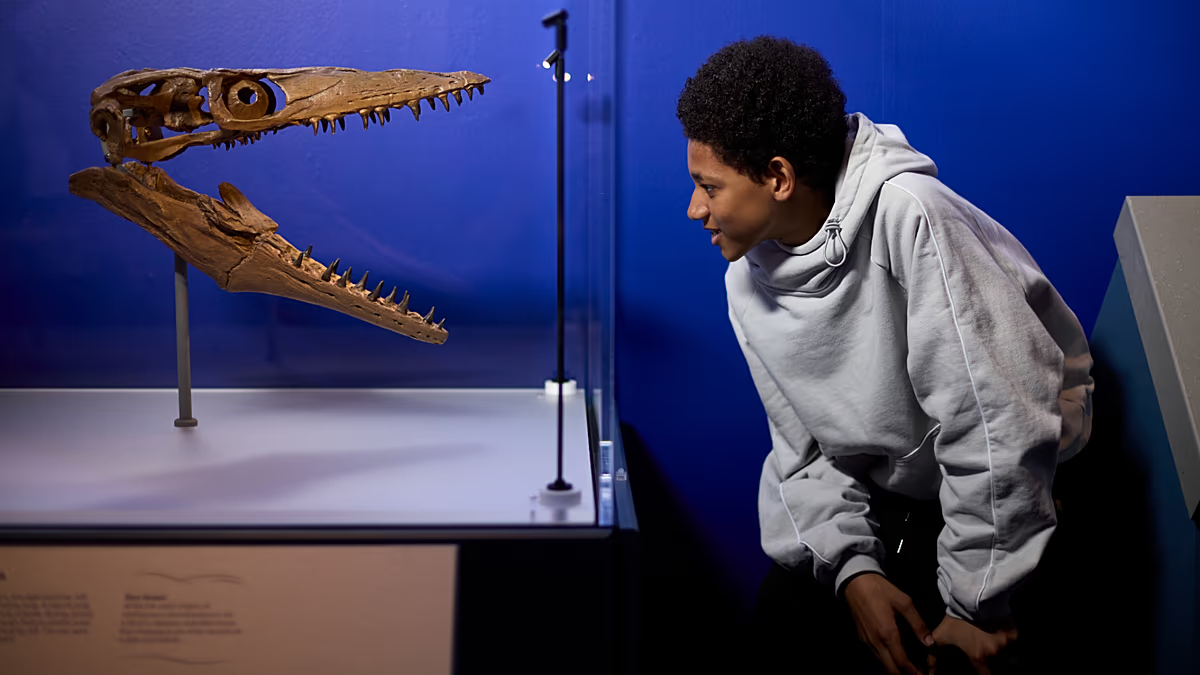
The first dinosaurs appeared on Earth about 233 million years ago. Had we been able to travel back in time, we would have hardly recognized our planet. In the Triassic, instead of today’s six continents that we are used to, one supercontinent existed called Pangaea, where these “terrible lizards” began to feel at home with the passage of time.Whenever we mention Russia’s dinosaurs, we have in mind animals whose petrous fossils* continue to be found on the territory of our country nowadays. Regrettably, continental sediments have not been passed down to us from those years, so the chances of ever discovering any bones of Triassic reptiles are close to none.In the Jurassic period, Pangaea began to break apart into Gondwana and Laurasia, with vast areas of land getting flooded. A large share of what is now Russia’s European territory disappeared under water. Dinosaurs settled on the islands, while pliosaurs, plesiosaurs and ichthyosaurs lived in the Central Russian Sea — warm and shallow.In the media, the word ‘dinosaur’ is often used in relation to not only ground lizards, but flying and aquatic ones as well. This is wrong. Dinosaurs lived exclusively on the ground, while pterosaurs and sea reptiles were their relatives (the latter — very distant ones).In the land of what is now Siberia, dinosaurs felt quite comfortable. For most part of the Jurassic, this region was warm and humid. In Russia, several sites dating back to that period are known.In the Cretaceous geological period, the climate became drier and winters colder, but there were no extreme temperatures yet, even in the Arctic.For instance, 70 million years ago, summertime air temperatures in the Chukchi Peninsula were at about +20° C, and in wintertime they dropped to + 3° C.The Chukchi Peninsula’s air temperatures 70 million years ago: roughly +20°C in summer and +3°C in winter.The Triassic(251,9 — 201,3 mln years ago)The Jurassic(201,3 — 145 mln years ago)The Cretaceous(145 — 66 mln years ago)The Paleogene(66 — 22 mln years ago)The Neogene(22 — 2,58 mln years ago)The Quaternary(2,58 mln years ago — today)Apparently, dinosaurs lived permanently in the North Pole region, as is evidenced by the eggshells and bones of cubs found in the Chukchi locality of Kakanaut. It is not very clear, however, what the herbivorous animals used for food during the polar night, when ferns and shrubs stopped growing. There is a hypothesis that some Australian dinosaurs hibernated for the winter. Perhaps, their Russian counterparts did the same.For a long time, practically no dinosaur bones were found in our country. There are several reasons for this. Firstly, large swaths of Russia’s land are covered by forests or lie in permafrost zones, for which reason geological deposits suitable for examination are not available to paleontologists. At the same time, the main "providers" of dinosaur fossils — the United States, Canada and China — occupy large areas of the so-called "badlands". There is no vegetation or fertile soil hiding them. The geological strata are bare.Secondly, Siberia and the Far East are sparsely populated. Dinosaur graveyards are often found during excavation work, the way it happened in Blagoveshchensk, where a large number of fossils was unearthed within the city limits while builders were digging a foundation pit. Populated areas in this region are few, so the territory remains largely unexplored.And thirdly, competent personnel are hard to come by. The country’s largest paleontological centers are in Moscow and St. Petersburg, yet qualified specialists in the regions are scarce.And still, regardless of the difficulties encountered, dinosaurs are found in Russia every year. Scientists joke that the secret of any expedition’s success is to dig for the fossils where they really are.An animal’s chances of becoming a fossil were slim. About one in a million, according to British paleontologist David Hawn.When the animal’s corpse remained on the ground’s surface after death, it was almost certainly devoured by scavengers. The remaining bones were destroyed by the sun, rain and temperature changes. Fossilization, or petrification requires water. This explains why we know nothing about the dinosaurs that lived in the mountains, deserts or in forest areas, but keep finding fossils of those who lived on the shores of seas, lakes and rivers.From the paleontologists’ point of view a dinosaur died an ideal death by drowning in a river or lake, or even better, in a swamp with its oxygen-free environment. Its flesh decayed or was eaten up by aquatic creatures, while the skeleton remained intact.After some time, the skeleton was buried under layers of sediment remaining there undisturbed for many millions of years.Gradually, bone voids were filled with minerals dissolved in water. Some minerals may turn out to be radioactive. Such finds make a Geiger counter spring to life. In Russia, such fossils, for example, continue to be found in the Tuvan locality of Kalbak-Kyry. Radiometers are sometimes used in the search process. Of course, the dinosaurs themselves were not radioactive during their lifetime and did not possess any extraordinary features (what a shame!).As a result of erosion or, for example, during the process of road construction, the layer containing bones could be exposed. Then, there is a chance they might catch someone’s eye.But searching for and finding fossils is only a tiny part of a paleontologist’s job. Examining bones, describing their features and trying to understand what animal species they belonged to is what researchers do most of the time.Over the past 150 years, paleontologists have managed to put together a large database. It contains detailed descriptions of thousands of finds from all over the world, including dinosaur bones. This database is the main resource specialists rely on in their work. Even a fragmentary find — a vertebra, a tooth, or a fragment of a skull — if compared with the already described fossils, makes it possible to determine which group the animal belonged to, and sometimes even to recreate its original look. Growth rings in the bones can tell us a lot about the conditions in which the dinosaur lived, the structure of its teeth and traces of abrasion indicate how and what kind of food the animal chewed, and the coprolites (fossilized excrement) provided an idea of the animal’s diet.Tomography has been a priority trend in paleontology in recent decades. It provides an insight into the bones without damaging them. For example, by scanning the skull with a tomograph it is easy measure the length of the cochlea, thus finding out the sound frequencies at which the animals communicated with each other.Over the past 30 years, perhaps, a little bit more, our understanding of dinosaurs has changed radically. For example, it was previously believed that they were cold-blooded animals with hard scales. Now, scientists state with certainty that most — if not all dinosaurs — were warm-blooded, and many of them were covered with feathers. In some cases, even their color is known. The discovery and examination of melanosomes — the cell components containing pigments — provided the clue. Paleontologists have compared their shape to similar structures in the feathers of modern birds.There is a scientific hypothesis that birds are today’s dinosaurs. Scientists now call the extinct dinosaurs non-avian. So, the next time you’re feeding pigeons in the park, take a closer look at them.Russia’s last non-avian dinosaur disappeared about 66 million years ago, but now interest in these animals in our country is greater than ever before. And, according to paleontologists, many discoveries are in store for us in the foreseeable future.When did these dinosaurs live?perioderaeonmln years agoTHE TRIASSICTHE JURASSICKULINDADROMEUS168,3–166KILESKUS167,7–164,7STEGOSAURUS(SHARYPOVO)167,7–164,7DIPLODOCOID165THE CRETACEOUSSTEGOSAURUS(TEETE)145–125SIBIROTITAN129,4–125PSITTACOSAURUS125–113ОLOROTITAN72,1–66THE PALEOGENE2001501005020114566THE PALEOZOICnon-avian dinosaursTHE MESOZOIC24366the emergence of Homo sapiens 200 000 years agoTHE CENOZOICformation of the EarthTHE PRECAMBRIANTHE PHANEROZOIC5 0004 5004 0003 5003 0002 5002 0001 5001 000500today541500450400350300252200150100500* The time intervals show the approximate age of the fossils found, but they do not mean that a particular species existed throughout the entire period or only during the given period.01Kulindadromeus zabaikalicusThe oldest of the feathered dinosaursType of diet: herbivorousFossils’ age: 168,3–166 million years (The Jurassic)Discovered at: the Kulinda Valley, the Trans-Baikal RegionIn 2010, paleontologists from all over the world heard about the Kulinda Valley in the Trans-Baikal Territory. It was there that geologist Sofia Sinitsa discovered the fossils of an unknown herbivorous feathered dinosaur. Scientists knew about the existence of feathered dinosaurs before, but it was generally believed that all of them were beasts of prey. This find also changed the scientists’ ideas about the evolution of the outer coverings — the Trans-Baikal lizard turned out to be the oldest feathered creature known to science.Four years later, an international group of scientists, which included Russian specialists, published an article about a unique animal in Science magazine. It was named Kulindadromeus (Kulindadromeus zabaikalicus).Just a month later, Russia’s Paleontological Journal published another article on the bones from Kulinda. According to its authors — paleontologist Vladimir Alifanov and biologist Sergei Savelyev — the found fossils belonged not to one animal, but two. The scientists named them Kulindapteryx ukureica and Daurosaurusolovus. However, Kulindadromeus remained the dinosaur’s official name.The paleontologists managed to determine the animal’s appearance largely because in the middle of the Jurassic Kulinda was an active volcanic zone. During eruptions, hot ash fallouts buried the dinosaurs’ bodies. The skin and even bones burned up, but the bodies left cavities inside the ash mass, with the dinosaurs’ outer coverings imprinted on the walls. Archaeologists saw something similar during excavations in Pompeii. Deep inside the rock, they found hollows left by the bodies of those who perished in the volcanic eruption.height — 0.5 meters; length — 1.5 meters; weight — undeterminedThe hind limbs, palms of the forepaws, and the long tail of the Kulindadromeus were covered with scales. Feathers grew on its head, chest, body and thighs. Some of them resembled thin threads and were no longer than 1 cm in length, while others were wider and longer — up to 3 cm. The dinosaur also had fluff, like that of the Silkie (a Chinese silk chicken). The Kulindadromeus did not have flight feathers and was unable to fly. The outer coverings helped the animal maintain a normal body temperature and at the same time served for transmitting signals to other animals, for example, warnings of an approaching predator.In 2016, the Kulindadromeus appeared on the flag and the coat of arms of the Trans-Baikal Region’s Chernyshevsky District, and in 2020 the Kulinda Valley was granted the status of a specially protected natural site.Coat of arms of the Chernyshevsky District (Transbaikial Region, east of Lake Baikal)02Kileskus aristotocusThe ancestor of that very tyrannosaurusType of diet: carnivorousFossils’ age: 167,7–164,7 million years (The Jurassic)Discovered at: near the town of Sharypovo, the Krasnoyarsk RegionEven those barely familiar with paleontology have heard about the Tyrannosaurus (Tyrannosaurus rex), which lived on the territory of what is know today as North America at the end of the Cretaceous period. But very few know that the first tyrannosauroids appeared in Asia about a hundred million years earlier, and the most ancient of them — the Kileskus — was a native of the Krasnoyarsk Region. However, the Russian dinosaur was not the direct ancestor of the T-Rex. Rather, it can be described as its uncle or even a great-uncle.The first part of the scientific name (called genus) — Kileskus — is derived from the Khakass word kileski — "lizard", and the second part of it, the specific epithet — aristotocus — is translated from Latin as "noble". Scientists found fragments of such a dinosaur’s skeleton in the Berezovsky surface coal mine: on a relatively small site, they discovered fragments of the upper and lower jaws, as well as bones of the front and hind limbs, including large sickle-shaped claws.height — 1.8 meters; length — 4.5 meters; weight — undeterminedLike other theropods (carnivorous dinosaurs), the Kileskus walked on two legs, which gave him certain advantages in hunting four-legged herbivores. Paleontologists speculate that its body may have been covered with down-like feathers, their main function being to maintain body temperature.The closest relatives of the Sharypovo tyrannosauroid — the Chinese Guanlong and Sinotyrannus, as well as the British Proceratosaurus — had a bone crest on the head. What this crest was used for remains unclear. Perhaps, with its help males attracted females the way roosters do. Their relative, the Kileskus, possibly had such a crest, too, but since the upper part of the dinosaur’s skull has not been found yet, there is no material confirmation of this.03Stegosauria indet.*Survived the Jurassic in SiberiaType of diet: herbivorousFossils’ age: 167,7–164,7 million years (The Jurassic).
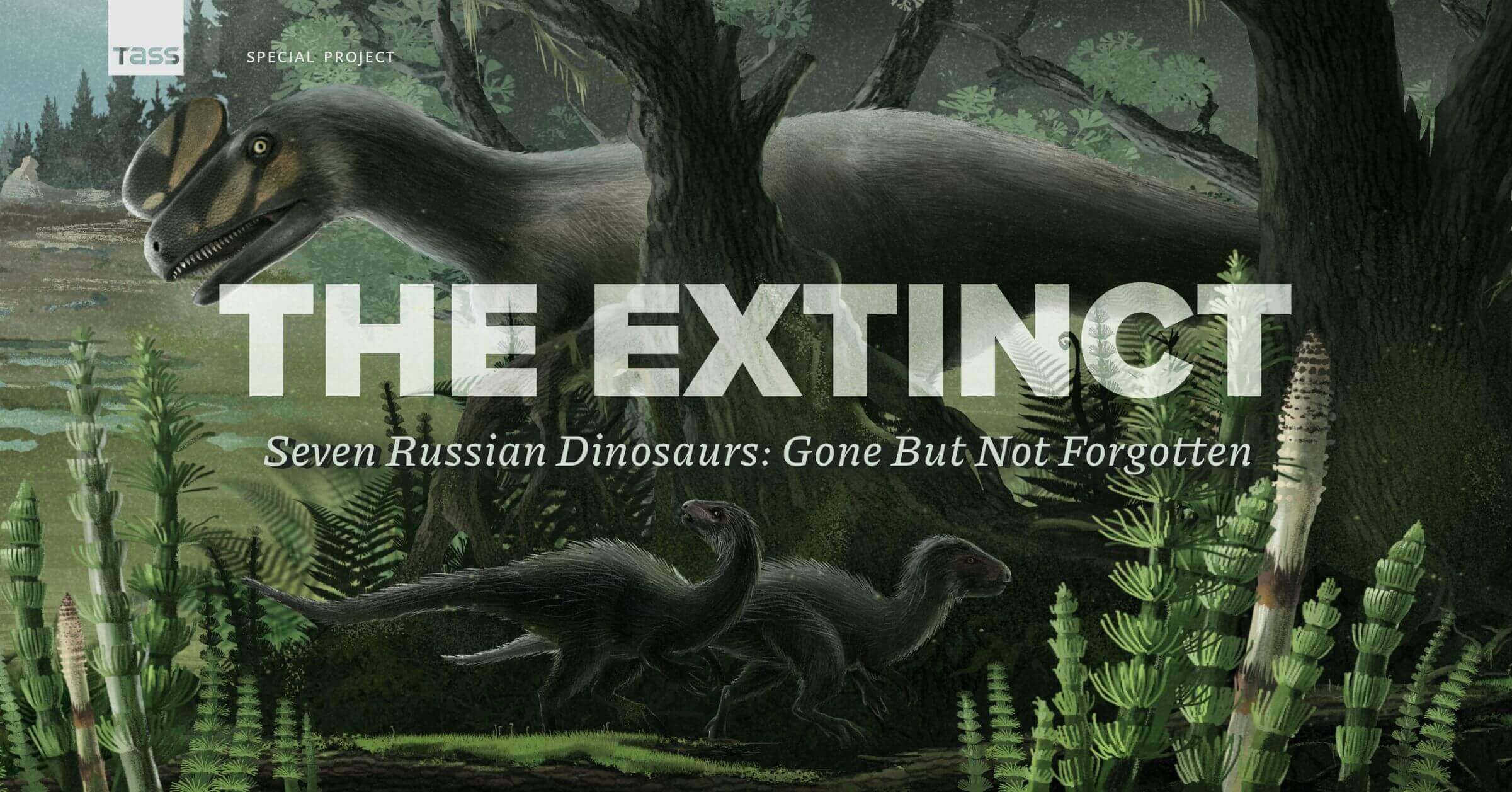
Which dinosaurs inhabited what is today Russia? TASS has the answer in a special project
The Earth belonged to them for nearly 150 million years. Gargantuan and tiny. Gregarious and solitary. Herbivores and carnivores
4,833 words~22 min read