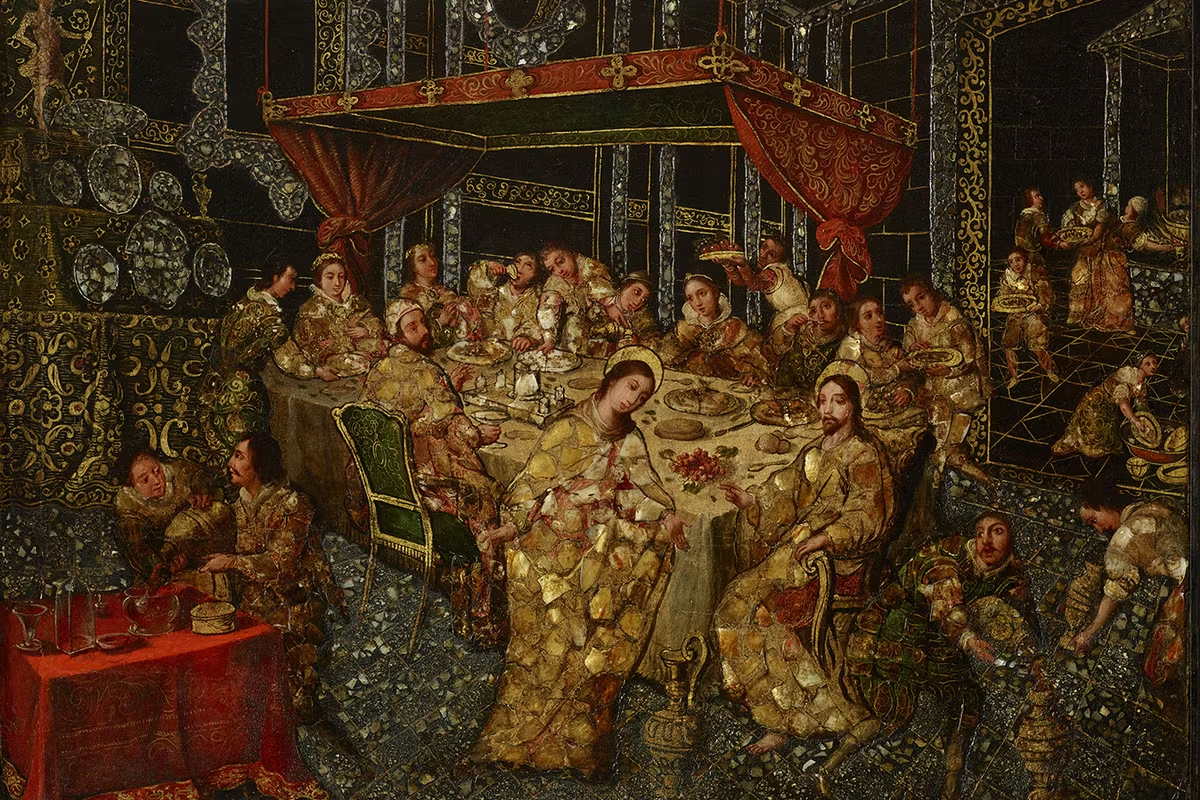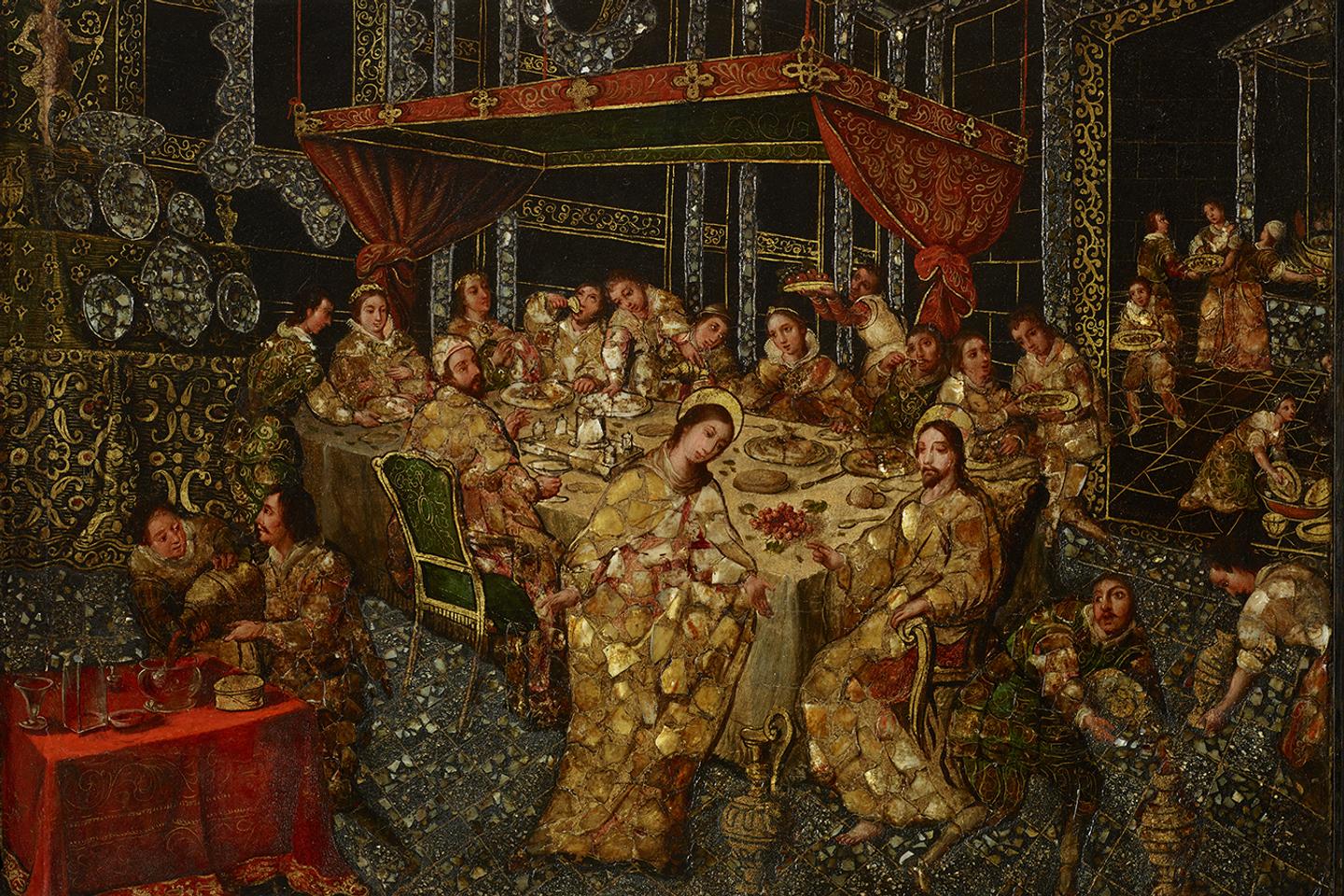
'The Marriage at Cana' (1696), by Nicolás de Correa. THE HISPANIC SOCIETY OF AMERICA, NEW YORK / MUSÉE JACQUEMART-ANDRÉ
The works currently on display at the Musée Jacquemart-André come from the Hispanic Society of America, which houses a museum and research library in New York dedicated to Spanish, Portuguese and Latin American art and craftsmanship. As its headquarters undergoes renovation, its most famous paintings are traveling: about 40 are in Paris, a small selection from a collection that comprises more than 18,000 pieces, ranging from ancient archeology to modern art.
This society and its collection owe their existence to philanthropist Archer Milton Huntington (1870-1955), whose family embodied the American dream. His stepfather, Collis Potter Huntington (1821-1900), was born into a farming family in Connecticut. Starting as a farm laborer and then a peddler, he traveled to California to join the Gold Rush. Rather than prospecting himself, he sold picks, shovels and other tools to miners, which allowed him to amass the capital to begin his fortune. Huntington then invested in railroads and became one of the founders of the Central Pacific Railroad, which spanned the United States from east to west, later connecting New Orleans to California and opening lines in Ohio and Virginia. This is how he became immensely wealthy.