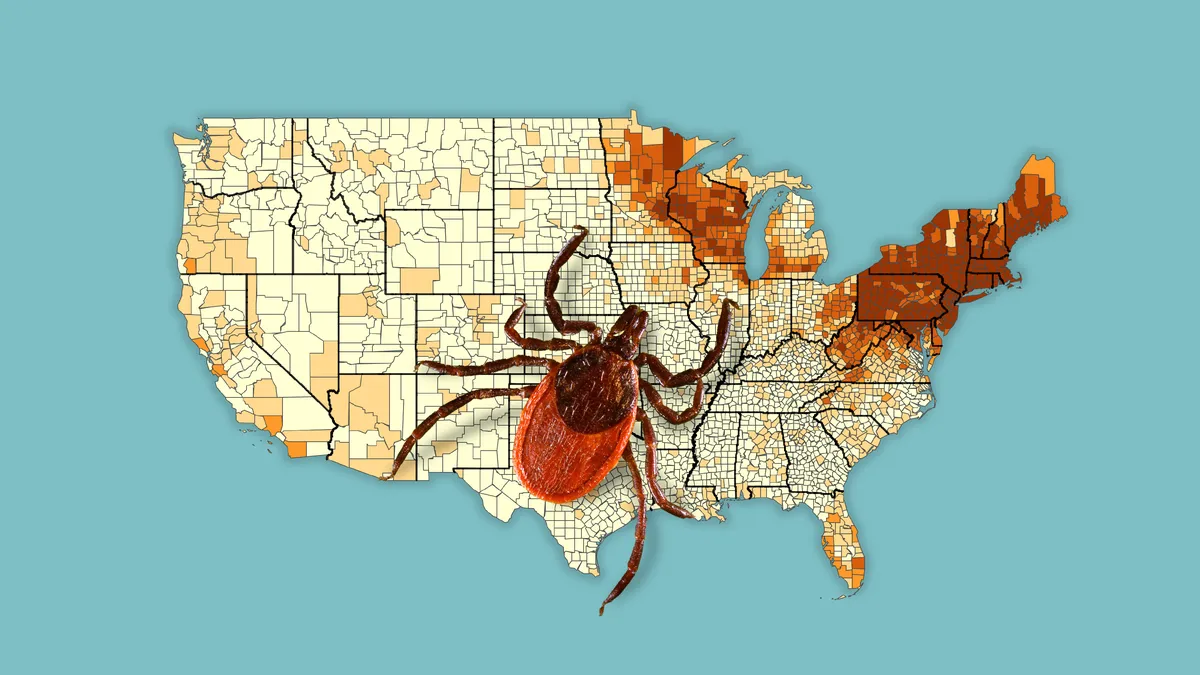
Lyme disease cases in Michigan nearly quadrupled between 2022 and 2025, according to data from the Michigan Department of Health and Human Services — jumping from 553 in 2022 to 2,167 confirmed cases last year.
The disease, which is caused by borrelia burgdorferi bacteria, is carried by ticks — small, blood-sucking arachnids — and is spread to humans and animals through tick bites.
The reason for the surge, said Jean Tsao, a professor in the departments of fisheries and wildlife and large animal clinical sciences at Michigan State University, is because ticks are spreading to more suburban and urban areas of the state.
"The ticks have spread," said Tsao, who also is a disease ecologist and specializes in tick-borne diseases, including Lyme disease. "Their populations are exploding in places where it is more populous with people. We're seeing a steep increase in the abundance of ticks in much of southern Michigan, and that's where the most people live."
That means the risk of contracting Lyme disease and other tick-borne illnesses is higher, she said.