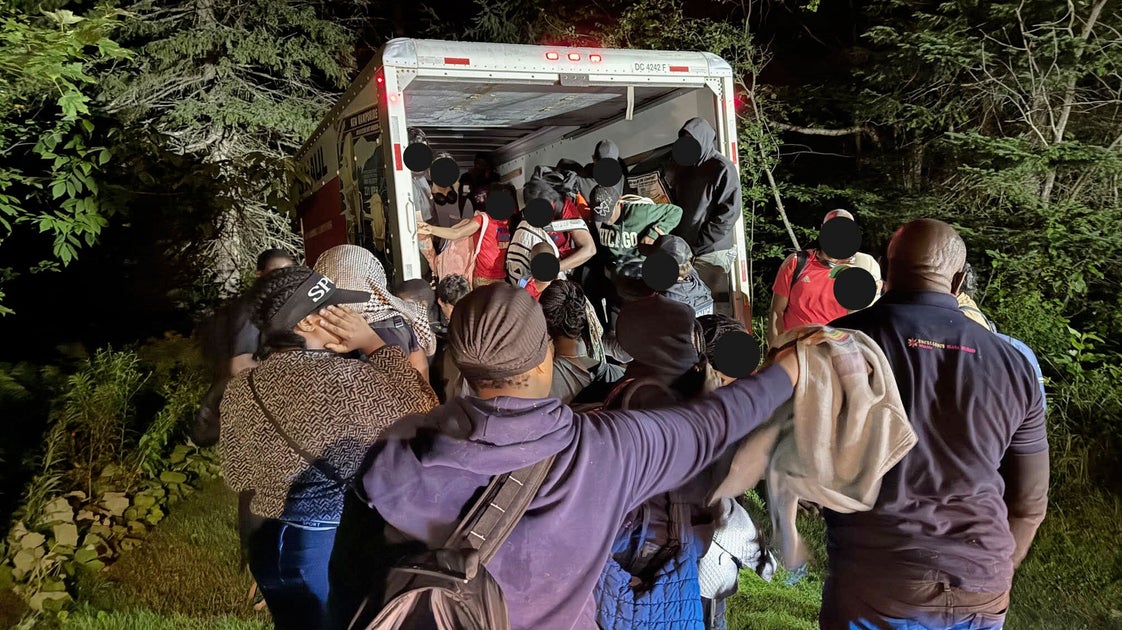
Early one Sunday morning last August, the Royal Canadian Mounted Police stopped a U-Haul truck just over the Canadian border. Inside the trailer, no larger than a small bedroom, were 44 people struggling to breathe, including a pregnant woman and a 4-year-old child. They were mostly Haitians, who had paid smugglers thousands of dollars to get them out of the country that they previously considered safe: the United States.
Many Haitian immigrants who have been living in the U.S. have chosen to undertake the expensive and treacherous process of crossing the Canadian border, rather than waiting to see if they’ll be deported by the Trump administration.
The first step of the journey, according to lawyers and immigrant advocates, is to get as close to the border with Quebec as possible without catching the attention of a guard. There, a smuggler, paid upward of $5,000, puts Haitians — who are allowed only one small bag — into a vehicle and drives across the border. Or the smuggler may guide Haitians through the woods for hours, which can mean trudging through deep snow and surviving below-freezing temperatures or, in the case of the people seeking refugee protections who were arrested last summer, wading through chilling waters. (At least 15 migrants have died making this trip in recent years.) The destination is usually Montreal, the French-speaking city where tens of thousands of Haitians have settled.