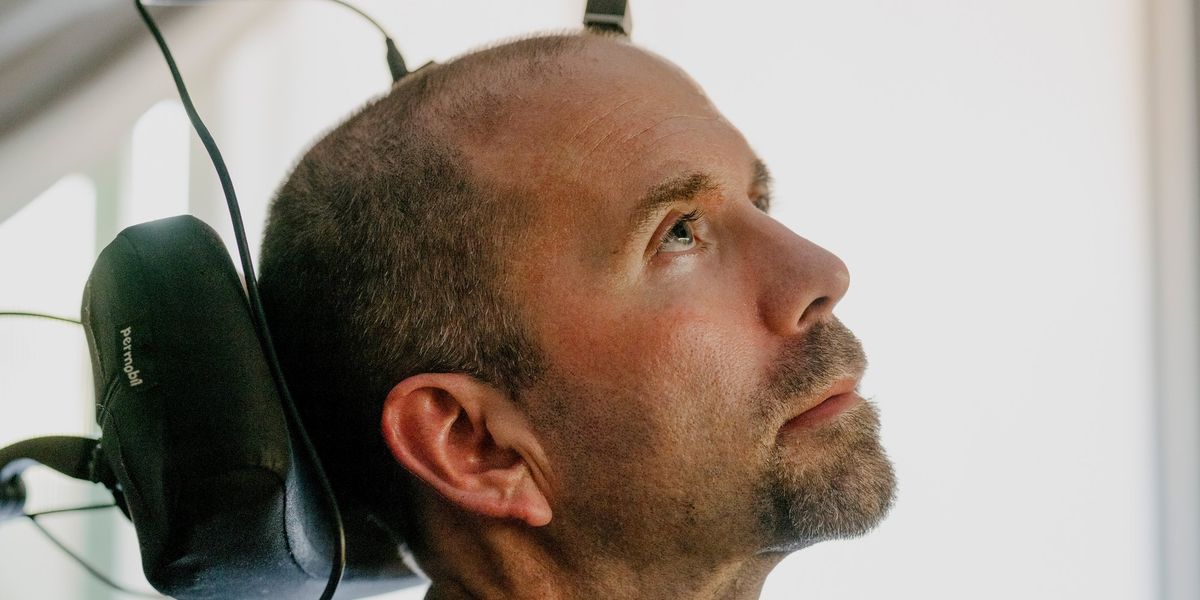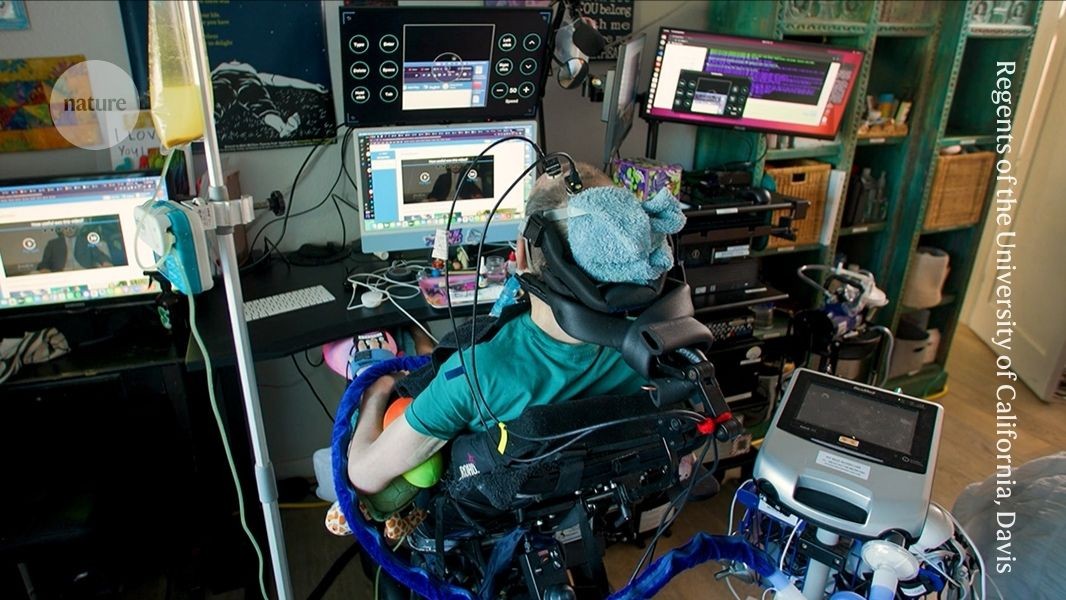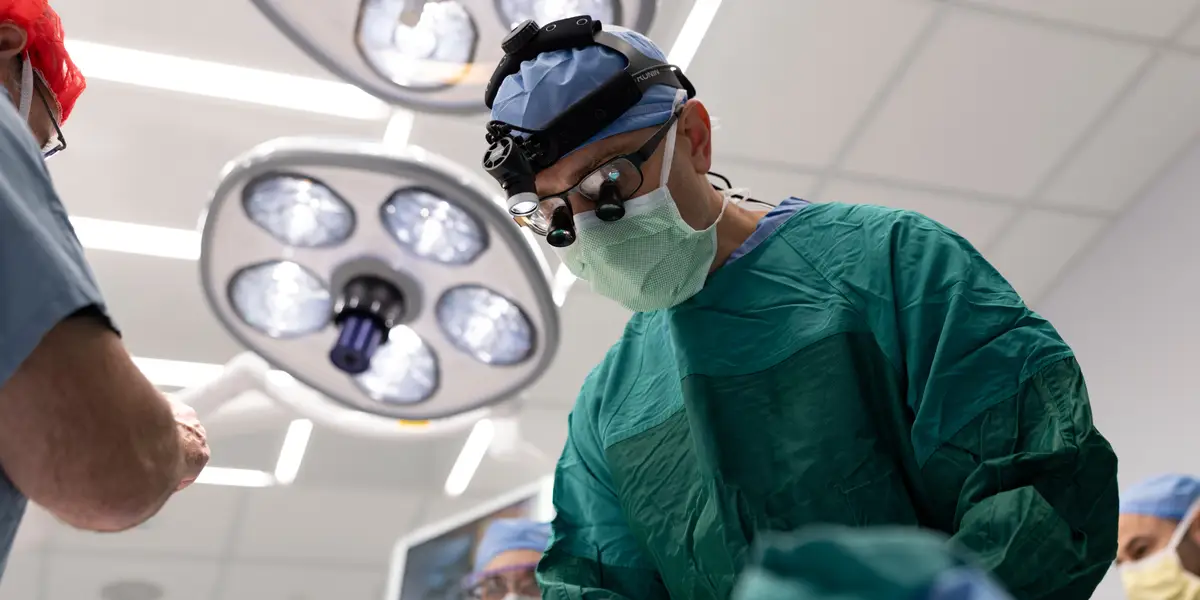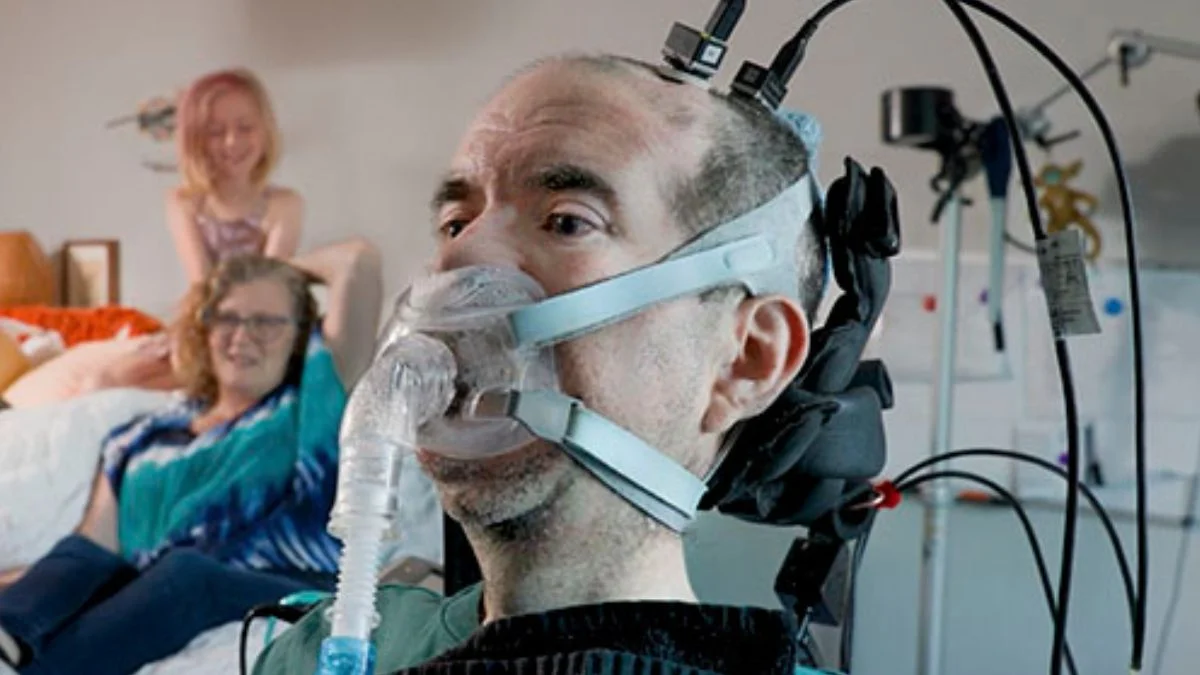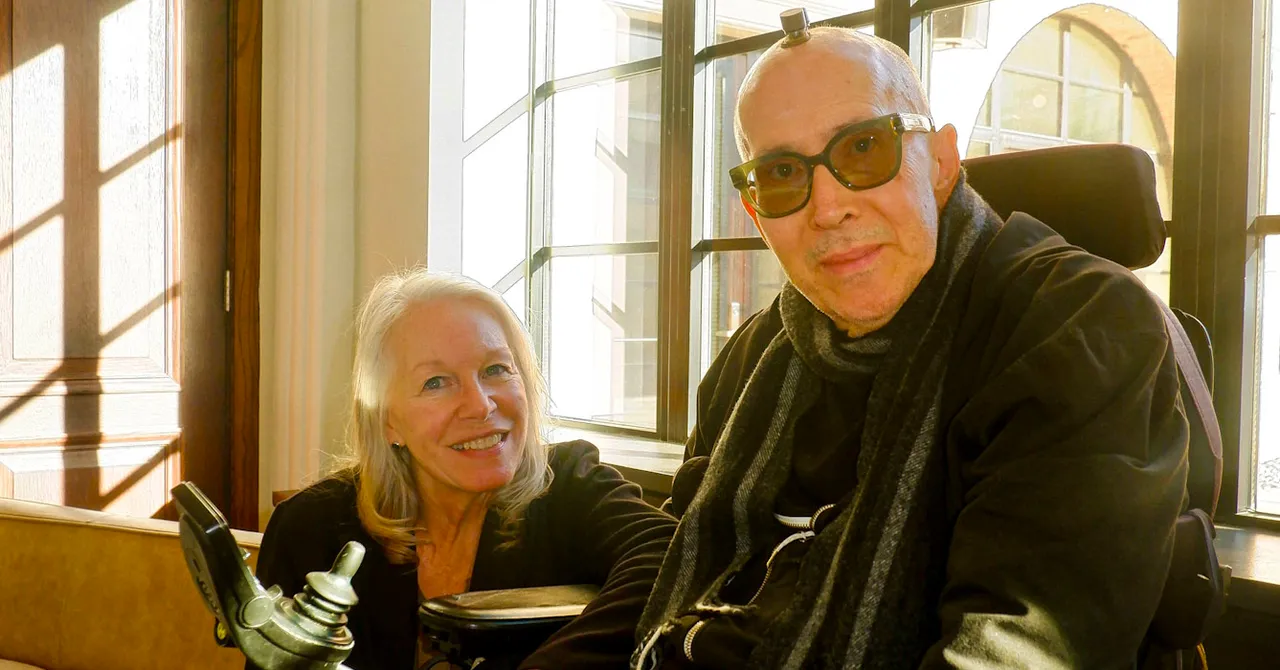
Galen Buckwalter didn’t hesitate to get a craniotomy in 2024 as part of a brain implant study at Caltech. The 69-year-old research psychologist wanted to contribute to cutting-edge science that could help other people with paralysis.Buckwalter has been a quadriplegic since a diving accident at age 16 left him paralyzed from the chest down. The six chips in his brain, made by Blackrock Neurotech, read activity from his neurons and decode movement intention. They enable him to operate a computer with his thoughts, feel sensation in his fingers that he had lost, and, more recently, make music with his mind.Known as a brain-computer interface, or BCI, the technology is being developed by Paradromics, Synchron, Elon Musk’s Neuralink, and others to restore communication and movement in people with severe motor disabilities. But Buckwalter’s experience shows that the technology can be used in ways that are not purely functional—for instance, as an outlet for creative expression. Other BCI recipients are using their implants to make digital art with their thoughts. A 2023 gallery exhibit at the American Association for the Advancement of Science in Washington, DC, displayed works by BCI recipients Nathan Copeland, James Johnson, and Jan Scheuermann.Buckwalter has been working with Caltech graduate student Sean Darcy, who developed an algorithm that allows him to create musical tones on a computer with his thoughts. Buckwalter, a longtime musician with the Los Angeles-based punk rock band Siggy, has used some of the tones he has composed in the lab in a song called “Wirehead,” also the name of the band’s latest album released on March 15.WIRED spoke with Buckwalter about what it’s like to make music with his mind. This interview has been edited for length and clarity.WIRED: You recently started using your implant to produce musical tones. How did that come about?Galen Buckwalter: Even before I was implanted, I saw this clip that was going around YouTube of mushrooms, where if you put electrodes on mushrooms you get this biosonification. It will amplify the electrical activity going on in a mushroom, and you get these really cool sounds. I saw that and thought, if a mushroom can chirp like that, I want to know what my brain sounds like. That was something that was on my agenda that I wanted to do with the Caltech team. From day one, I was talking to all the researchers about it, and this amazing grad student, Sean Darcy, heard about it. He spent his time on weekends and nights coming up with this software that translates what I think into the ability to manipulate tones.So you’re able to create musical tones just by thinking. How does that work?Each neuron has a baseline firing rate. All these neurons are firing to some extent, but what we do is identify neurons that I have volitional control of. My six implants each have 64 independent channels to record from, and we have a big screen with all 384 channels on it. So, if I think about moving my toe up and down, a bunch of channels will light up. There seems to be a directional set of neurons that it picks up from just the extension and flexion of my toe.What Sean does is he assigns a tone to the baseline firing rate. If I activate that neuron, the pitch will go up, and if I suppress it, it will come back down. I think about moving my index finger, and then think about moving my pinky, and I can do that for as many channels as I have volitional control over. Right now I can do two tones at once, but if you go above that it starts to feel like you're rubbing your head and patting your stomach at the same time.You’re thinking about a particular movement, and each of those movements is assigned a different tone?Yeah.Wow. And right now, you’re able to produce two tones at once by thinking about two different movements simultaneously?Right. Any more than that and it gets a little discordant. But it’s something we’re working on. I think it’s totally possible. Ultimately, I do think the potential is that we'll have a complete DJ booth coming out of my head. We're starting to get loops so that I can get a good rhythm loop going and then put melodies on top of it.Sean has also come up with a kind of keyboard, so the tone will only play if I go above a certain threshold, and then if I bring it back down it'll go off. It starts to be like playing an instrument.Does it require a lot of concentration?Yeah, at least to learn. From one day to another, the channels can actually be detecting different neurons. Sometimes channel 54 might be our go-to neuron and then one day it’s just not happening for us. We have to find the neurons that are happening that day and what I need to do to activate them. Then we go from there.Tell me more about how the virtual keyboard works.I'm thinking about movement primarily, but I just have to get the movement above a threshold to get the tone. I can think about moving my index finger, and then think about my middle finger and activate different neurons and get them to give me the tone, but then to suppress that takes more focused effort. It’s trippy to think that we can control individual neurons in our brains. I don't know what the long term implications of that are, but I find it really fascinating that we can do that.Has music always been important to you?I have a punk band, Siggy. We've been together for 29 years. It’s a huge part of my life—getting together, creating, and playing shows on occasion. We actually used one of the tracks I created with my neural signals for a song called “Wirehead,” which is kind of a punk reflection on the possibilities of BCIs and all that good stuff.I do have some frustration with the whole academic approach to BCI, which is that it’s not always considering the interests of the participants. The researchers have their experiments and aren't really saying, “Hey, how can we work with you to make your life more interesting?” The community has to incorporate that if this technology is really going to advance. It's going to make the technology more enjoyable for the people using it.I think we should absolutely be exploring how to use this to advance creativity. Restoration, yeah, that's first and foremost. But we're a lot more than just moving and sensing. I think that's where getting the subjective experience to not only be considered but to drive the research is really important.Buckwalter has six Utah arrays made by Blackrock Neurotech in his brain.
Meet the Man Making Music With His Brain Implant
Galen Buckwalter says brain-computer interfaces will have to be enjoyable to use if the technology is going to be successful.
1,572 words~7 min read