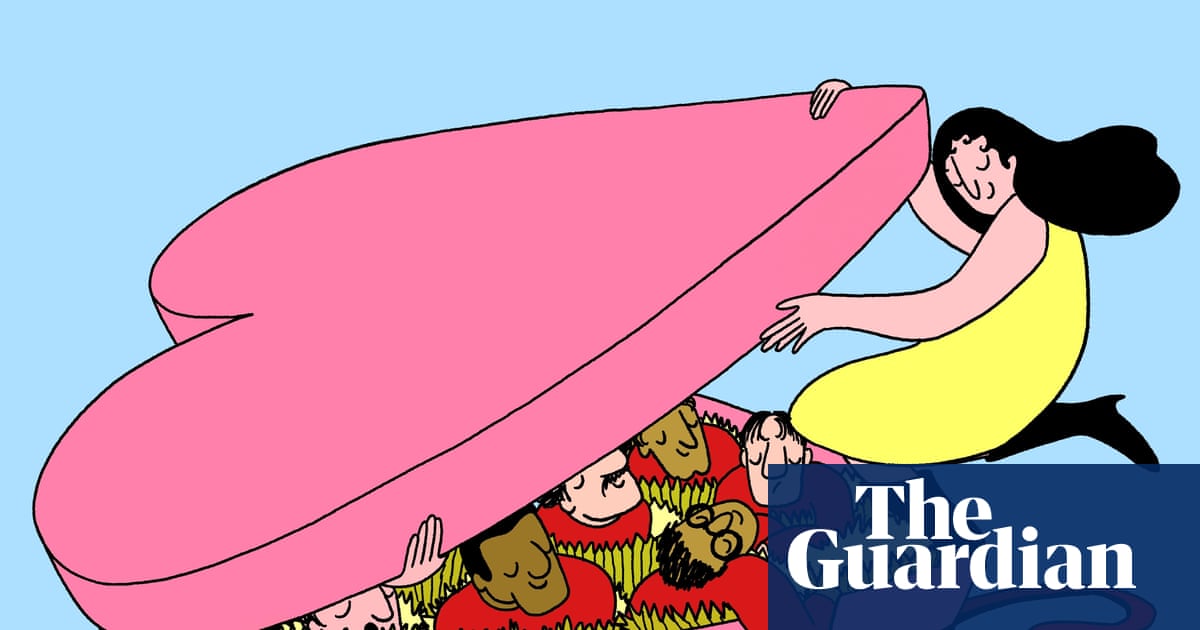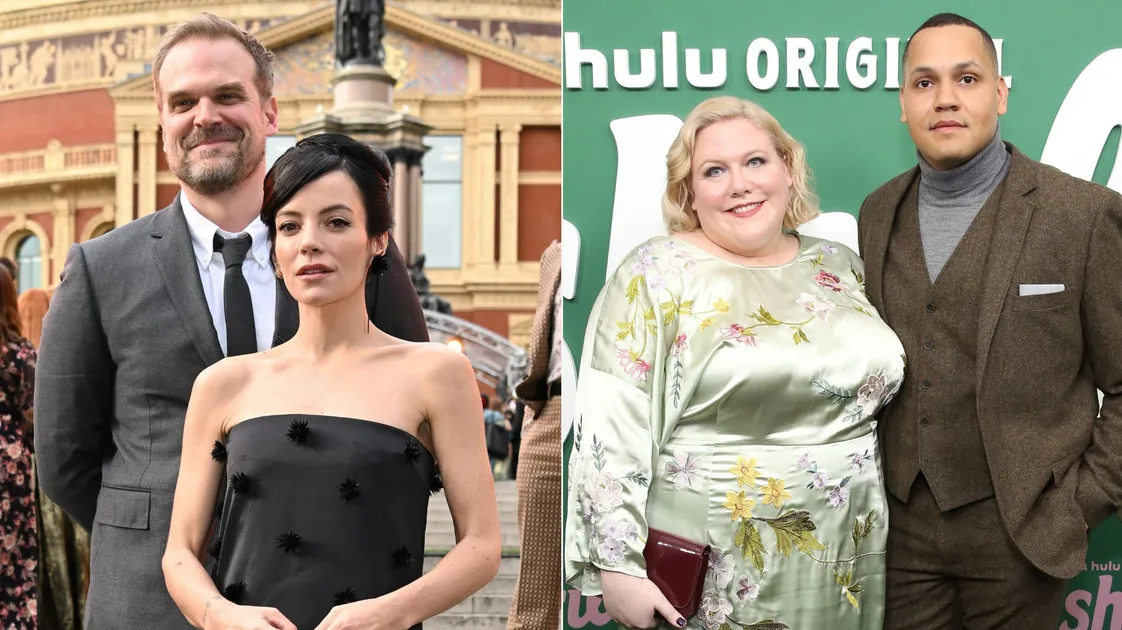
We’re in the middle of a pop-culture “poly” moment, but the headlines and the discourse online haven’t exactly done polyamory any favors.Across social media, people are talking about “poly under duress” (PUD), a term used in ethical non-monogamy (ENM) circles to describe situations in which someone reluctantly agrees to polyamory out of pressure to preserve a relationship, rather than from genuine interest or enthusiastic consent.There’s two celebrity stories that have brought the concept (coined by sex writer Dan Savage, like so much of our modern dating and sexual lexicon) to the forefront. In October, pop singer Lily Allen went scorched-earth on her album “West End Girl,” with brutally revealing lyrics that seemed to allude to the turbulent open marriage she reportedly shared with ex-husband David Harbour, the “Stranger Things” actor.In an interview with Elle UK, Allen admitted that she had to contort her own needs to accept the arrangement Harbour had proposed. “It’s not something that I think I would necessarily explore again,” she told the magazine. Then, there’s Lindy West. Last month, the memoirist released “Adult Braces,” which, among other more milquetoast midlife topics, delves into how she reluctantly agreed to a non-monogamous marriage with her husband, musician Ahamefule Oluo.“My initial reaction was, I was devastated,” she told The New York Times of Oluo broaching the idea earlier on in their relationship. “Our initial conversation was a lot of me crying and being like, ‘I don’t want anyone else.’”Jeff Spicer / Monica Schipper / Getty Images"People read a messy story about someone's relationship and go, 'A-ha, I told you.’ It’s confirmation bias for them," Leanne Yau, a sex and polyamory educator said of recent viral stories about polyamorous marriages.In 2019, West learned that Oluo was dating another woman, Roya Amirsoleymani, which forced the issue. “At this point he had sort of come to the conclusion that we couldn’t resolve this, which is why he went ahead and started dating this person. Because I had been gone. I had refused to talk to him about it,” West said. “I think it felt like I was losing him, but I was just determined to win.”Eventually, West met Amirsoleymani and came around to the idea of opening up her marriage. Now, West says, all three are living together and happily settled into a “triad.” Many argued on social media that the author might not have agreed to it had her husband not made clear he intended to continue his relationship with Amirsoleymani. Whether that dynamic amounts to poly under duress is ultimately for West alone to decide. But a month after the book was released, the internet is still unpacking the ins and outs of the memoirist’s open marriage.“People read a messy story about someone’s relationship and go, ‘A-ha, I told you so.’ It’s confirmation bias for people who already have biases against poly people,” said Leanne Yau, a sex and polyamory educator based in the U.K. “People think that we’re selfish, untrustworthy cheaters who don’t understand monogamy.”How poly under duress tends to happen, from a husband who experienced it.Those biases aren’t fair, but as forms of ethical non-monogamy become more prevalent, it is common for partners to feel pressured to enter into a poly relationship after years of monogamy. Kat Moghanian, a therapist who specializes in alternative sex and sexuality, says she sees the dynamic play out often in her San Francisco, California, office. “Sometimes it’s based on fear,” Moghanian said. “Sometimes it’s a partner’s infidelity driving these decisions, or the anxiety of losing a partner.”That’s how it happened for Joe, who slid into polyamory because he feared losing his poly-curious wife and the life they’d built together.“I couldn’t walk away from a 25-year marriage with kids and our dream forever home,” said Joe, who, like others in this story, asked to use his first name only to protect his privacy. “I still loved my partner, I still wanted them to be happy, so I agreed to be polyamorous, because I couldn’t bring myself to end the relationship,” he said. “But you can’t consent when there is no choice. It felt like emotional blackmail.” Illustration: Kelly Caminero/HuffPost; Photo: Getty ImagesAs forms of ethical non-monogamy become more prevalent, it is common for partners to feel pressured to enter into a poly relationship after years of monogamy.While his wife had had years of private contemplation about ethical non-monogamy, Joe felt thrown into it. He tried to play catch up, frantically reading and finding out more about polyamory and what a healthy and ethical poly dynamic look like.The couple agreed to explore the local kink scene and mutually agreed they’d like to explore to play with others in one-off experiences. But Joe was firm on wanting no outside emotional, long-term connections or relationships to develop.“I had made it clear it was a limit for me,” he told HuffPost. “I did not feel I was ready or happy for either of us to pursue an additional emotional and loving connection with a third party.” Unfortunately, his wife quickly broke that boundary.“Within a month, my wife was spending multiple nights with a new partner, fluid bonded ― no condoms ― and traveling away on holiday with them for several nights,” he said. “I later came to understand this as new relationship energy (NRE).”To make a long story short, the couple eventually divorced, and Joe’s wife moved on with the aforementioned new partner. Years later, Joe is often asked if he would consider polyamorous relationships again in the future. Given his traumatic first go-around, it’s a difficult question to answer.“However, I now fully understand that what I went through was not an ethical poly relationship,” he said. “Polyamory should not be exercised like it was for me, and many people do have very healthy and happy poly relationships. They put the work in, all parties are aligned, informed, and communication is key.”There are poly under duress success stories, too. Not every poly under duress story has an “...and they divorced,” ending, either. When Dave opened his marriage, he worked to ensure his wife never felt cornered: He made sure they had equal decision-making power, pushed for therapy, and even offered financial support if they decided to part ways, despite their similar incomes.“I was aware of poly under duress, and I worked hard to navigate a space between doing the commonly suggested thing of simply divorcing and separating when such an impasse is reached or continuing to live monogamously unhappily without even a remote possibility of my needs ever being met,” Dave told HuffPost. Reluctantly, his wife agreed to opening up their marriage. It’s been a success, perhaps surprisingly, given her initial reluctance. Dave doesn’t see her decision as one made under duress, though he concedes she may feel differently. The couple have now been happily married for 22 years, 15 of them open.“Opening a monogamous relationship is really ending one,” he said, “and what’s built after is a new and different relationship, with different rules and agreements and structure.”Noko LTD via Getty Images“Experiences are really all over the map,” therapist Kat Moghanian said. "I have also worked with clients experiencing polyamory under duress that stemmed from feeling pressured by ideologies or by an internal sense of obligation to embrace polyamory as a political, anti‑patriarchal value, even when it did not align with their own needs or identity.”“It’s the same as closing an open relationship and usually with beginnings and endings there is fallout, casualties, loss and pain,” he continued. “You have to have faith in your own ability to navigate tough things and in your resilience.”Moghanian, the therapist, agrees that successful “poly under duress” stories can happen. And sometimes partners who felt pressured into polyamory discover that they’re much more successful in the dating world than their poly-curious partner. “Experiences are really all over the map,” Moghanian said. “I have also worked with clients experiencing polyamory under duress that stemmed from feeling pressured by ideologies or by an internal sense of obligation to embrace polyamory as a political, anti‑patriarchal value, even when it did not align with their own needs or identity.” That reasoning speaks to something West wrote in her book: “Being cool about polyamory felt like a growing imperative in progressive circles.” That gets at another layer of the conversation: In forums like r/polyamory, discussions of PUD tend to center on straight couples. PUD happens in queer relationships, too, but it’s considerably less common, Yau said.“I think that’s because there’s a huge overlap between the non-monogamous community and those who are already living a non-traditional, non-heteronormative life,” Yau said. “Queer couples are much more likely to question other relationship norms, like monogamy and mononormativity.”With thoughtful communication, there doesn’t have to be a bad guy when asking these questions and opening up, Yau said. Ultimately, the poly-curious person is just being transparent about what they need from the relationship in its current phase. In the process, an imbalanced power dynamic can emerge: I want this, you’re caught off-guard by the news, and now we’re forced to make some sort of weighty decision. That’s a complicated script that plays out around any number of knotty relationship issues, Yau said.“Take, for instance, two people who thought they wanted children, and then in the middle of it, someone says, ‘Actually, I want to be child-free,’ and leads to a crossroads in the relationship,” she said.There’s nuance in every poly relationship. Yau thinks people need to stop stereotyping polyamorous people as manipulative or dead-set on leaving their partners, and start to listen to their actual experiences. “Polyamorous people very openly talk about shit online, so we don’t need to project,” she said. “Ultimately, I think we all deserve to engage in relationship styles that feel aligned with our values and make us happy.”
The 'Poly Under Duress' Conversation Has Gotten Out Of Control
After Lily Allen and Lindy West shared their poly stories, online discourse is giving polyamory a really bad name.
1,623 words~7 min read