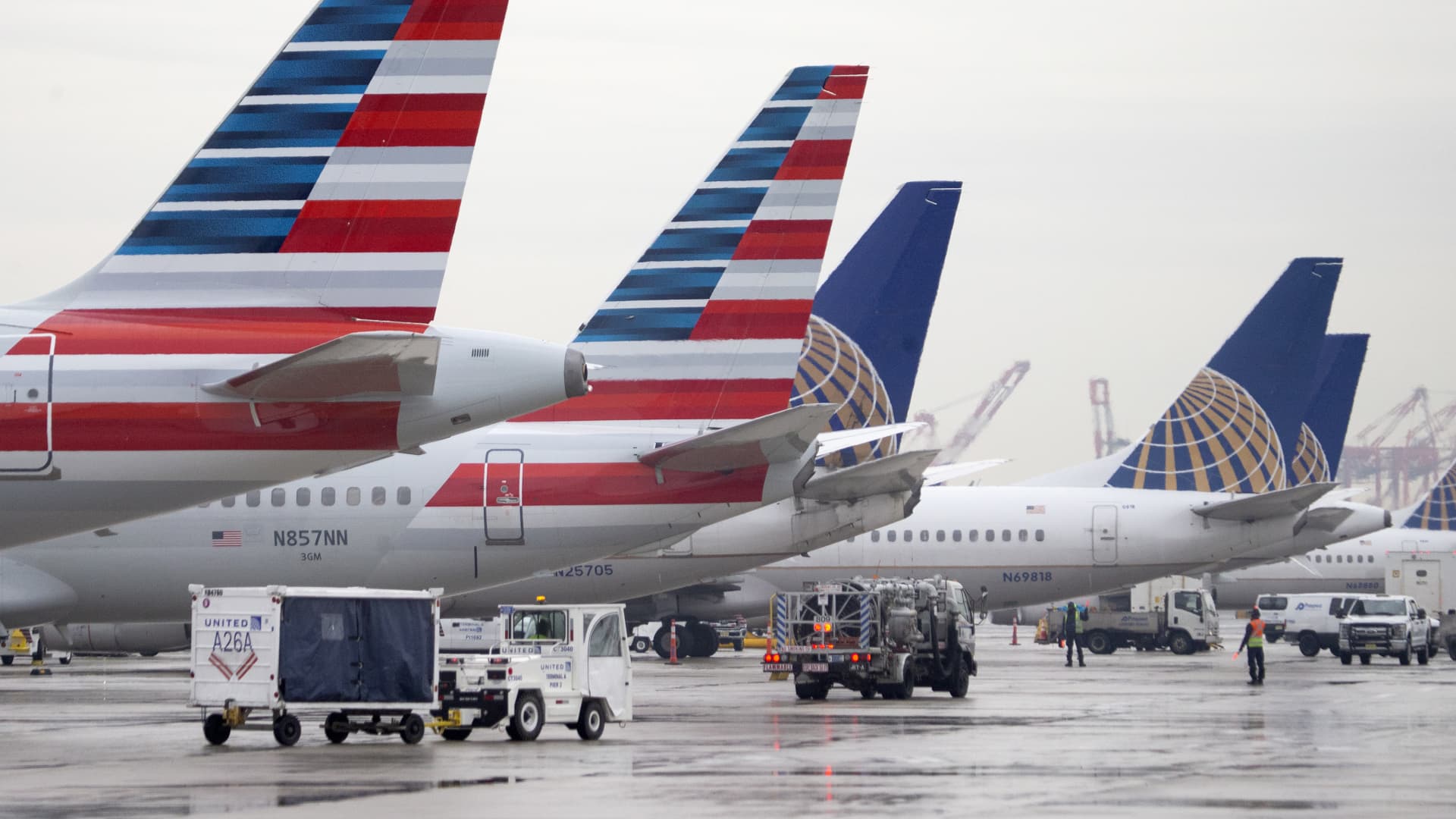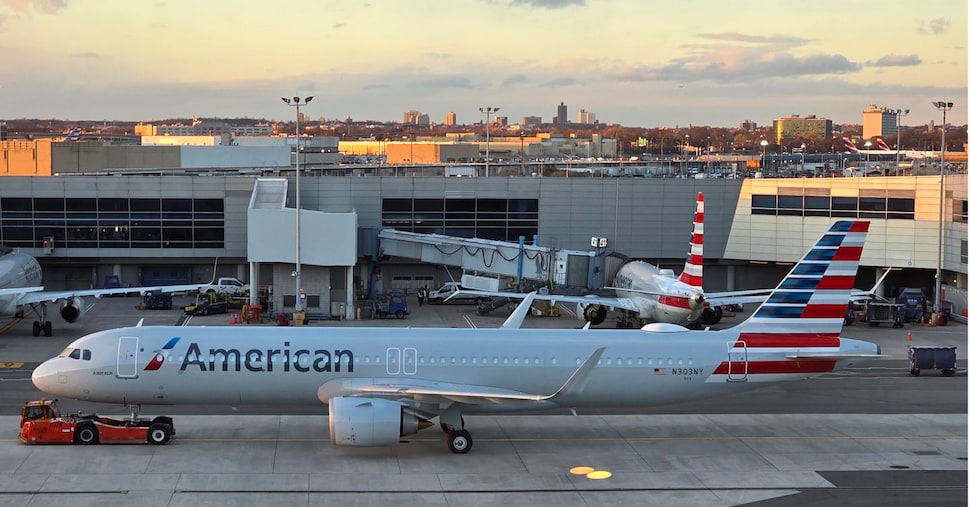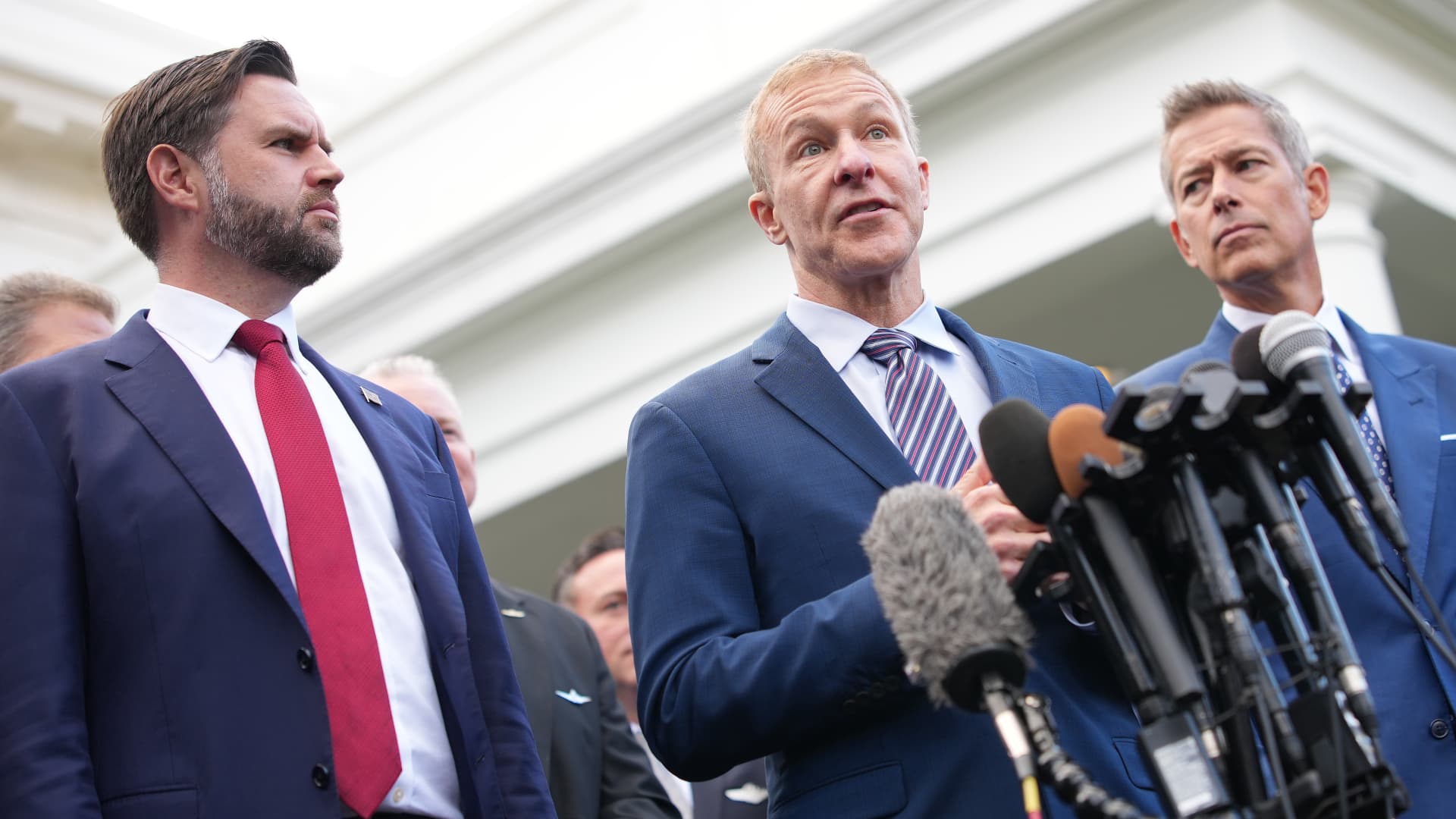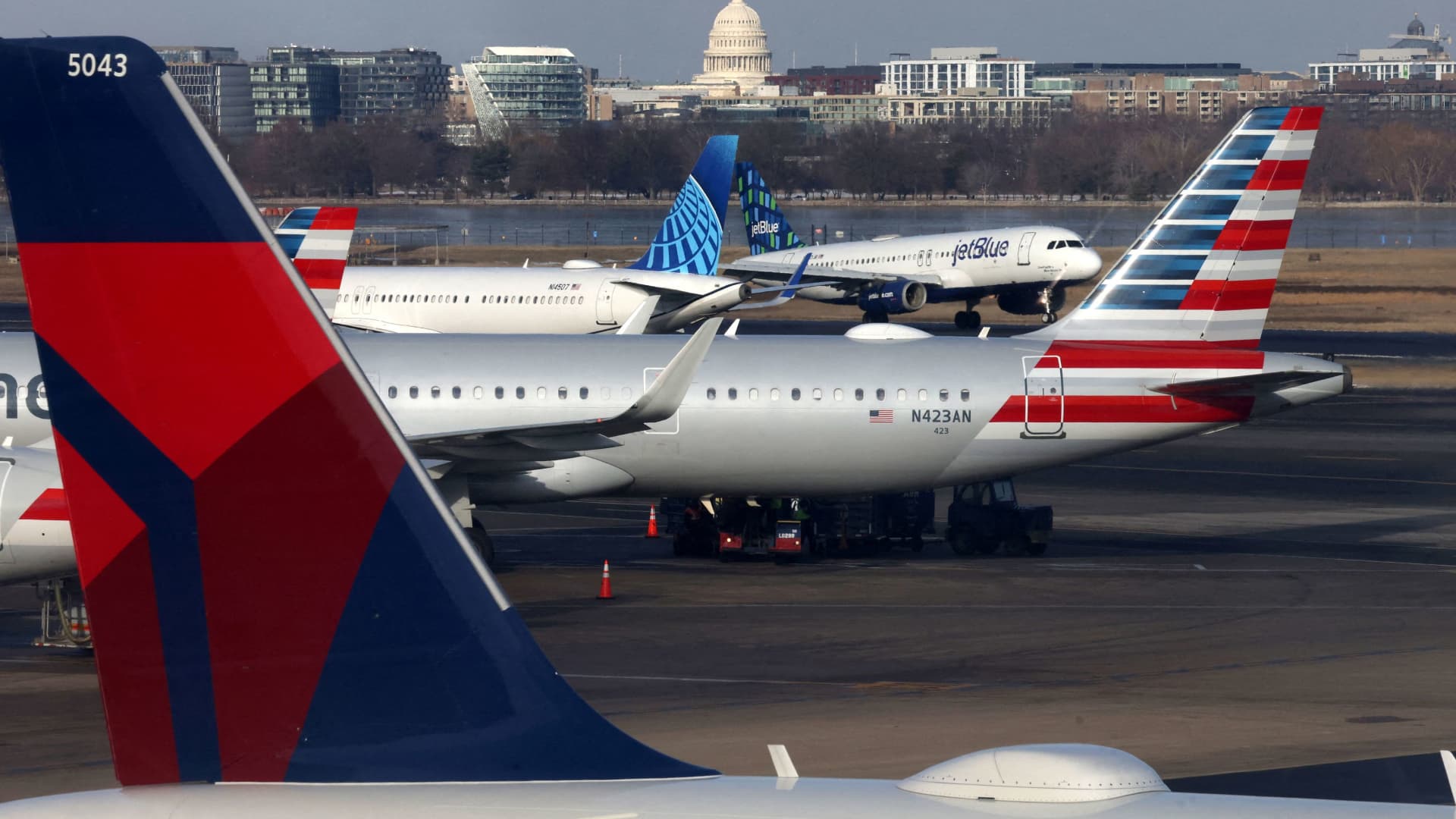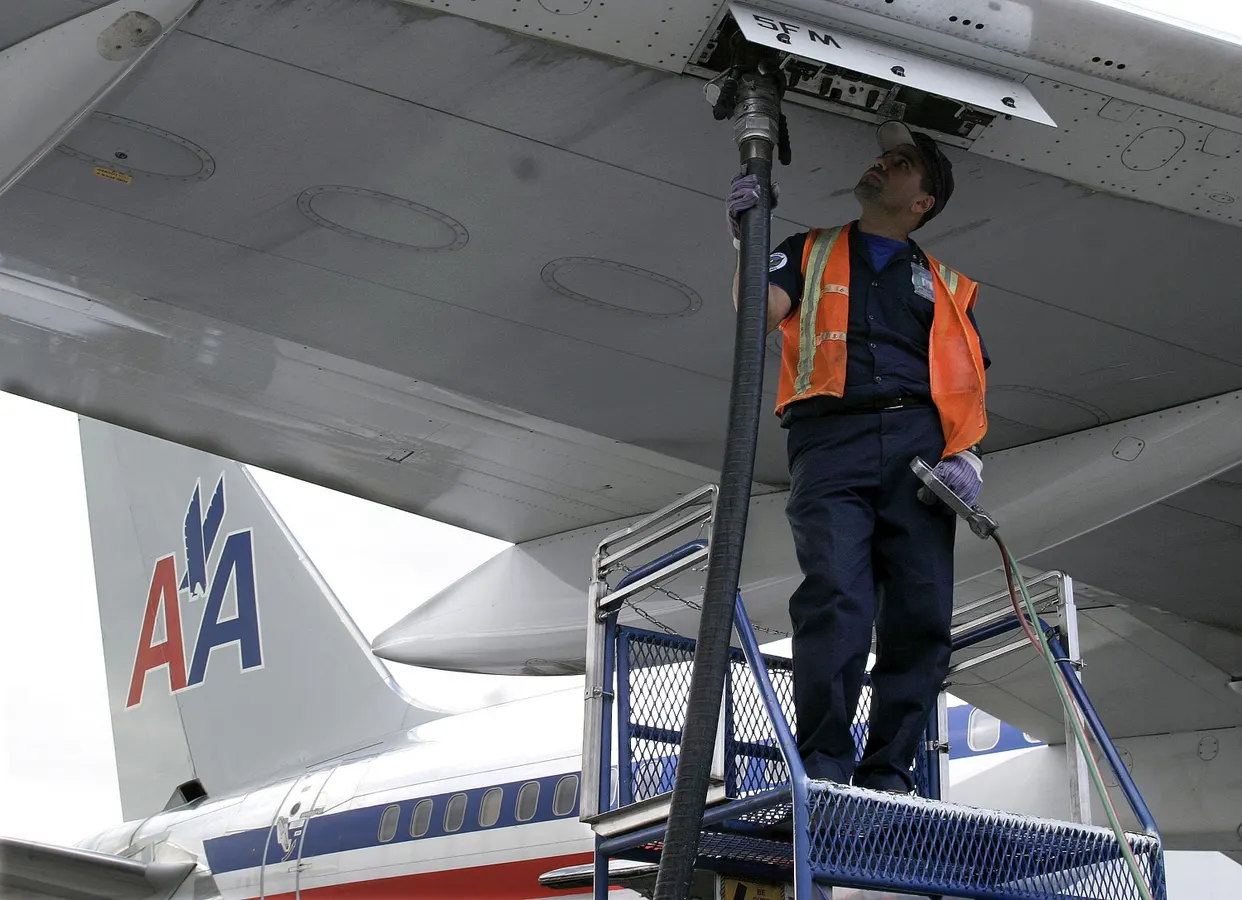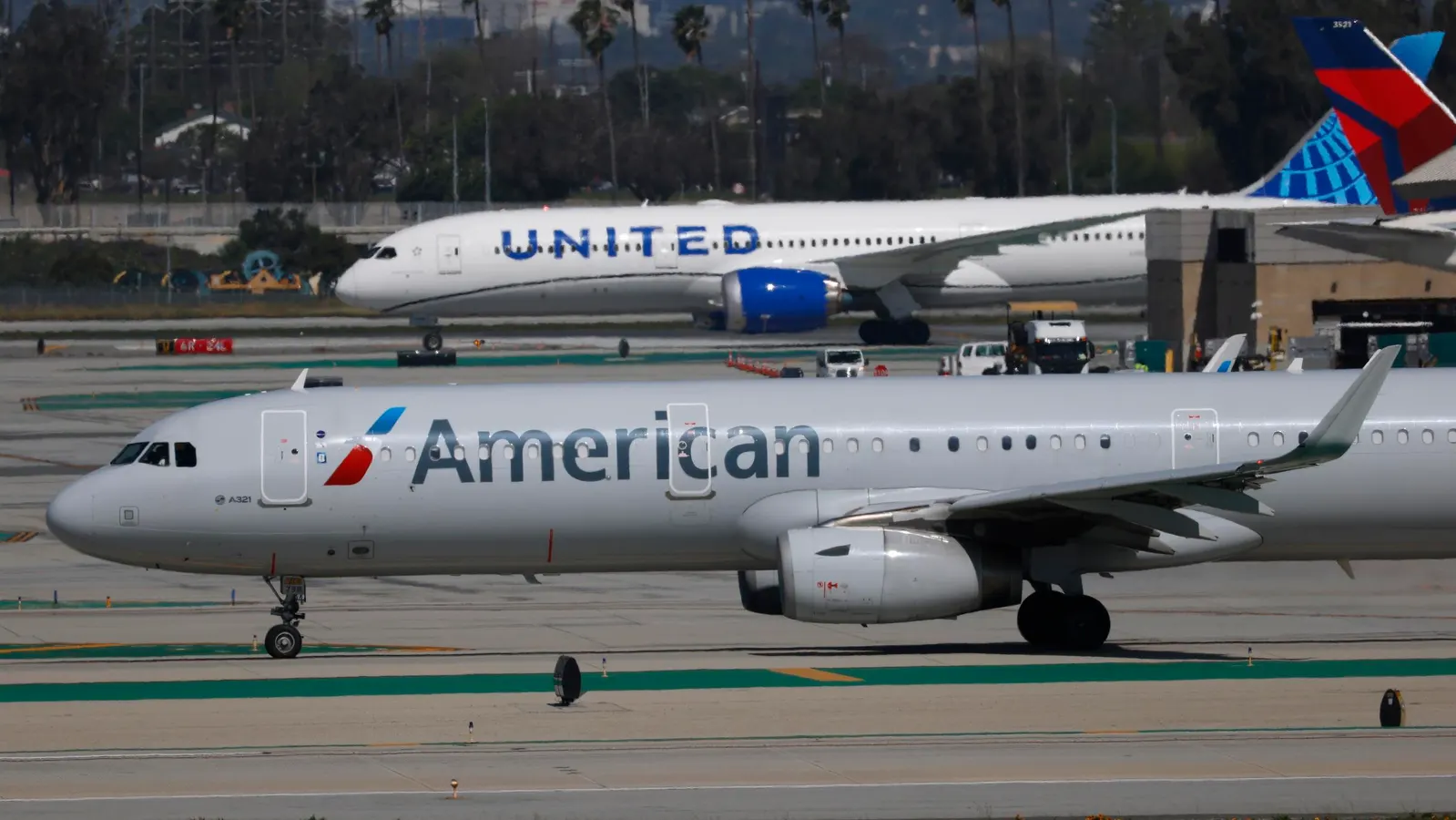
ToplineIn the past week, airline CEOs and the Transportation Secretary have fueled speculation of mergers on the horizon, but industry experts warn consolidation would be unlikely to benefit the traveling public.A merger between American Airlines and United Airlines would form the largest carrier in the world. (Photo: Kevin Carter)Getty ImagesKey FactsUnited Airlines CEO Scott Kirby floated a possible merger with American Airlines to government officials, including President Trump, Bloomberg reported Monday.Higher fuel prices “will cause much more significant structural reform” in the airline industry, Delta CEO Ed Bastian told investors on his company’s first-quarter earnings call last week.“Is there room for some mergers in the aviation industry? Yeah, I think there is,” Transportation Secretary Sean Duffy told CNBC last week, adding that President Trump “loves to see big deals” but any merger would be subject to antitrust scrutiny.American Airlines and United Airlines stock was up 8% and 3%, respectively, on Tuesday afternoon.“The chance of this [United-American] merger happening is about as likely as the sun rising in the north,” Henry Harteveldt, president of Atmosphere Research Group, a travel market research and advisory firm, told Forbes, adding that Kirby was likely trolling American.United Airlines declined to comment, while neither American Airlines nor the White House responded to Forbes’ requests for comment.Crucial Quote“Fewer airlines means that less price competition, and allowing any of the big four to become larger would not necessarily benefit the traveling public,” Harteveldt told Forbes, adding that all U.S. airline mergers require approval from both the Department of Transportation and Department of Justice. Iran War Has Airlines Circling In The WaterOne airline’s misfortune is another’s opportunity. Spiking jet fuel prices—up 65% since before the Iran war began—is a financial stress test for U.S. airlines, with weaker carriers forced to cut capacity, borrow or absorb deeper losses while stronger rivals increase market share. At a J.P. Morgan investor conference on March 17, executives of major U.S. airlines agreed travel demand remained robust enough to offset much of the huge spike in jet fuel prices caused by the war in Iran. But some airline chiefs had already begun laying down a narrative for mergers. Bastian remarked that fuel prices doubling “almost overnight” would have a significant impact on the industry, because “there’s those that don't have any margin to absorb that.” Kirby noted the Transportation Secretary had proactively called him “just to make sure everything around the world is going okay with oil.” In a note to employees three days later, Kirby wrote that if fuel prices stay elevated, it could create a chance "to buy assets, absorb network changes, etc." Will History Repeat Itself?“Going back over the last decade when we saw consolidation happen, we forget what drove consolidation. What drove consolidation was higher fuel prices,” Bastian said on Delta’s earnings call. Indeed, the 2008 oil spike and financial crisis triggered a wave of airline mergers that shrunk the industry from more than a dozen carriers into four controlling the lion’s share of U.S. air travel. In the span of several years, Delta acquired Northwest, United merged with Continental, Southwest acquired AirTran and, in 2013, American acquired US Airways. More than a decade later, the “big four" airlines—American, Delta, United and Southwest—still control 75% of seat capacity in the nation’s aviation market, according to OAG data. “Fewer choices mean higher ticket prices, more fees, and fewer options for anyone who wants to get from point A to point B," Ganesh Sitaraman, director of the Vanderbilt Policy Accelerator, told Reuters. “What we need in this country is more competition in the airline business, not less,” Harteveldt told Forbes. “If any of the mergers involve any of the four largest airlines, it makes those carriers that much larger, that much stronger, and it reduces the opportunity for other airlines to compete effectively against them.” U.s. Airlines That Could Potentially Be AcquiredThe airline industry runs on tight margins, and the surge in oil prices brought on by war in the Middle East is challenging carriers’ ability to withstand the shock. Since airlines sell tickets weeks and months in advance, weaker carriers are more exposed when fuel prices move faster than fares can follow. Ultra low-cost carrier Spirit Airlines, which is operating under Chapter 11 bankruptcy, is seen as the most vulnerable to failure or acquisition. Frontier and JetBlue have also struggled to be profitable since the Covid pandemic.Which U.s. Airlines Could Potentially Buy Another?The most profitable U.S. airlines—Delta and United—are best positioned to absorb higher fuel costs and stick to their operating strategies. Delta owns an oil refinery, which provides a partial hedge against fuel price spikes. “You could make the argument that Delta, Southwest and United are all in financial positions where they could make acquisitions,” Harteveldt told Forbes. “They have the balance sheets and credit ratings and financial abilities to make such a deal, although a lot would depend on the size of a merger and the airline involved.” A tie-up of United and American would create the largest airline in the world and would pose serious antitrust concerns, according to Harteveldt. “Even the Trump administration’s DOT would not let a merger like United and American go through without massive concessions that could conceivably make such a merger so unattractive and economically unviable that it’s not worth pursuing.”Further ReadingIran War Has Sent Airfares Climbing—Here’s What To Expect (Forbes)U.S. Airfares Are On The Rise—Experts Advise Booking Summer Flights Now (Forbes)
Surging Jet Fuel Prices Spark Airline Merger Speculation
Higher jet fuel prices have sparked a drumbeat of merger chatter in the airline industry—but consumers would likely pay the price, say industry experts.
899 words~4 min read