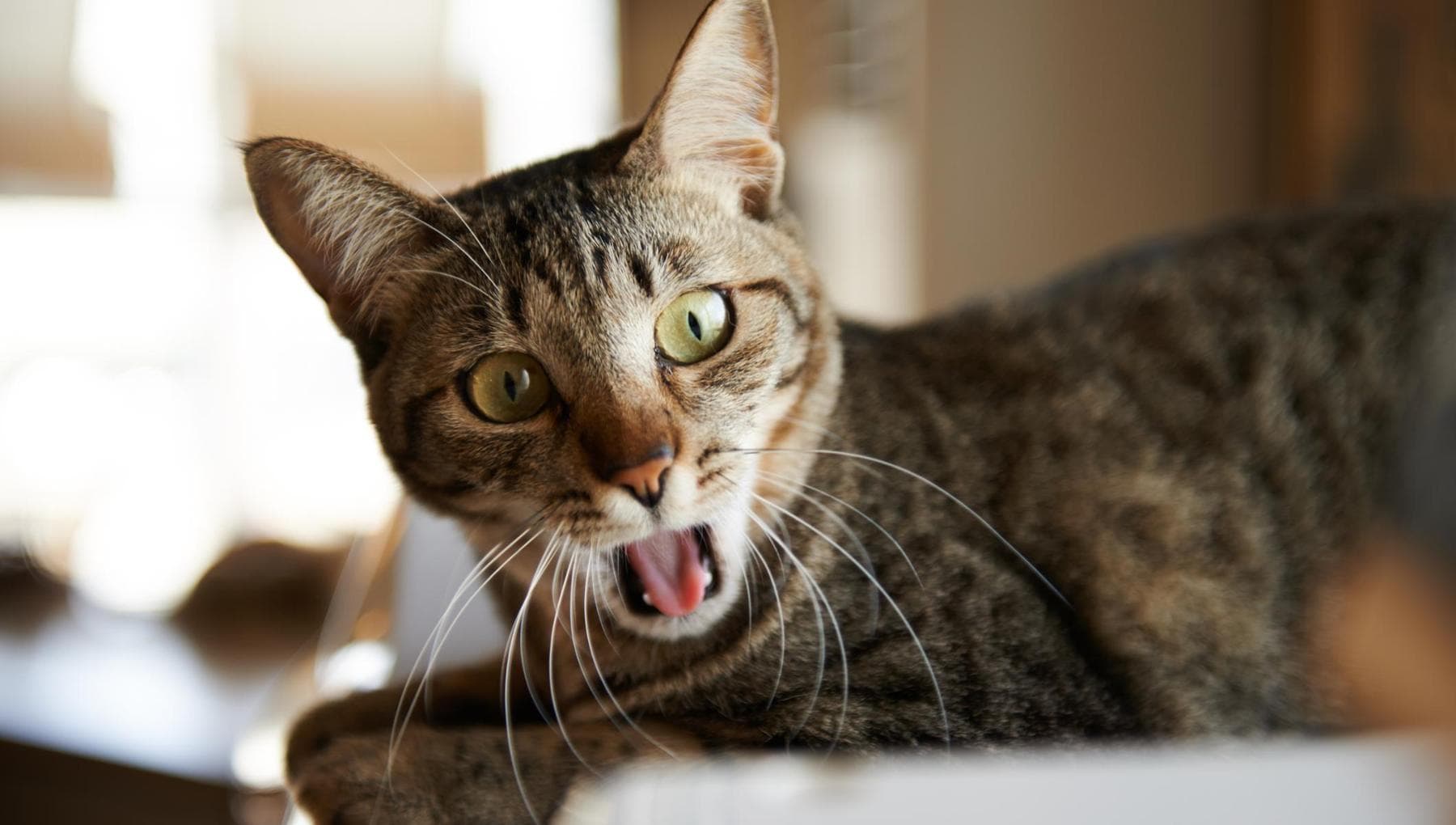
Non è un miagolio diverso dal solito. Non è nemmeno uno di quei comportamenti che chi vive con un gatto impara subito a riconoscere. È qualcosa di più subdolo. Il gatto sembra stare bene, poi all’improvviso si ferma, si acquatta leggermente e allunga il collo in avanti. Da lì parte un suono strano: secco, cadenzato, quasi “grattato”, come se qualcosa gli fosse rimasto incastrato in gola. Dura pochi secondi. Poi si rialza e se ne va, come se nulla fosse. È proprio questa normalità dopo il gesto a ingannare. Perché nella maggior parte dei casi quel verso non è ciò che sembra: è asma. E molti proprietari, senza saperlo, la interpretano nel modo sbagliato.
Il grande equivoco
L’errore più comune è pensare che il gatto stia cercando di vomitare un bolo di pelo. La scena è convincente: postura tipica, movimenti dell’addome, suono simile a un conato. Ma manca un elemento fondamentale: non espelle nulla. Secondo la veterinaria Tannetje Crocker, questo è il punto chiave: quello che sembra un problema digestivo è, molto più spesso, un problema respiratorio. In altre parole, il gatto non sta cercando di liberare lo stomaco ma ha un broncospasmo e sta cercando di respirare meglio.
@dr.tannetje.crocker My cat started making this sound, and as a Veterinarian I was worried. This hunched position with an outstretched neck, and hacking is commonly seen with asthmatic cats. Your cat needs an exam and radiographs to determine if that is the cause. Some asthmatic cats have infrequent attacks and recover quickly. Some can develop longer, frequent coughing fits that require medication. Most commonly they are treated with an inhaler of steroids for maintenance, and albuterol when needed. Both inhalers require a delivery system that is made for cats. Many owners come in worried their cat is trying to vomit when they look like this. Please bring a video to your vet visits of any frequent abnormal sounds like this! If this was helpful save and share it with fellow cat guardians. #catstagram #emergencyvet #catinfo #catasthma ♬ original sound - Dr Crocker - Pet Vet