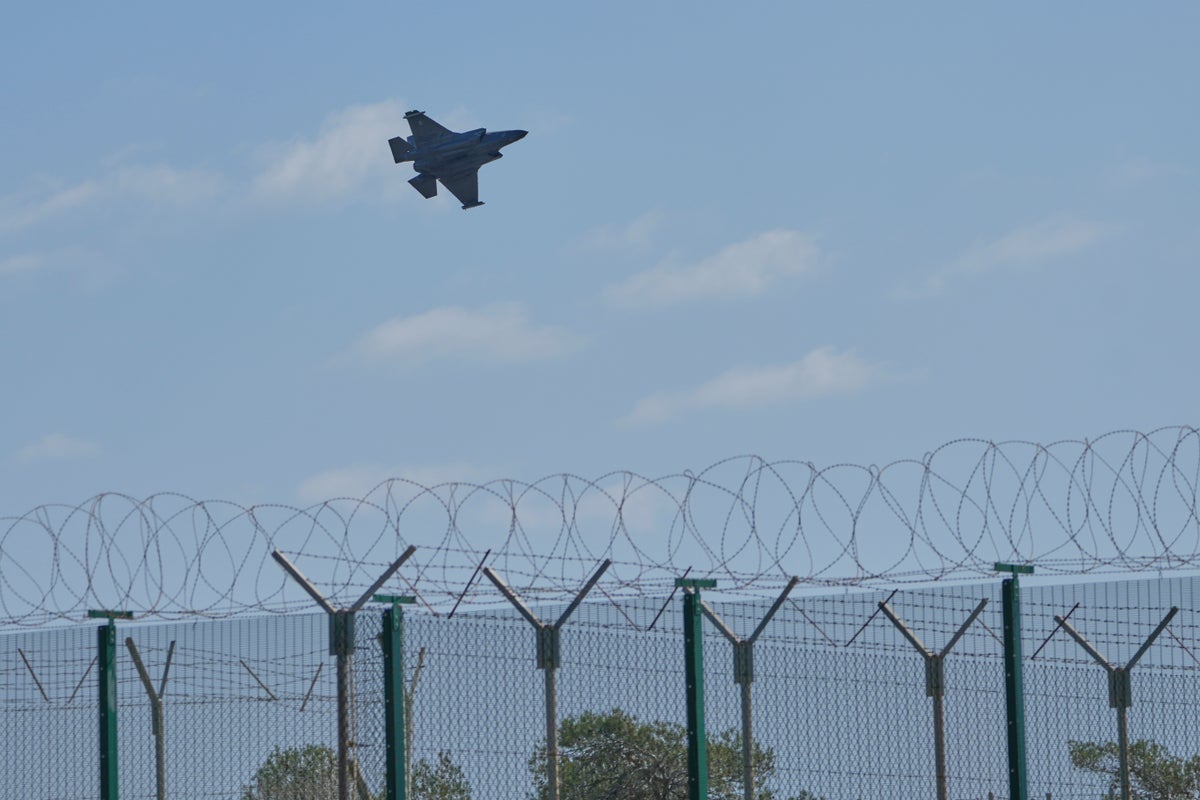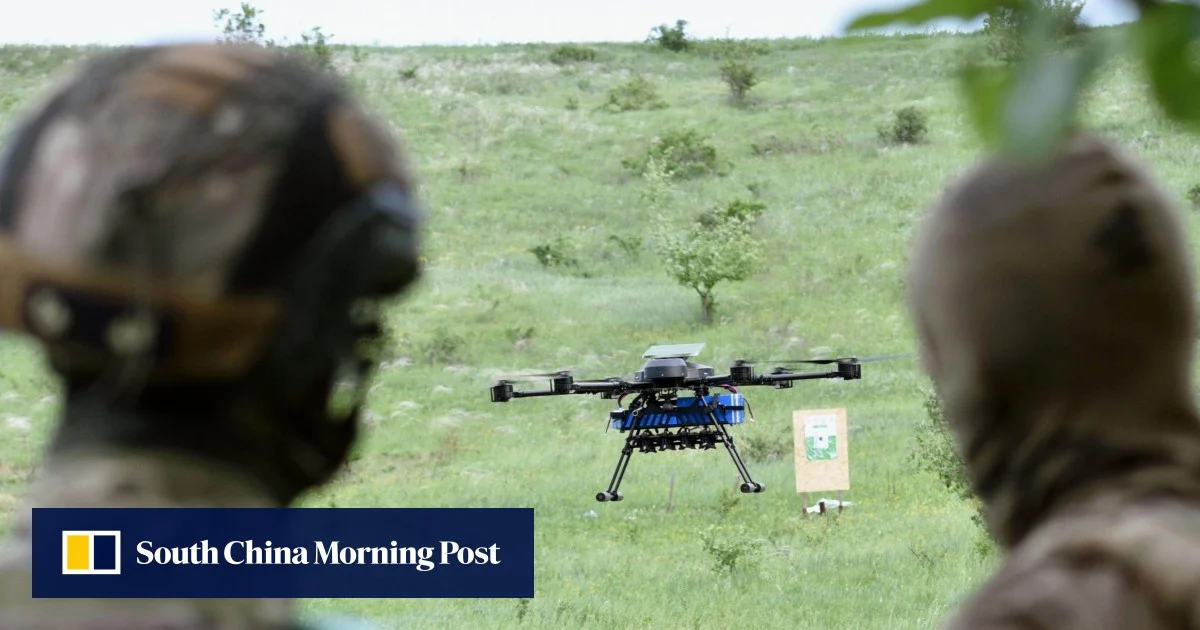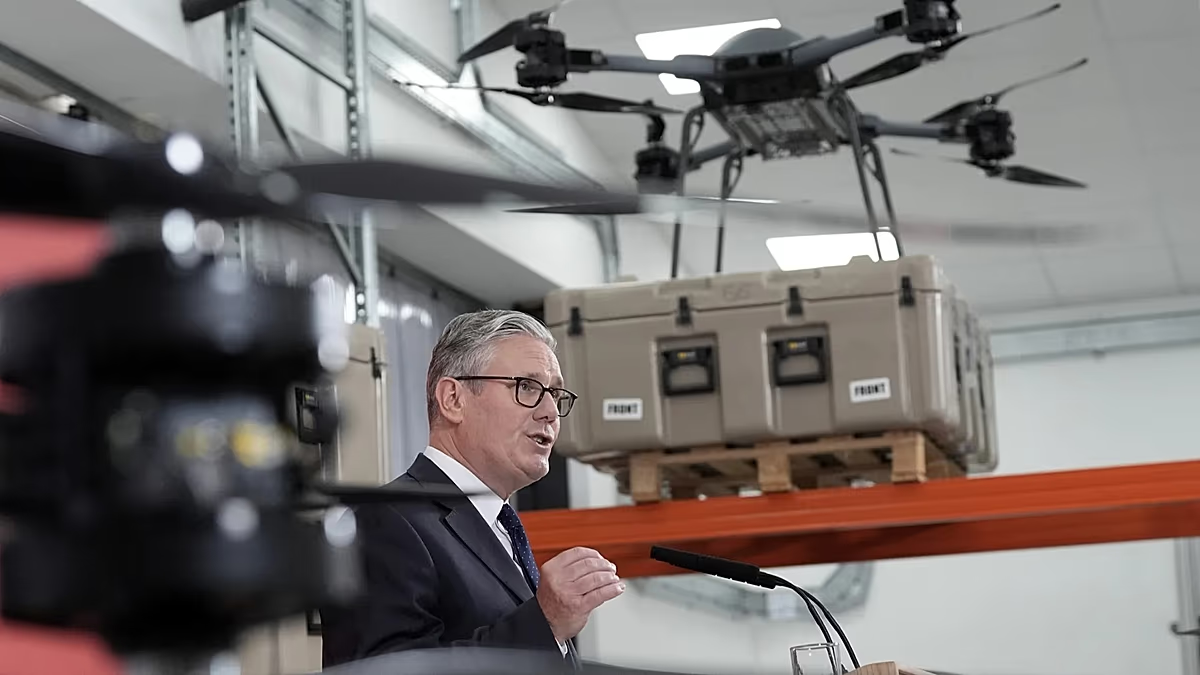
Just before first light, a re-flagged shadow fleet cargo ship sailing up the North Sea launches a dozen Shahed drones against London. As the UK has no air defence radar looking in this direction, the first notification of this strike comes from Dutch radar. But even at the Shahed’s low speed (175 km/h), the RAF Quick Reaction Alert Typhoons at RAF Coningsby in Lincolnshire are unable to intercept the drones before they slam into a range of targets, including Liverpool Street station in the morning rush hour, a hospital, and some electricity infrastructure. Casualties at the station are in the dozens. A dozen drones costing less than $50,000 (£37,000) each bring London to a panicked halt.Unrealistic? A few years back, you would rightly have scoffed at me for suggesting this. Even the techno-thriller master Tom Clancy wouldn’t have come up with such a scenario (although it is worth recalling that in 1994, he did write a novel in which a commercial aircraft crashed into the Congress building, killing the US president, foreshadowing 9/11).But recently while the French aircraft carrier Charles de Gaulle was on a port visit to Malmö in Sweden, a Russian ship did launch a drone to “have a look” at the ship, before it was shot down by Swedish air defence units. There was no evidence that it was armed, on this occasion anyway.There is growing disbelief at the blasé attitude of the UK to its defence. In a speech later today, Lord Robertson - the former Labour defence secretary who wrote the government's Strategic Defence Review (SDR), will warn: "We are underprepared. We are underinsured. We are under attack. We are not safe... Britain's national security and safety is in peril."He will add: "There is a corrosive complacency today in Britain's political leadership. Lip service is paid to the risks, the threats, the bright red signals of danger - but even a promised national conversation about defence can't be started."The prime minister, Sir Keir Starmer, previously said the investment plan was on his desk and was being “finalised”; however, the lack of investment is now at acute levels, none more so than when it comes to our land-to-air defence and surface-to-air missiles (SAMs). In the context of what is now unfolding in the Middle East, it is true that Iran’s known missiles cannot currently reach London from Iran itself (their main ballistic missiles have ranges of about 1,300km to 2,500km; London is over 4,000km away). However, that is not to say future or modified systems couldn’t potentially reach parts of Europe, including the UK, depending on development or launch location.Arguably, the most worrying hint of our unpreparedness was best put by the undersecretary for defence, former Royal Marine Al Carns, who was asked about ballistic missile defence of London at the start of February: “The UK has a suite of capabilities to tackle the missile threat which is advancing, proliferating and converging. The UK has announced an investment of up to £1bn to enhance our integrated air and missile defence with a focus on homeland defence. The UK’s nuclear deterrent exists to deter the most extreme threats to the UK and our allies. Its purpose is to preserve peace, prevent coercion, and deter aggression.”The direct suggestion here is that, were a missile to be fired at London, the UK would retaliate with nuclear weapons. Really? It’s far from certain that the UK’s Nato allies would support this form of escalation, rather seeing any missile or drone strikes on UK soil from an unidentified hostile actor as a result of underinvestment in crucial home defences. And the “up to £1bn” is less than that – this spend is spread across six to seven years and covers more than “just” air defence systems. The real spend, if it ever comes, is set for the mid-2030s. And if our Nato allies are correct, any threat to the UK will be this decade.Although the headline sum is impressive – £62bn – the outputs look weak outside of the nuclear deterrent. The harsh truth is that within Nato the UK is increasingly an outlier regarding defence spending and is, in effect, defenceless against air/missile/drone attacks. And while these might have seemed unlikely five years ago, they are now a “when, not if”. European Nato is spending tens of billions every year to ensure that it is less at risk of seeing critical national infrastructure destroyed in drone or sabotage attacks, but the same is simply not true of the UK.Airports across Europe have been affected by suspicious drone sightings (AP)Late last year there were large numbers of drone incursions around European airports (especially Copenhagen) and military airbases in Denmark, Sweden, Norway, Germany and the Netherlands. Although no one could confirm beyond a reasonable doubt that these were Russian, many have pointed their fingers at Moscow.These drones weren’t armed, but having scouted the bases and the defences, the hostile state behind them will now have a better idea of what it might need to do next time. This sort of activity has not been limited to continental European countries either. Gatwick had numerous drone incursions between 2019 and 2023, costing millions in disruption. Police have investigated multiple suspects, but no prosecution successfully identified the operator, and while the incursions were security breaches with unclear origins, some analysts have speculated about testing by hostile actors or “shadow fleet” activity.Faced with this sort of threat, what can the UK do? At the moment, next to nothing. Ground-based air defence, both missiles and guns, has been run down massively. Air defence has simply not been a priority for over two decades. Quantities of SAMs are ridiculously small, and we have no anti-air artillery. Having guns firing at air targets will undoubtedly sound very Second World War – flak, the Blitz – but it is a very cost-effective solution to what could, in theory, be a devastating homeland attack.UK officials said a suspected Iranian-made Shahed-type drone crashed into RAF Akrotiri in Cyprus last month. There has been a lot of talk about whether it was actually aimed at the base, but that is irrelevant. What is of note is that a small drone attack against the base today stands a good chance of destroying 10 per cent or more of the RAF’s fighter strength in one hit, making the base defenceless.A fighter jet takes off from RAF Akrotiri in Cyprus on 2 March after reported drone attacks on the island (AFP/Getty)This is not the case in most of Europe, where billions of euros are being invested in upgrading and expanding ground-based air defences across the continent. In January, Sweden signed contracts worth over €1.5bn (£1.3bn) for air defence weaponry and radar to counter threats ranging from drones to cruise missiles, and this is just one part of a broader investment package. In line with rising anxieties over renewed Russian aggression, the direct focus of this spending is earmarked for critical national infrastructure and population centres.Late last year, Germany placed framework contracts to buy up to 600 Skyranger anti-air cannon systems, an order worth as much as €8bn in total. Most of these weapons will be used for airport and airbase defence, as well as for protecting key industrial and infrastructure sites against a wide range of air threats from drones upwards.These contracts are now the norm in Europe, not the exception. Checking contracts for air defence systems in 2025 points to more than €15bn being spent on anti-air defences, with an emphasis on the defence of critical national infrastructure – and there were more contracts in 2024. In the UK, ask about whether there will be investment in more systems to protect the country, and a worrying range of what can only be described as “excuses” are trotted out.Waiting for the Defence Investment Plan (DIP) for a steer on where to spend the defence money is one familiar response to questions being raised about underinvestment. The DIP is now at least three months late, and apparently is stuck inside a Treasury that is having to weigh up Britain’s benefit spending against how much is needed to be spent on defence. What doesn’t seem to be understood by our so-called leaders is that there isn’t a “surface-to-air missile supermarket” where you can push your trolley down, selecting whatever missiles you want. Even with the best money spent, there will be a two-year-plus gap between ordering new SAMs and receiving them.High demand for air defence systems has made lead times rise, and some European customers for the US Patriot SAM have now been told that they do not know when they will receive their missiles, production being under such stress.The reliance on Nato for our collective defence is also often emphasised by those tasked with keeping us safe, who regularly point out that our allies would intercept any missiles coming towards the UK.But would our allies act straight away? Most missile defence systems have computer systems that look at the trajectory of a missile and calculate where it is set to hit. If it is set, say, to hit unpopulated areas or the sea, the computer calculation will be to not waste a missile on it. So a Dutch Patriot SAM, seeing a ballistic missile passing over the Netherlands towards the UK, would in effect say, “nothing to worry about – not a threat to us”. To my certain knowledge, after numerous conversations over the past year, there have been no explicit talks between the UK and Nato partners about them defending UK airspace with their SAMs. Actually, there is more astonishment that the UK is not doing more to defend itself.Prime minister Keir Starmer has paid visits to fellow Nato countries such as Norway to discuss defence, but plans to reinforce Britain’s infrastructure need more urgency (Getty)There are parts of the Labour Party that believe in “welfare, not warfare”. The oft-misquoted line from the prime minister Neville Chamberlain talking about the Sudetenland dispute in 1938 – “a quarrel in a far-away country between people of whom we know nothing” – comes from those who insist there is no direct threat to the UK. This is in spite of documented evidence of sabotage and hostile activity against infrastructure in Europe, including railways, energy networks, and communications systems.The stark reality is that the UK’s lack of investment in air and missile defences leaves our nation increasingly vulnerable. While Europe acts decisively to protect critical infrastructure, the UK emerges as the exposed man of the continent – with limited options should a coordinated drone or missile strike occur. Without urgent strategic action, the scenario that once seemed implausible – dozens of inexpensive drones bringing the UK to a halt – could move from fiction to fact. As war escalates in the Middle East and tensions grow across the Baltic regions, the time for complacency is over.Francis Tusa is editor of ‘Defence Analysis’
Welfare v warfare: How the UK is more vulnerable than ever
While Europe invests billions in its land-to-air defence systems, Britain looks increasingly like the most exposed nation on the continent. At a time when parts of the Labour Party believe in ‘welfare, not warfare’, people are right to be worried, writes defence expert Francis Tusa
1,812 words~8 min read