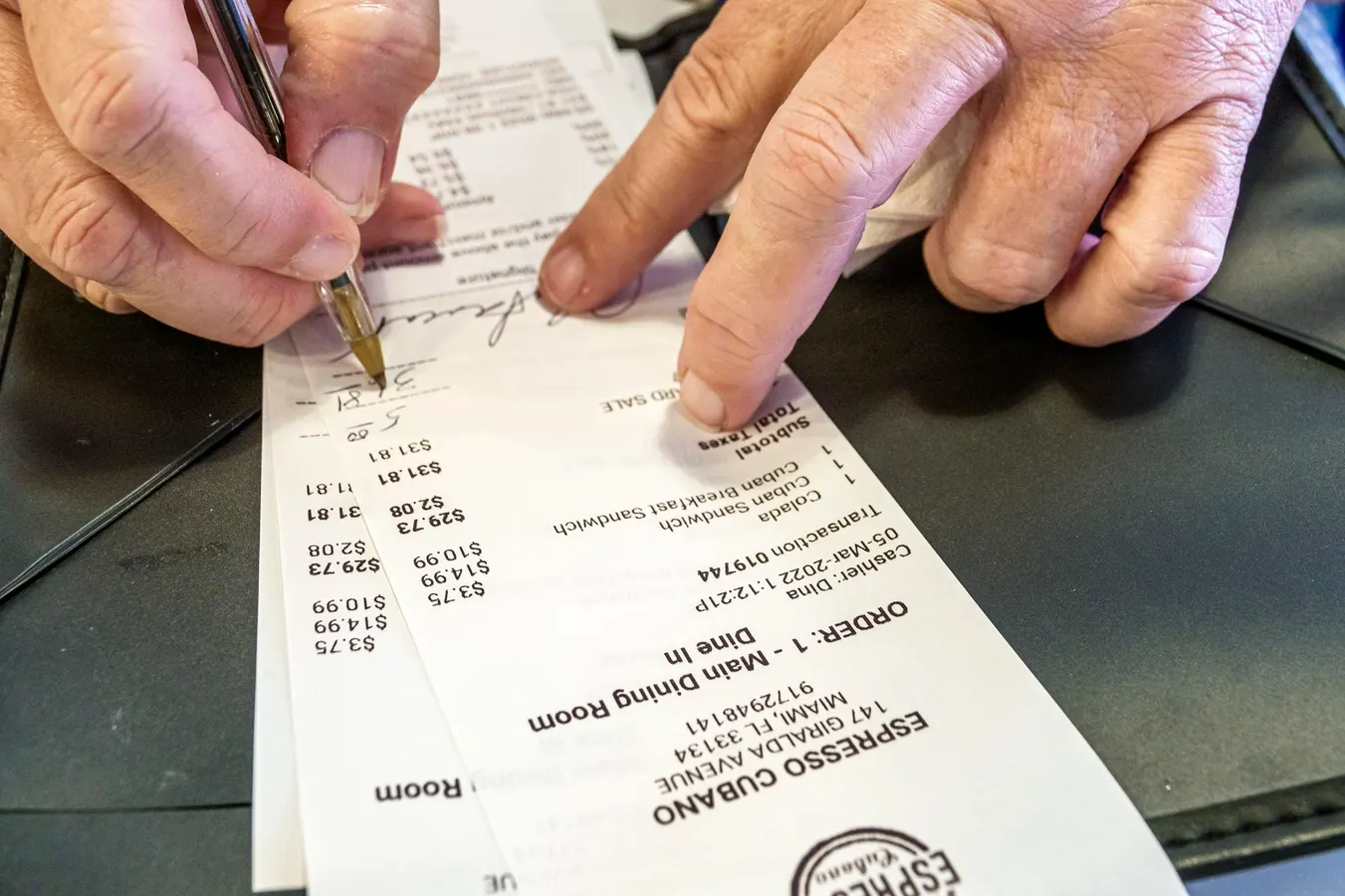
ToplineAmerican companies are increasingly skipping traditional price hikes on goods in favor of new surcharges and fees added to checkout screens and monthly bills—often far less visible—as a way to pass rising prices onto consumers amid surging inflation. A man signs a credit card receipt. Jeffrey Greenberg/UCG/Universal Images Group via Getty ImagesKey FactsRestaurants, hotels, airlines, retailers and other businesses are increasingly breaking price hikes into separate line items—often labeled as a “fuel surcharge,” “service fee” “processing fee” or “resort fee”—that allow them to preserve advertised prices but still pass inflation-related price increases on to the consumer. Often these costs only show up on a final bill or check—separate from the original, advertised price.One of the most common examples is a credit card use surcharge—used by one-third of American small businesses—which see companies try to recoup the fees charged to them by credit card companies by hitting customers with a 2% to 4% fee if they use a card instead of cash. More than 15% of restaurants nationally also now tack on extra fees to the bill at the end of a meal, according to the National Restaurant Association, with some adding credit card surcharges while others opt for automatic gratuity or vague “service charges” to help cover increased supply costs or employee wages. Airlines advertise ticket prices without including hidden taxes, fees and charges—that can increase ticket prices by roughly 20% at checkout—and carriers like American, Alaska, Delta, United and Southwest this month announced they were hiking the price of baggage fees by $10 per bag to cover Iran war-caused jet fuel increases.Grab, a Nasdaq-listed rideshare and food delivery company that operates in Southeast Asia, told customers it will implement a fuel surcharge through May 31 and Uber Australia said it will introduce a temporary 5-cent-per-kilometer fuel surcharge starting April 15. What To Watch ForMore price hikes or fees for consumers as businesses themselves fall victim to new surcharges. Amazon has added a 3.5% fuel surcharge for its third-party sellers. UPS, FedEx and the USPS have implemented their own fuel-related price hikes, ranging from 3.5% to 8%, since the Iran war spiked energy costs. Experts have said those logistics companies have little choice but to offset the skyrocketing costs of gasoline and diesel, and as many as 30 to 40% of Amazon sellers subject to the new surcharge will pass it directly on to consumers, a supply chain expert told the New York Post. The owner of Ash & Erie, a small men’s clothing brand, told the Wall Street Journal the fuel surcharges are like “tariffs 2.0” and said he’ll likely have to raise prices to make up for them. Similarly, fresh food distributors are billing restaurants and grocery markets to make up for the rising price of diesel, which could soon get passed along to shoppers and diners. Grocery prices will rise 2% in the next few weeks, according to The Food Institute. Contractor Plus, a management app designed for contractors and businesses like plumbing and electricians, is advising its clients on how to add fuel surcharges directly to invoices. Uber, Lyft, DoorDash, Instacart and Amazon have all started offering fuel price relief options for its delivery and rideshare drivers, the New York Times reported, and that could soon turn into a surcharge for riders or delivery recipients. When the war in Ukraine caused gas prices to jump in 2022, Uber and Lyft added surcharges directly to customers. Will The New Fees Ever Go Away? Probably not. Often, a fee gets introduced to solve a seemingly temporary cost problem but then becomes permanent, even after the original justification fades. Restaurant service fees, for example, were born amid higher prices and fewer sales during the pandemic but many stayed around when costs dropped. Airline checked baggage fees were introduced during the 2008 oil price spike, when jet fuel costs surged, but didn't disappear once fuel prices stabilized. Rental car companies added "temporary" surcharges after the Sept. 11, 2001 terrorist attacks to offset falling travel demand and pay for added airport security and facility costs, but they stuck around after the travel industry recovered. Delta Airlines CEO Ed Bastian recently implied airfares likely won't go back down even if oil prices drop, instead saying the lowered fuel costs would "certainly help us boost our margins this year and clearly into next year as well." Crucial Quote“Consumers tend to pay less attention to surcharges than to base prices,” Vicki Morwitz, a marketing professor at Columbia University, told the Wall Street Journal. Key Background As inflation soars, the prices of almost everything are up from this time last year. Annual inflation surged to 3.3% in April and increased 0.9% from March to April, the Bureau of Labor Statistics reported. Gas prices are up 18.9% from March 2025 to March 2026, the Bureau reported, with food costs up 2.7%, clothing up 3.4%, housing up 3% and medical care up 3.7%. Consumer sentiment, a monthly survey of Americans’ views on the economy by the University of Michigan, fell to an all-time low in April. Consumers said they're bracing for higher prices and weaker asset values as fears about the Iran war’s impact on prices continue to spread. Trump on Sunday told Fox News that gas prices, which jumped 21.2% just in March, likely won't go down before the midterm elections in November and could possibly be "a little bit higher." Further Reading ForbesEconomic Pessimism Hits All-Time High Among Americans On Iran War FearsBy Ty RoushForbesIran War’s Inflation Impact: Energy Prices Surged In Largest Gain Since 2005By Ty RoushForbesKey Inflation Gauge Improved Ahead Of Iran War—But Incomes FellBy Ty Roush
Inflation’s Hidden Fees: Here’s How To Spot The Surcharges Increasingly Hitting Americans
Surcharges are hiding price increases at restaurants, in stores and beyond as Americans feel worse than ever about the economy.
934 words~4 min read