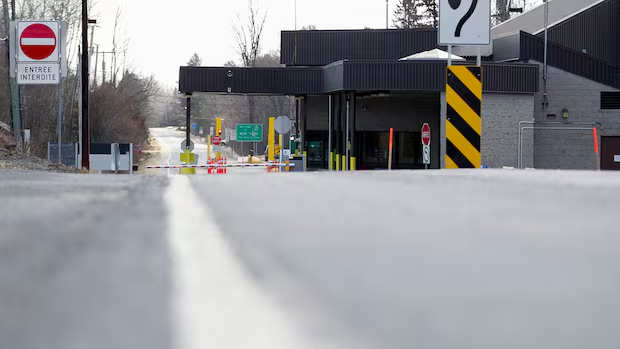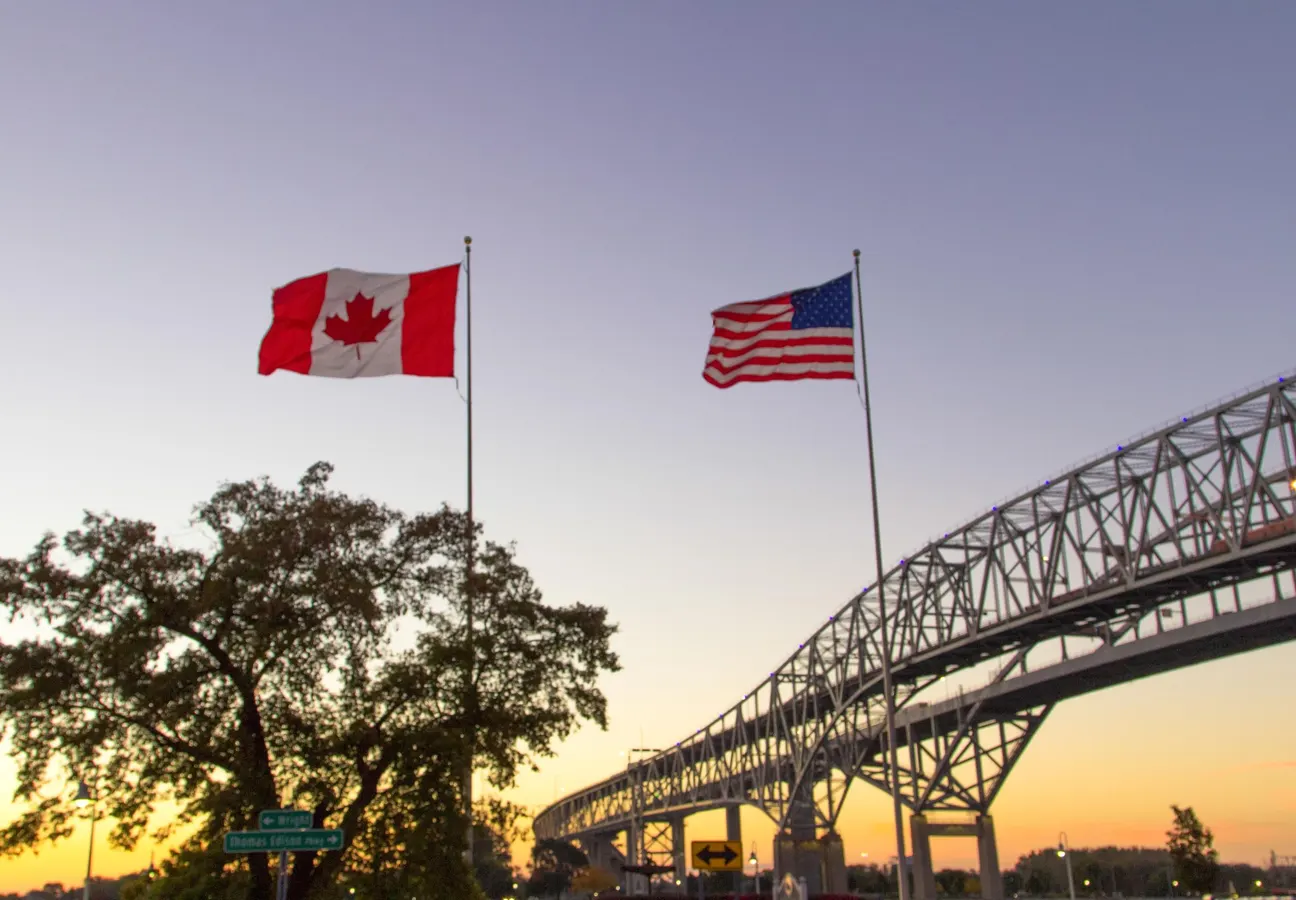
ToplineCanadian visitation to the U.S. is down 35% since President Trump returned to office—dealing a massive, sustained economic blow to the U.S. economy that shows no sign of reversing in 2026.The Blue Water Bridges between Michigan and Ontario sees fewer Canadians traveling south amid the second "Trump Slump."gettyKey FactsThe number of Canadians taking road trips into the U.S.—the most common way of visiting—dropped by 5% last month compared to March 2025 and is down 35% compared to March 2024, according to data released Monday from Statistics Canada.There was also a 14% year-over-year decline in air travelers from Canada to the U.S. in March.In contrast, the volume of Americans visiting Canada in March was up 4% compared to a year ago.For the third consecutive month, more Canadians flew to overseas destinations than drove to the U.S.—flipping a long-established pattern.Canadian visitation overseas was up 5% year over year—a sign Canadians are swapping the U.S. for other international destinations. Nearly a quarter (23%) of Canadian travelers have canceled a previously planned trip to the U.S., according to a Longwoods International tracking study of Canadian travelers.Crucial Quote“In my 37 years in the travel industry, I have never seen anything like what the Canadians have pulled off,” Amir Eylon, President and CEO of Longwoods International, told Forbes. How Much Has The 14-Month Canadian Boycott Cost The U.s. Economy?In the years leading to President Donald Trump’s re-election to a second term, Canadian tourists were the biggest single source of international visitors to the U.S., comprising roughly one-quarter of all foreign travelers, according to the U.S. Commerce Department's National Travel and Tourism Office (NTTO). In 2024, Canadian tourists injected $20.5 billion into the U.S. economy. But in early 2025, the U.S. Travel Association (USTA) warned even a 10% reduction in Canadian inbound travel could translate to $2.1 billion in lost spending and 140,000 lost jobs in the hospitality sector. The actual decline was 22%—more than double that hypothetical drop—which works out to a drop of roughly $4.5 billion in visitor spending. The boycott continued into 2026, with double-digit declines in both January and February, and cumulative two-year drops of more than 30% each month.Canadian Boycott Is Driving Second Trump SlumpDuring Trump’s first term, the U.S. experienced a 4% drop in international visitation in the first seven months of 2017, according to NTTO data. The travel industry quickly dubbed the decline a “Trump Slump,” attributing the decline to the president's America First anti-immigrant rhetoric and more restrictive visa rules for some countries. But the second Trump Slump has inflicted more economic damage than the first. In 2025, while tourism grew around the globe, the U.S. was the only country to see international visitor spending decline, according to a study by the World Travel & Tourism Council (WTTC) that analyzed 184 destinations. Last year, the U.S. saw a 6.3% downturn in inbound international tourism, driven mainly by Trump’s tariffs, America First rhetoric and immigration policies.What We Don’t KnowWill global anti-U.S. sentiment negatively impact international visitation for the 2026 FIFA World Cup? Last year, FIFA forecasted millions of international visitors would deliver a $30.5 billion economic boost to the United States. Tourism officials were initially bullish on the World Cup’s potential to help reverse the downturn turn in inbound international tourism, but the heads of hotel associations in three World Cup host cities—New York City, Philadelphia and San Francisco—told Forbes they have not seen a World Cup surge in international demand so far.Further ReadingHow Trump Is Torpedoing Foreign Tourism To The US—Potentially For Years To Come, Say Analysts (Forbes)
Canadian Travel Boycott Of U.S. Continues—14 Straight Months Of Declines—Amid Trump Slump
Now 14 months in, Canada’s rejection of the U.S. is the most successful tourism boycott in memory.
589 words~3 min read