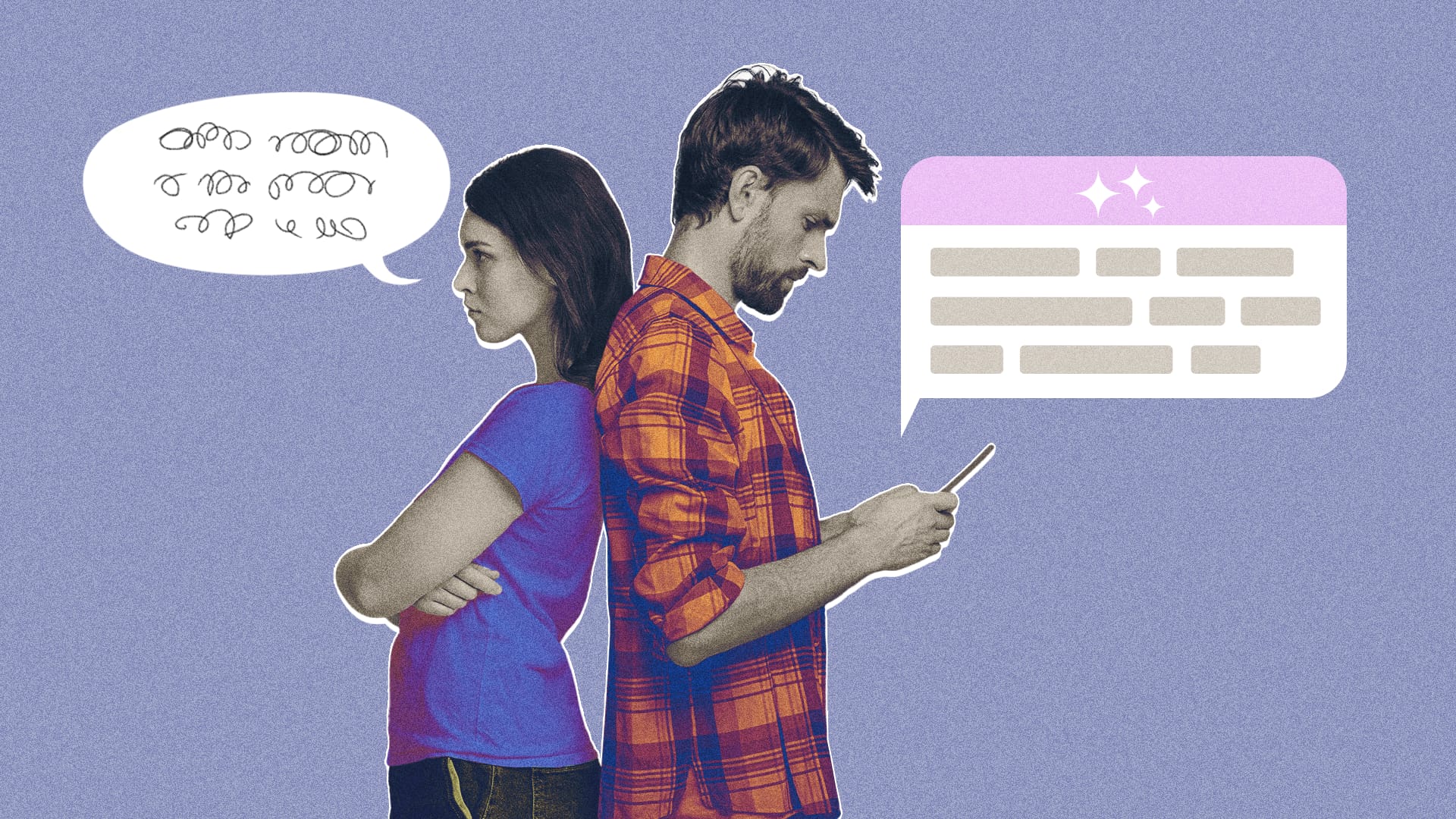
People love their AI companions. And they’re increasingly relying on AI to navigate the hardest parts of human relationships.
Between 2022 and mid-2025, the number of AI companion apps surged by 700%. Surveys have found that seven in 10 Gen Zers use AI to navigate workplace conflicts, and about half use it in their dating lives, including to help them break up with people.
I get the appeal. AI companions are built to simulate human connection. They provide responses that come off as empathic, nonjudgmental, and validating. In long conversations, they don’t zone out or get short with us when we go on and on about the same issue the way our human confidants do. They do the opposite: They become more positive over time.
But social scientists like me have studied the pros and cons of using AI in difficult interactions, and we’ve found hidden costs most people don’t see. Avoiding AI might not be realistic. But you can use it more thoughtfully to support healthier relationships.
Here are some of the costs — and how to counteract them.