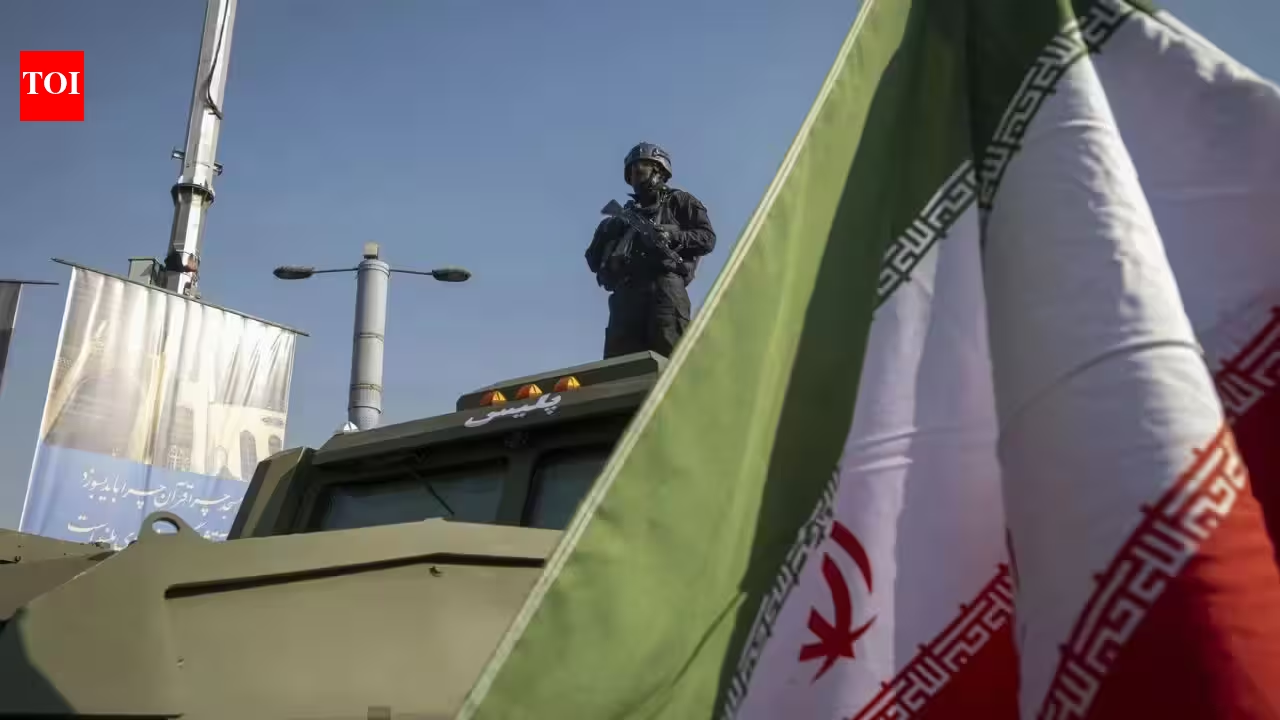
MOSCOW, April 13. /TASS/. The collapse of US-Iran negotiations could lead to a prolonged, moderate-intensity conflict unfolding in three distinct stages, transforming into a war characterized by a battle of nerves, financial strain, and dwindling patience. This prognosis was outlined by Nikolay Gaponenko, PhD in economics and associate professor at the Department of Economic Security at the Institute of Law and National Security, Russian Presidential Academy of National Economy and Public Administration (RANEPA), in an interview with TASS.
On April 11, Iran and the United States engaged in several rounds of talks in Islamabad. The Iranian delegation was led by Parliament Speaker Mohammad Bagher Ghalibaf, while Vice President JD Vance represented the US. According to reports from Tehran and Washington, the negotiations ended without a breakthrough, primarily due to persistent disagreements. Details regarding the potential for follow-up discussions remain unclear.
Gaponenko suggests that the initial phase will likely see increased hostilities in northern Israel within the next ten days. "Although some documents may still mention a ceasefire, in practice, it's essentially over. We should anticipate a sharp escalation in fighting in southern Lebanon. Israel will attempt to destroy Hezbollah missile launchers and depots swiftly and extensively," he explained. However, he notes that Iran is unlikely to respond with a large-scale missile attack on Israeli cities - such a move would be too risky and predictable.